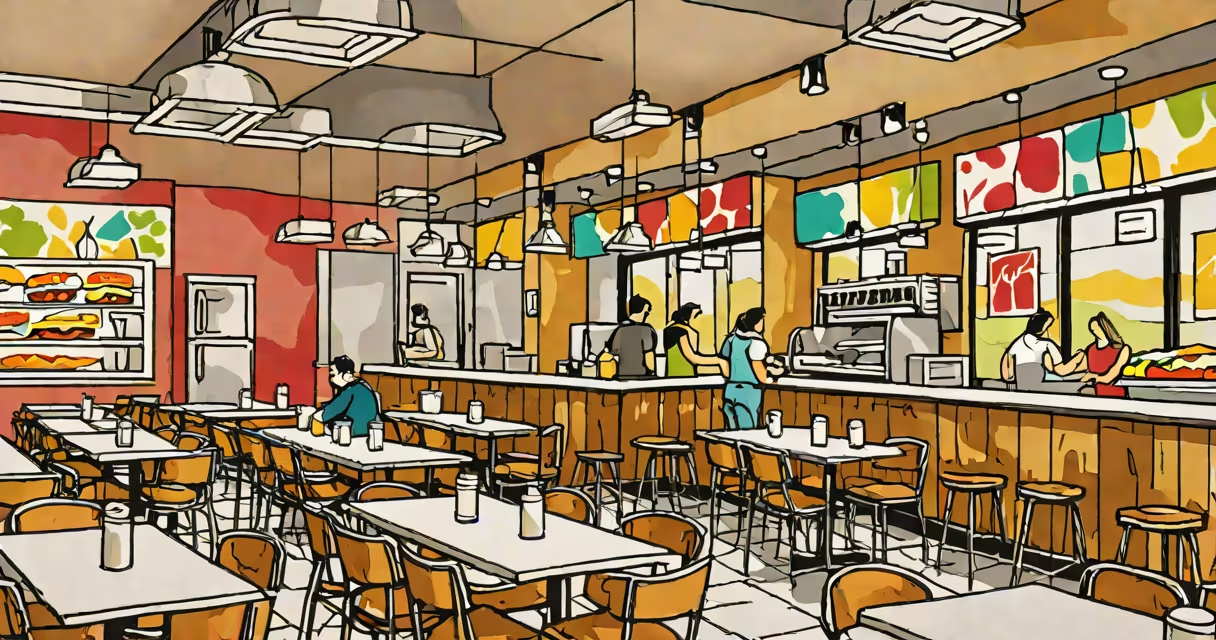
Popular fast casual restaurants serve freshly prepared, customizable meals at moderate prices with sit-down seating and faster service than traditional sit-down dining. These establishments prioritize quality ingredients and transparency, often listing sourcing details on menus.
Fast casual dining emerged in the early 2000s as a middle ground between fast food and full-service restaurants. Unlike fast food, which relies on pre-made components and drive-thru efficiency, fast casual restaurants prepare dishes to order using fresh ingredients. This model allows for greater customization and perceived health benefits, appealing to consumers seeking better options without the premium pricing of fine dining.
According to the National Restaurant Association, fast casual restaurants accounted for 36% of U.S. restaurant sales growth between 2015 and 2022, outpacing both fast food and full-service segments. The category includes chains like Chipotle, Panera Bread, Sweetgreen, and Shake Shack-each known for distinct branding, ingredient sourcing, and customer experience.
Popular fast casual restaurants operate on a limited-menu model, typically offering 10-20 core items. Orders are taken at counters or digital kiosks, then prepared in an open kitchen visible to customers. This setup increases trust through transparency-customers see ingredients being assembled and cooked in real time.
Staff are trained to handle customizations: swapping proteins, adding toppings, adjusting spice levels. A burrito at Chipotle, for example, lets guests choose from 14 ingredients including black beans, grilled chicken, avocado, and multiple salsas. The meal is assembled to order and served within 5-8 minutes.
Unlike fast food, where most items are pre-cooked and frozen, fast casual chains use fresh produce, house-made sauces, and daily-prepped proteins. Panera Bread's "Clean Food" initiative, launched in 2014, removed artificial preservatives, flavors, and colors from its menu-a move that boosted brand loyalty and sales by 12% over two years.
The fast casual segment includes several subtypes based on cuisine focus and operational model:
| Type | Focus | Examples | Key Differentiator |
|---|---|---|---|
| Bowls & Salads | Plant-forward, customizable bases | Sweetgreen, Cava, Freshii | Emphasis on seasonal ingredients and nutrition labeling |
| Tacos & Burritos | Mexican-inspired, build-your-own formats | Chipotle, Qdoba, El Pollo Loco | High customization with protein and sauce choices |
| Grilled Proteins & Sandwiches | Protein-heavy, fresh-cut ingredients | Shake Shack, Five Guys, Popeyes (limited service) | Use of flame-grilled meats and hand-cut fries |
| Global Street Food | Regional dishes with authentic flavor profiles | Wahoo's Fish Taco, Baja Fresh, Kuma's Corner | Regional authenticity with modern presentation |
Each type uses a consistent supply chain model. Sweetgreen, for instance, partners with local farms to deliver leafy greens within 48 hours of harvest. Their salad bowls are assembled in-store and never frozen. This system supports freshness but requires precise inventory management-overstock leads to waste, understock reduces throughput.
Many people assume fast casual restaurants are inherently healthier than fast food. While they often use fresher ingredients, this doesn't guarantee lower calories or better nutrition. A study published in Journal of the Academy of Nutrition and Dietetics found that 68% of fast casual menu items exceed 600 calories per serving-comparable to high-end fast food chains.
Another misconception is that fast casual means "organic" or "vegan." Not all chains offer plant-based options, and even those that do may use processed substitutes. For example, Chipotle's Impossible™ burger contains 550 calories and 33 grams of fat-higher than many beef burgers. Consumers must read labels carefully.
A key distinction lies in labor models. Fast casual chains rely heavily on hourly staff who handle food prep, ordering, and cleaning. This creates higher labor costs than automated fast food systems. As a result, average meal prices range from $10 to $16, compared to $6-$9 in fast food.
In 2021, Sweetgreen faced a temporary closure of 12 locations due to a contaminated romaine lettuce batch linked to a Listeria outbreak. The incident highlighted the risks of relying on fresh, locally sourced ingredients. The company responded by expanding its farm partnerships to include 120 certified organic farms across the U.S., implementing blockchain tracking for all produce shipments.
After the recall, Sweetgreen reported a 22% increase in customer retention among members who received personalized updates via email. This shows that transparency during crises strengthens consumer trust-even when operations are disrupted.
During a visit to a Sweetgreen location in Chicago in 2022, I watched the team assemble six different salads in under 15 minutes. Each bowl included a base of kale, mixed greens, or spinach, plus four to five add-ons like roasted sweet potatoes, chickpeas, or grilled chicken. The staff explained ingredient origins-"This kale came from Wisconsin, harvested yesterday"-and offered nutritional info on tablets at the counter.
Fast casual dining has evolved beyond convenience. It reflects changing values around food quality, sustainability, and employee treatment. Chains like Panera Bread have committed to paying employees a living wage and offering healthcare benefits, resulting in a 30% reduction in turnover compared to industry averages.
Consumers increasingly expect brands to align with their values. A 2023 survey by McKinsey & Company found that 62% of U.S. shoppers prefer brands that disclose sourcing practices. Fast casual restaurants meet this demand through public-facing ingredient sourcing maps and social media storytelling.
Popular fast casual restaurants aren't just about meals-they represent a shift in how Americans eat. They blend speed, quality, and transparency in ways that traditional fast food cannot. As demand grows for ethically produced, fresh, and customizable food, this segment will continue to expand-with new entrants testing hybrid models like ghost kitchens and subscription meal plans.