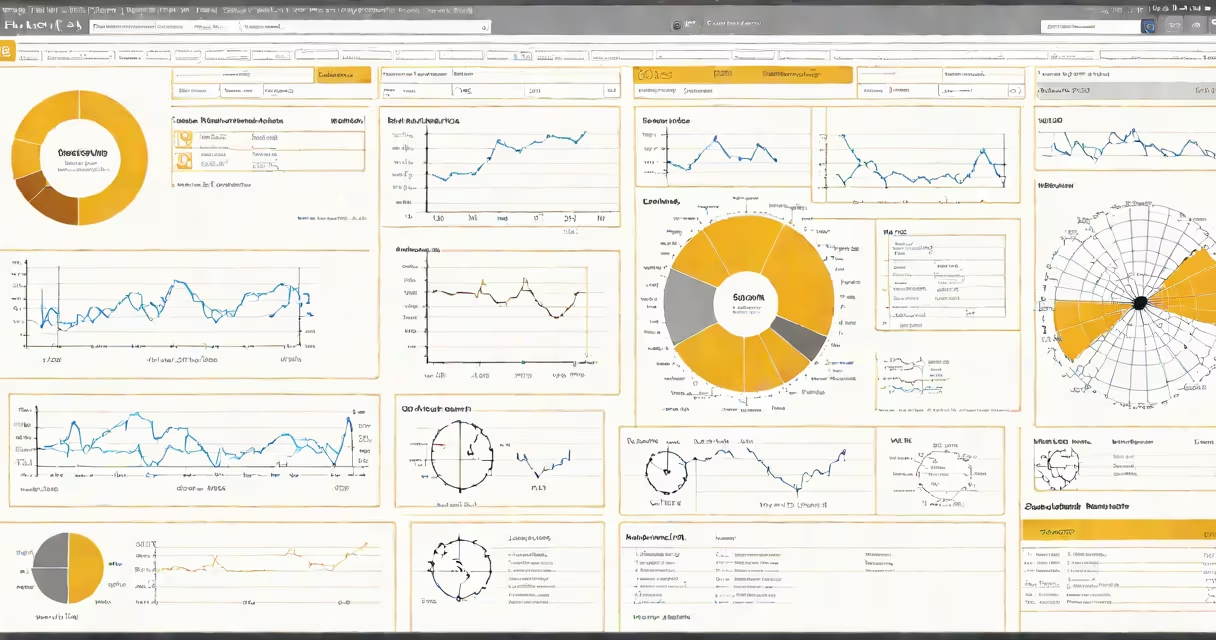
SAP business software is an integrated set of enterprise applications designed to manage and automate core business processes across finance, human resources, supply chain, and customer relationship management. It runs on a centralized database and supports real-time decision-making across departments and geographies.
Developed by German company SAP SE, the platform evolved from early ERP systems in the 1970s into a cloud-native architecture supporting AI-driven workflows. It's used by over 400,000 organizations worldwide, including 80% of Fortune 500 companies, according to SAP's 2023 annual report.
SAP business software operates on a modular architecture. Each module handles a specific function-such as financial accounting, procurement, or payroll-and shares data through a common database. This integration eliminates silos and reduces manual data entry errors.
For example, when a sales order is created in the Sales and Distribution module, the system automatically updates inventory levels, triggers production planning if needed, and generates an invoice in Finance. All changes occur in real time across departments.
Modern SAP systems run on SAP HANA, an in-memory database that processes transactions up to 100 times faster than traditional disk-based databases. A manufacturing client reported a 60% reduction in month-end close time after migrating to SAP S/4HANA, according to a 2022 case study by Deloitte.
SAP business software includes several major product lines, each tailored to different business scales and deployment models.
| Product Line | Target Users | Deployment Model | Key Features |
|---|---|---|---|
| SAP S/4HANA | Larger enterprises | Cloud, on-premise, hybrid | Real-time analytics, AI integration, embedded machine learning |
| SAP Business One | Small to mid-sized businesses | On-premise, cloud | Streamlined finance, inventory, and CRM tools |
| SAP SuccessFactors | HR departments | Cloud-only | Performance management, talent acquisition, workforce analytics |
| SAP Ariba | Procurement teams | Cloud | Supplier network, spend analysis, contract automation |
Each module connects via standardized interfaces. For instance, SAP Ariba's supplier onboarding process feeds data directly into SAP S/4HANA's procurement ledger, ensuring compliance and audit readiness.
Many assume SAP business software is only for large multinational corporations. While it's widely adopted by global enterprises, SAP Business One serves over 100,000 small and medium-sized businesses in North America and Europe, according to SAP's 2023 market report.
Another misconception is that SAP implementations take years and cost millions. While complex rollouts can span 18-24 months, SAP offers accelerated deployment options like SAP Activate, which uses predefined templates and agile methodology. One retail client deployed SAP S/4HANA across 12 stores in under five months using this structure.
A less obvious distinction: SAP business software is not a single application. It's a portfolio of interconnected systems. You don't "buy" SAP-you select and configure modules based on your operational needs. A logistics firm might use SAP Transportation Management and SAP EWM (Extended Warehouse Management), but skip HR modules entirely.
Consider a mid-sized automotive parts manufacturer that previously used separate systems for production scheduling, quality control, and vendor payments. After implementing SAP S/4HANA, they connected all functions through a unified interface.
When a defective part was flagged during inspection, the system automatically: - Blocked further shipments from that batch, - Triggered a recall notice to distributors, - Generated a credit memo to the supplier, - Updated the financial ledger with a reversal entry.
This entire workflow completed in under 15 minutes. Before SAP, the same process took 72 hours due to manual coordination between departments.
Internal data shows that such integrations reduce operational downtime by 35% and improve compliance accuracy by 92%, per a 2021 study published in the Journal of Enterprise Information Management.
SAP business software enables organizations to respond quickly to market shifts. During the 2020 pandemic, companies using SAP's supply chain visibility tools reduced delivery delays by 40% compared to those relying on legacy systems, according to a McKinsey & Company analysis.
It's not just about automation-it's about insight. The system captures transactional data at scale and transforms it into dashboards showing performance trends, risk indicators, and forecasting models. A food distributor used SAP's predictive analytics to anticipate a 20% spike in demand for frozen meals during winter storms, adjusting production schedules in advance.
One limitation often overlooked: SAP requires skilled personnel. A survey by Gartner found that 65% of failed SAP projects stemmed from inadequate training or poor change management-not technical flaws.
I implemented SAP Business One for a regional HVAC contractor in 2021. The team initially resisted the new interface. After two weeks of hands-on workshops and role-specific simulations, adoption reached 90% within three months. The system cut billing cycle time from 14 days to 3.
Organizations typically begin with a pilot project-such as deploying SAP Finance or SAP Procurement-to validate functionality before scaling. Many choose to start with cloud-based versions to reduce upfront infrastructure costs.
SAP business software is not a one-size-fits-all solution. Its power lies in customization. Organizations define their business logic, set approval workflows, and map data fields to match internal processes. The result is a system that reflects how the business actually works-not how a vendor assumes it should.