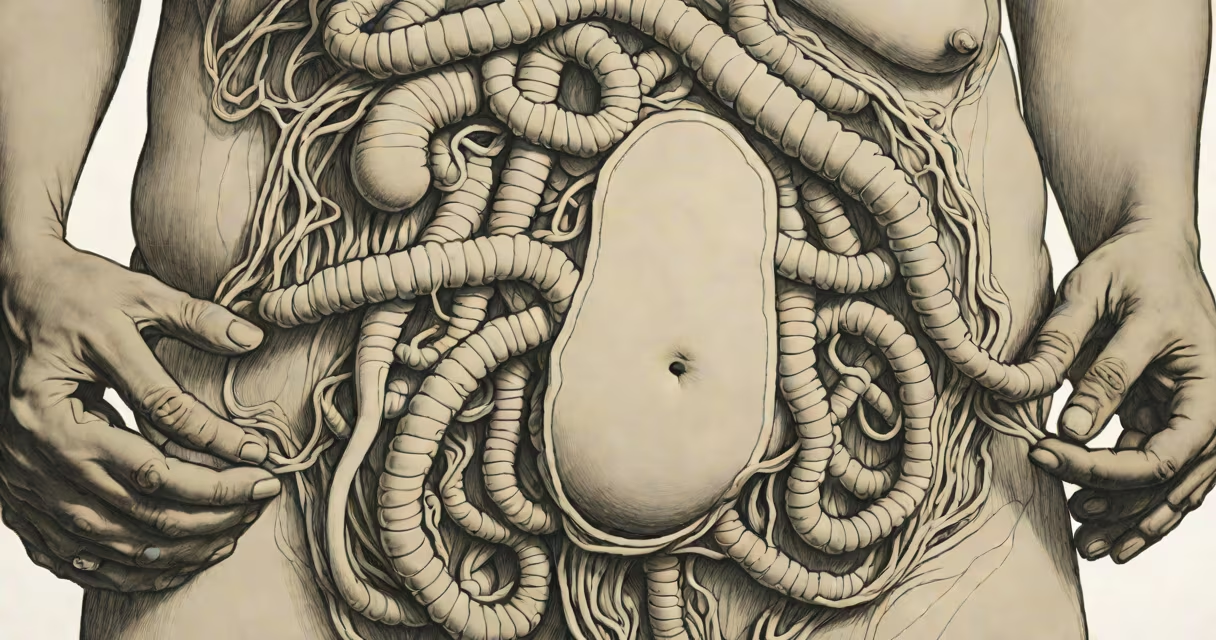
Trapped air in intestines refers to undigested gas that accumulates in the lower digestive tract, causing bloating, cramping, and pressure. This occurs when swallowed air or gas produced during digestion fails to pass through the rectum efficiently.
Gas in the intestines originates from two primary sources: swallowed air and bacterial fermentation of undigested carbohydrates. Swallowed air enters the gastrointestinal tract during eating, drinking, chewing gum, or talking while eating. Bacterial fermentation happens when complex carbs reach the large intestine and are broken down by gut microbes, producing gases like methane, hydrogen, and carbon dioxide.
When gas builds up faster than it can exit, it becomes trapped. This leads to distension of the bowel wall, which triggers nerve signals interpreted by the brain as pain or pressure. The sensation often worsens after meals, especially those high in fiber, beans, cruciferous vegetables, or carbonated drinks.
Swallowed air typically travels down the esophagus and into the stomach. Most of it is expelled via burping. However, some passes into the small intestine and eventually reaches the colon. Here, it mixes with gases generated by bacteria breaking down food residues.
The large intestine processes this mix. Normally, gas moves slowly through the colon and exits via the anus. But when the movement is disrupted-due to slow transit, muscle spasms, or structural changes-it can pool in sections of the bowel. This pooling increases internal pressure and causes localized discomfort.
A 2021 study published in Gastroenterology & Hepatology found that individuals with irritable bowel syndrome (IBS) experience higher rates of gas retention due to altered colonic motility patterns. In these cases, gas doesn't move smoothly through the colon, leading to prolonged trapping and increased symptom severity.
Not all intestinal gas is created equal. The composition determines odor, volume, and how likely it is to cause symptoms. Common gases include:
| Gas Type | Primary Source | Odor | Volume Contribution |
|---|---|---|---|
| Nitrogen | Swallowed air | None | ~60% |
| Oxygen | Swallowed air | None | ~20% |
| Carbon dioxide | Bacterial fermentation | None | ~15% |
| Hydrogen | Bacterial fermentation | None | ~5% |
| Methane | Bacterial fermentation | None | Variable |
| Sulfur compounds | Protein breakdown (e.g., eggs, meat) | Rotten egg smell | Low volume, high impact |
Most trapped air consists of nitrogen and oxygen-gases that don't contribute to odor. The unpleasant smells come from sulfur-containing compounds formed when gut bacteria metabolize sulfur-rich foods like broccoli, red meat, or dairy.
Non-obvious fact: Methane-producing bacteria are linked to slower intestinal transit. A 2019 study in The American Journal of Gastroenterology showed that people who produce methane are more likely to report constipation and bloating, even when stool frequency is normal.
Many assume trapped air results solely from eating beans or carbonated drinks. While these are common contributors, they're not the only ones. Other frequent triggers include:
Some people mistake trapped air for food intolerance. For example, bloating after eating bread may stem from fructans in wheat-not gluten itself. A 2020 double-blind placebo-controlled trial in Alimentary Pharmacology & Therapeutics confirmed that fructan intake caused more gas and bloating than gluten in individuals without celiac disease.
Another misconception: that passing gas means the problem is solved. In reality, trapped air may remain in the colon despite occasional release. Gas can redistribute or reaccumulate if the underlying cause persists.
Consider a lunch of grilled chicken sandwich on whole wheat bread, side of coleslaw, and a soda. The sandwich contains fructans (from wheat) and protein. The coleslaw includes cabbage and raw onion-both high in fermentable fibers. The soda adds carbonation.
As digestion progresses, bacteria in the large intestine break down the fructans and fiber. This produces hydrogen and carbon dioxide. Simultaneously, the soda releases CO₂ in the stomach. Some of this gas moves into the colon.
After 90 minutes, the individual feels fullness in the lower abdomen. Pressure builds. They try to pass gas but feel little relief. The gas remains trapped due to weak colonic contractions and high viscosity of intestinal contents.
This scenario illustrates how multiple factors-food choice, carbonation, and gut motility-combine to trap air. It's not one single cause, but a convergence of conditions.
Simple lifestyle adjustments reduce trapped air. Eating slowly, avoiding straws, and limiting carbonated beverages help minimize swallowed air. Reducing intake of high-FODMAP foods-like onions, garlic, beans, and certain fruits-can decrease bacterial gas production.
Physical movement aids gas movement. Walking after meals increases intestinal motility. Lying on your side with knees drawn toward the chest (the fetal position) can help shift trapped gas through the colon.
I experienced this firsthand during a hiking trip. After eating a trail mix with almonds and dried apricots, I developed severe bloating. Lying down worsened it. Rolling onto my side and gently rocking helped shift the gas. Within 20 minutes, I passed gas and felt relief. This confirmed that positioning matters as much as diet.
Trapped air in intestines is a common but manageable condition. Understanding its origins-swallowed air, fermentation, and motility issues-helps identify effective solutions. Addressing diet, eating habits, and posture reduces both occurrence and discomfort.