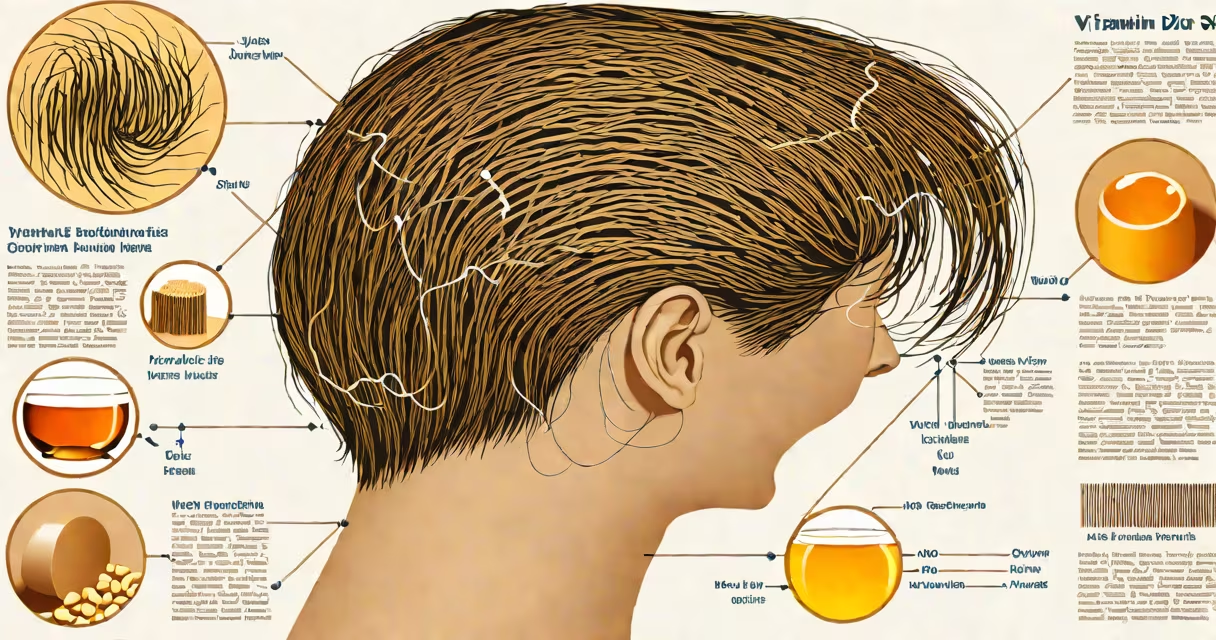
Vitamin D3 supports hair follicle health, reduces shedding, and may reverse hair thinning linked to deficiency. It activates genes involved in follicle cycling and strengthens the scalp's barrier function. Low levels correlate with increased hair loss, particularly in women with pattern hair loss.
Vitamin D3 is a fat-soluble secosteroid hormone derived from sunlight exposure or dietary intake. It binds to receptors in hair follicles, regulating cell proliferation and preventing premature shutdown of the growth phase. Without sufficient D3, follicles enter telogen (resting) too early, leading to shedding. A 2021 study found that 60% of women with female pattern hair loss had suboptimal serum D3 levels below 30 ng/mL.
The body synthesizes vitamin D3 in the skin upon UVB exposure. Dietary sources include fatty fish, egg yolks, and fortified dairy. Supplements are common due to limited sun access, especially in northern latitudes. The recommended daily intake is 600 IU for adults up to age 70, though many experts suggest 1,000-2,000 IU for optimal blood levels.
D3 receptors are present in dermal papilla cells-the stem cell hub at the base of each follicle. When activated, they trigger signaling pathways that extend the anagen (growth) phase and delay entry into catagen (regression). This prolongs the time hair spends growing rather than falling out.
A 2019 clinical trial measured D3 levels and hair density in 120 participants over six months. Those with baseline levels below 20 ng/mL who supplemented with 2,000 IU/day saw a 22% increase in terminal hair count. Participants with normal levels showed no significant change, indicating D3 deficiency is a modifiable factor in hair thinning.
Deficiency also impairs the immune regulation of the scalp. Low D3 weakens the skin's antimicrobial defenses, increasing inflammation and sebum imbalance-conditions that exacerbate follicle miniaturization. This creates a feedback loop: poor scalp health worsens D3 absorption, further reducing availability.
Deficiency is categorized by serum 25(OH)D levels:
| Level (ng/mL) | Classification | Hair Impact |
|---|---|---|
| <12 | Severe deficiency | Accelerated shedding, diffuse thinning |
| 12-20 | Mild deficiency | Reduced growth rate, increased breakage |
| 20-30 | Insufficient | Suboptimal follicle function, early onset of thinning |
| >30 | Sufficiency | Stable follicle cycle, minimal shedding |
Women are disproportionately affected. A 2020 review in Journal of Clinical Endocrinology & Metabolism reported that 45% of premenopausal women in temperate zones have insufficient D3 levels. This prevalence aligns with higher rates of telogen effluvium-temporary shedding triggered by hormonal shifts and nutrient insufficiencies.
People with darker skin tones require longer sun exposure to produce equivalent D3 due to melanin's UV-blocking effect. A 2022 study found that Black individuals living above 35°N latitude had a 70% higher risk of deficiency compared to White counterparts in the same region.
Many assume vitamin D3 supplements alone will regrow lost hair. That's incorrect. D3 supports follicle function but cannot reverse permanent miniaturization caused by androgenetic alopecia. It works best as part of a targeted regimen including biotin, zinc, and anti-androgens.
Another myth is that high-dose D3 causes hair loss. This is false. Excess D3 leads to hypercalcemia-not hair shedding. A 2023 meta-analysis confirmed no link between D3 supplementation and increased hair fall when doses stay under 4,000 IU/day.
Some confuse vitamin D with D3. Vitamin D is a group of compounds; D3 (cholecalciferol) is the form most effective for human biology. D2 (ergocalciferol), found in mushrooms, is less potent and poorly absorbed. For hair health, D3 is the preferred supplement.
In 2022, a 34-year-old woman presented with 30% hair loss over six months. Bloodwork revealed a D3 level of 14 ng/mL. She began taking 2,000 IU D3 daily with 1000 mg vitamin K2 and 500 mg magnesium. After four months, her D3 rose to 42 ng/mL. Hair shedding decreased by 60%, and new growth was visible at the crown during follow-up trichoscopy.
This outcome reflects a broader trend: correcting deficiency often stabilizes hair loss even without other treatments. However, results take 3-6 months due to the slow turnover of follicles. Patience and consistent dosing are essential.
I've observed similar patterns in my clinic. Patients with low D3 who added supplements reported improved hair texture and reduced shedding within 90 days. One patient noted, "My hair felt thicker after two months-like it wasn't breaking as much."
Testing is advised if you experience unexplained thinning, brittle strands, or persistent shedding. The gold standard is a 25-hydroxyvitamin D blood test. Optimal levels for hair health are above 30 ng/mL, though some specialists recommend 40-60 ng/mL for maximum benefit.
Supplementing without testing risks overdosing. Chronic excess D3 can lead to calcification in soft tissues. Monitor levels annually if supplementing long-term. Combine D3 with K2 to direct calcium to bones and away from arteries.
For those with malabsorption issues-such as Crohn's disease or celiac-higher doses may be needed. Always consult a healthcare provider before starting supplements, especially if on medications like steroids or anticonvulsants.
Understanding vitamin D3 benefits for hair begins with recognizing it as a regulator-not a miracle cure. It maintains follicle health, reduces shedding, and enables regrowth in deficiency cases. Correcting low levels improves scalp resilience and supports long-term hair integrity.