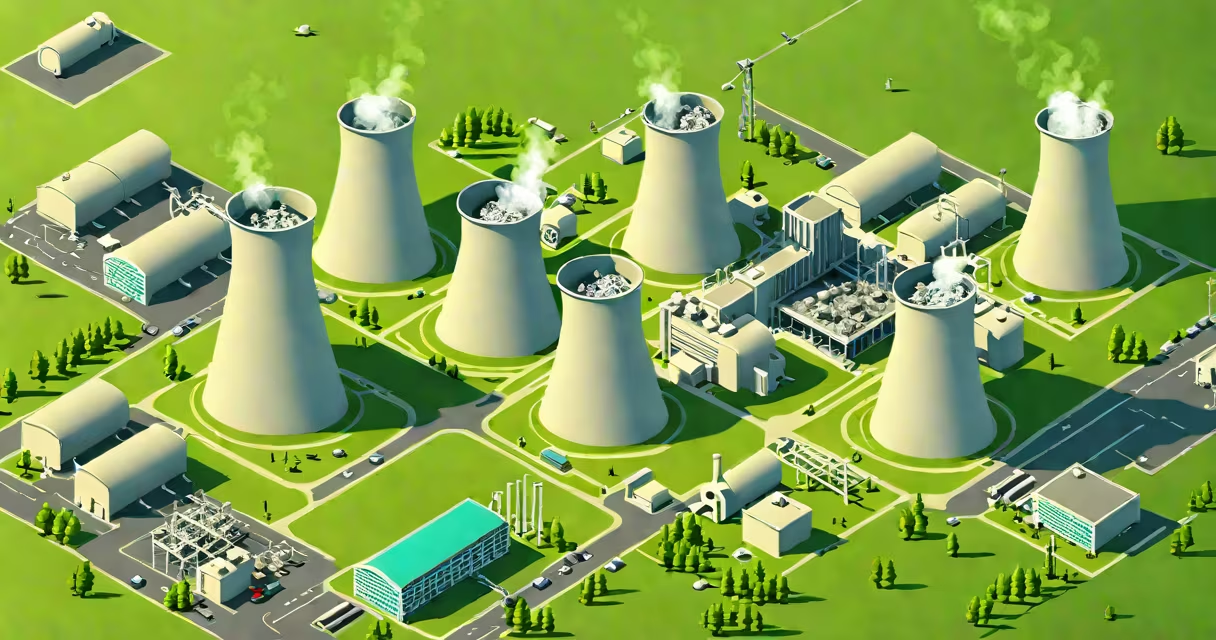
Nuclear energy generates electricity through controlled fission reactions in reactors, powers naval vessels like aircraft carriers and submarines, supports medical diagnostics and treatments, and enables long-duration space exploration. It provides reliable, low-carbon baseload power and operates continuously for 18 to 24 months between refueling cycles.
At its core, nuclear energy releases heat from splitting uranium-235 or plutonium-239 atoms in a process called fission. This heat boils water to produce steam, which spins turbines connected to generators. The U.S. Department of Energy confirms that nuclear plants operate at over 90% capacity factor-higher than solar, wind, or natural gas plants-making them ideal for consistent grid supply.
Global nuclear reactors produced 2,600 terawatt-hours of electricity in 2022, enough to power over 700 million homes annually. France derives 68% of its electricity from nuclear sources, while Finland's Olkiluoto 3 reactor supplies 10% of the country's total demand. These numbers reflect the scale and reliability of nuclear energy in national grids.
Nuclear power plants use pressurized water reactors (PWRs), boiling water reactors (BWRs), and advanced designs like small modular reactors (SMRs). In a PWR, coolant circulates through the reactor core under high pressure to prevent boiling. Heat transfers to a secondary loop where steam forms, driving turbines. Afterward, steam condenses and returns to the system in a closed loop.
Each reactor unit typically produces between 600 and 1,200 megawatts of electrical output. A single fuel rod contains about 30 grams of enriched uranium-enough to power a typical household for over 20 years. Fuel assemblies last 18 to 24 months before requiring replacement, during which operators shut down the reactor for refueling.
The International Atomic Energy Agency (IAEA) reports that modern reactors have multiple safety layers including containment domes, emergency cooling systems, and automated shutdown mechanisms. During a loss-of-coolant accident, control rods drop into the core within seconds to halt fission and prevent meltdown.
Nuclear energy serves four major sectors: electricity generation, maritime propulsion, medicine, and space exploration. Electricity accounts for over 90% of all nuclear applications. The remaining uses use unique properties such as high energy density and long operational life.
| Application | Energy Source | Key Example | Output Duration |
|---|---|---|---|
| Electricity Generation | Fission (U-235) | Palisades Reactor (Michigan, USA) | 18-24 months continuous operation |
| Naval Propulsion | Fission (High-enriched uranium) | Nimitz-class aircraft carrier (USS Abraham Lincoln) | 20+ years without refueling |
| Medical Imaging & Therapy | Radioisotopes (e.g., Mo-99) | Mayo Clinic PET scans using F-18 | Short-lived isotopes (hours to days) |
| Space Exploration | Radioisotope Thermoelectric Generators (RTGs) | Cassini probe to Saturn | 15+ years of steady power |
Medical applications rely on radioisotopes produced in research reactors. Molybdenum-99, generated in facilities like the National Research Universal reactor in Canada, decays into technetium-99m-the most widely used medical isotope for imaging heart and brain conditions. Over 40,000 procedures daily depend on this supply chain.
Space missions use RTGs, which convert heat from radioactive decay into electricity. The Voyager 1 spacecraft, launched in 1977, still transmits data from beyond our solar system thanks to its three plutonium-238-powered RTGs. These units provide stable power in environments too cold or distant for solar panels.
Nuclear energy is often conflated with nuclear weapons. While both involve fission, weapon-grade uranium requires enrichment to over 90% U-235. Power reactors use fuel enriched to only 3-5%, making it unsuitable for weapons. The IAEA verifies enrichment levels globally to prevent diversion.
Another myth is that nuclear plants emit large amounts of CO₂. In reality, lifecycle emissions average 12 grams of CO₂ per kilowatt-hour-lower than wind (11 g/kWh) and solar (48 g/kWh), according to the IPCC's Sixth Assessment Report. Nuclear remains one of the lowest-emission energy sources available.
A lesser-known fact: spent nuclear fuel contains 95% unused uranium and 1% plutonium. Advanced reprocessing techniques can recover these materials for reuse in new fuel. France recycles 90% of its spent fuel via the La Hague facility, reducing waste volume by 90% compared to direct disposal.
In 2019, I toured the Palo Verde Generating Station in Arizona-the largest nuclear power plant in the U.S.-and witnessed the control room's calm precision during a routine shift. Operators monitored reactor parameters in real time, with alarms set to trigger only at extreme thresholds. The plant's three units collectively supply 13% of Arizona's electricity, operating at 95% availability.
During the tour, a technician explained that each reactor's fuel core contains around 180 fuel assemblies, each holding 200 fuel rods. When replaced, the spent fuel is stored in wet pools for five years before moving to dry casks. All storage is monitored remotely, with radiation levels measured hourly.
For context, a single 1,000 MW reactor produces about 8.7 million tons of CO₂-equivalent emissions avoided annually compared to coal-fired plants. That's equivalent to removing 1.5 million cars from the road each year.
Nuclear energy differs from hydroelectric and geothermal sources in energy source and scalability. Hydroelectric plants require specific geography-rivers, dams, and reservoirs-and face seasonal variability. Geothermal energy relies on underground heat gradients and is limited to tectonically active zones. Nuclear plants can be sited almost anywhere, independent of climate or terrain.
While nuclear fission splits atoms, fusion-still experimental-combines light nuclei. Fusion promises more energy per reaction and less long-lived waste. ITER, the international fusion project in France, aims to demonstrate net energy gain by 2035. But until then, fission remains the only proven method for commercial-scale nuclear energy.
Nuclear energy is not a substitute for renewable integration-it complements it. Grids with high wind and solar penetration benefit from nuclear's constant output. Germany's phase-out of nuclear power led to increased coal use, raising emissions despite expanding renewables. Studies show that combining nuclear with wind and solar reduces carbon intensity more effectively than relying solely on intermittent sources.
Nuclear energy powers cities, propels warships, treats disease, and explores space. Its applications span decades of continuous operation, low emissions, and high energy density. From generating electricity to enabling deep-space missions, nuclear energy delivers reliable, scalable power where other sources fall short.