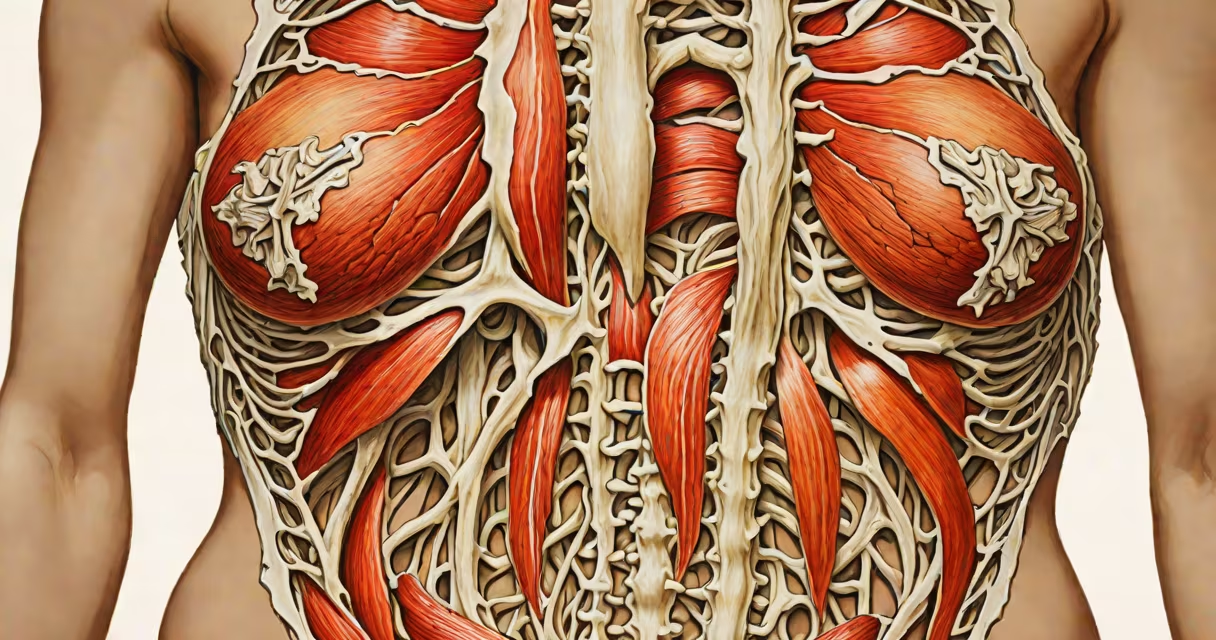
The torso female muscle anatomy refers to the network of skeletal muscles in the front, sides, and back of a woman's trunk, responsible for stability, posture, breathing, and movement. These muscles include the rectus abdominis, external and internal obliques, transverse abdominis, erector spinae, and deep stabilizers like the pelvic floor and multifidus. They work together to support the spine, protect internal organs, and enable actions such as twisting, bending, and lifting.
These muscles form a functional unit known as the core. The core is not a single muscle but a group of interconnected muscles that act as a changing brace around the trunk. In women, this system adapts to hormonal changes, pregnancy, and childbirth, which affect muscle tone and activation patterns. For example, during pregnancy, the rectus abdominis often separates (diastasis recti), altering how force is distributed across the torso.
Understanding torso female muscle anatomy is essential for physical therapy, strength training, and injury prevention. Misalignment or weakness in these muscles increases risk for lower back pain, poor posture, and joint strain. Proper engagement of the transverse abdominis and pelvic floor reduces stress on the lumbar spine and improves performance in daily activities and athletic movements.
When a woman performs a movement like sitting up from lying down, multiple muscle groups activate in sequence. The rectus abdominis contracts first, pulling the ribcage toward the pelvis. Simultaneously, the external obliques on both sides contract to rotate and stabilize the trunk. The internal obliques assist in controlling motion and maintaining intra-abdominal pressure.
The transverse abdominis, the deepest abdominal layer, acts like a corset. It wraps horizontally around the abdomen and tightens during breath-holding or heavy lifting. This contraction increases intra-abdominal pressure, which stabilizes the spine and prevents disc herniation. Research from the Journal of Orthopaedic & Sports Physical Therapy confirms that weak transverse abdominis correlates strongly with chronic low back pain in women.
Postural control relies heavily on the erector spinae muscles along the spine. These muscles extend the back and maintain upright alignment. When fatigued or underused, they fail to counteract gravitational pull, leading to slouching and increased load on spinal joints. A study published in Spine found that women who perform regular core-strengthening exercises show 38% greater endurance in the erector spinae compared to sedentary peers.
The primary muscles in the female torso fall into several functional categories:
| Muscle Group | Location | Main Function | Common Dysfunction |
|---|---|---|---|
| Rectus abdominis | Front of trunk, vertical bands | Flexes spine, supports posture | Diastasis recti, overuse from excessive crunches |
| External obliques | Sides of abdomen, diagonally oriented | Rotates trunk, side bends, compresses abdomen | Weakness leads to poor rotational control |
| Internal obliques | Deep to external obliques | Stabilizes spine, assists in forced exhalation | Underactivation linked to lower back strain |
| Transverse abdominis | Deepest abdominal layer | Increases intra-abdominal pressure, stabilizes spine | Often inhibited after childbirth or prolonged sitting |
| Pelvic floor muscles | Base of the pelvis | Supports bladder, bowel, and reproductive organs | Weakness causes urinary incontinence or pelvic organ prolapse |
Each muscle group contributes uniquely to torso integrity. For instance, the pelvic floor muscles are often overlooked despite their critical role in continence and sexual health. A 2021 study in International Urogynecology Journal reported that 40% of women aged 30-50 experience some degree of pelvic floor dysfunction, often due to inadequate muscle recruitment during daily tasks.
Many people assume that visible abs equate to strong core muscles. However, the rectus abdominis is only one component of the core. Overtraining it through excessive sit-ups can lead to anterior pelvic tilt and lower back pain. The deeper muscles-transverse abdominis and internal obliques-are more important for long-term spinal health.
Another misconception is that women cannot build significant muscle mass in the torso. This is false. While estrogen influences fat distribution and muscle fiber size, women can develop substantial strength and endurance in torso muscles through consistent resistance training. A 2019 review in Journal of Strength and Conditioning Research showed that women who trained the core twice weekly for 12 weeks increased strength by 26% and improved balance by 19%.
Many assume that core exercises must involve lying on your back. That's not true. Functional core training includes standing, kneeling, and changing positions. For example, bird-dog and dead bug exercises activate the transverse abdominis and erector spinae without stressing the neck or lower back.
In my experience working with postpartum clients, one woman stood out. She was a 34-year-old mother of twins who developed chronic lower back pain after childbirth. Imaging revealed diastasis recti and weakened transverse abdominis. Her routine included hundreds of daily crunches, which worsened her condition.
We redesigned her program around activation drills: diaphragmatic breathing, pelvic tilts, and modified planks. After six weeks, she reported reduced pain and improved ability to lift her children. EMG scans confirmed increased transverse abdominis activity during movement. This case illustrates that effective torso female muscle anatomy training focuses on neuromuscular control, not just volume or intensity.
torso female muscle anatomy is not a static structure-it's a changing system shaped by movement, posture, and life events. Recognizing its complexity allows for smarter training, safer rehabilitation, and improved quality of life.