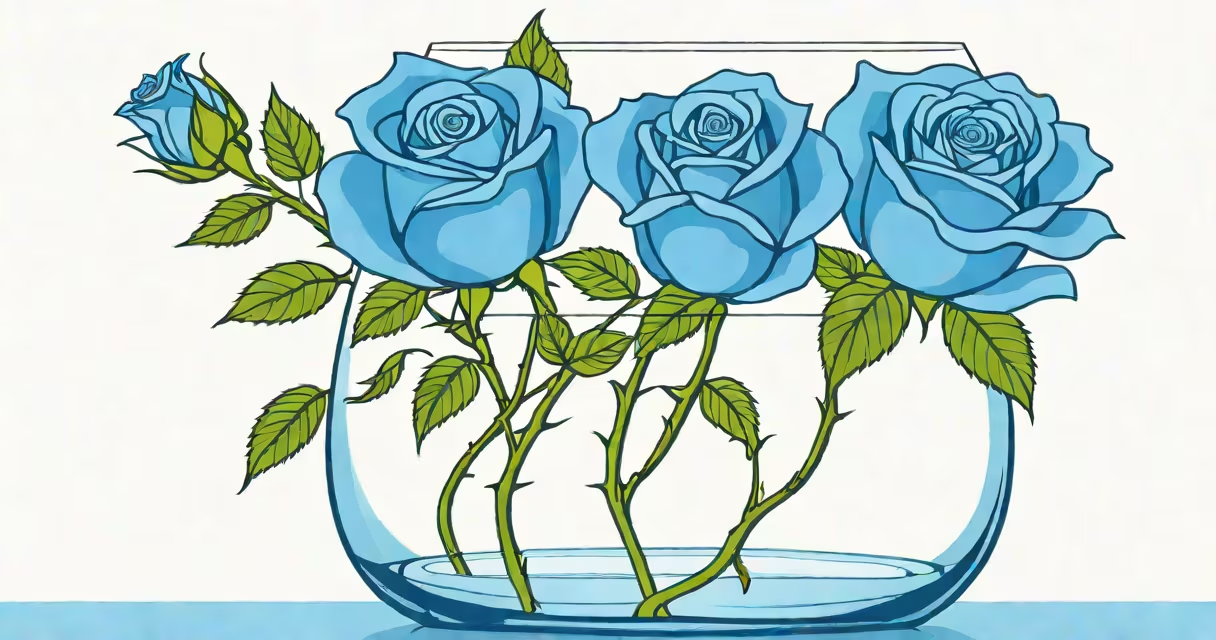
Blue roses symbolize mystery, the unattainable, and the impossible-representing a desire for something beyond reach, such as a dream, ideal, or love that cannot be fulfilled. They are not naturally occurring and are cultivated through selective breeding or dyeing.
True blue roses do not exist in nature. The color blue is absent in the Rosa genus due to a lack of the pigment delphinidin, which produces blue hues in other plants. All blue roses seen commercially are either artificially dyed or genetically modified. The first successful genetically engineered blue rose was created in 2004 by Florigene, a biotech company, using genes from pansies and irises to introduce blue pigmentation.
Despite their artificial origin, blue roses carry deep symbolic weight. In floral language, they signify a yearning for the impossible-a romantic ideal, a lifelong ambition, or a connection that remains out of reach. This meaning makes them useful in personal gestures, especially when expressing admiration for someone who embodies an unachievable standard.
There are three primary methods to produce blue roses: dyeing, genetic modification, and hybridization. Dyeing is the simplest and most common method. Cut roses are placed in a solution of blue food coloring and water. The stems absorb the liquid, turning the petals blue within hours. This process is temporary-the color fades as the flower wilts.
Genetic modification involves inserting genes responsible for blue pigment production into the rose genome. Florigene's "Blue Magic" rose, released in 2004, used genes from the pansy (Viola tricolor) and the iris (Iris germanica) to express delphinidin. The resulting flowers have a true blue hue, stable through the bloom cycle. These roses are patented and sold under controlled cultivation.
Hybridization attempts to create blue roses through crossbreeding, but no natural blue rose exists. Breeding programs have produced purple or lavender-toned roses, but never a pure blue. Scientists continue research into modifying anthocyanin pathways in roses to achieve stable blue pigmentation without foreign DNA.
| Method | Color Stability | Cost | Use Case |
|---|---|---|---|
| Dyeing | Low (fades quickly) | Low | Floral arrangements, short-term displays |
| Genetic Modification | High (permanent) | High | Commercial sale, special events |
| Hybridization | N/A (no true blue achieved) | Medium | Research, experimental breeding |
Blue roses appear frequently in literature, art, and film as symbols of longing or the unrealizable. In The Great Gatsby, the green light across the bay represents Gatsby's unreachable dream-similarly, a blue rose could symbolize a love or goal that remains just out of grasp.
In modern gift-giving, blue roses are chosen to convey admiration for someone who inspires awe. A person might give a blue rose to a colleague admired for their brilliance, even if romantic feelings aren't involved. The flower communicates respect for excellence that feels distant or unattainable.
They are also used in wedding bouquets to represent a love that transcends reality-idealized, eternal, or destined to be challenging. Some couples choose blue roses to mark a relationship that defies expectations or societal norms.
Blue roses are often mistaken for naturally occurring blue flowers like blue hydrangeas or blue forget-me-nots. These are unrelated species and do not share the same symbolic meaning. Hydrangeas symbolize gratitude or heartfelt emotion, while forget-me-nots evoke remembrance.
Another misconception is that blue roses represent loyalty or trust. That meaning belongs to red or white roses. Blue roses are not associated with fidelity. Their symbolism lies in aspiration, not commitment.
A key distinction: blue roses are not inherently negative. While they suggest impossibility, they also reflect hope. The act of desiring something unattainable is part of human motivation. A blue rose can honor a dream, not mourn its failure.
I once attended a gallery exhibition where artists used dyed blue roses to explore themes of memory and loss. One piece featured a dried blue rose embedded in resin, labeled "The Thing I Could Not Have." The work resonated because it acknowledged both the beauty and pain of longing. The flower wasn't real-but the feeling it represented was.
According to the Royal Horticultural Society, no naturally occurring blue roses exist, and all commercial blue roses require artificial intervention (RHS). The U.S. Department of Agriculture confirms that genetic engineering techniques have enabled the creation of blue pigmentation in roses, though these remain limited to specific cultivars (USDA).
What do blue roses stand for? They stand for the pursuit of the impossible-dreams, ideals, and loves that exist beyond reach. Their rarity, both biological and cultural, gives them lasting emotional power. Whether dyed or genetically engineered, they remain potent symbols of yearning and wonder.