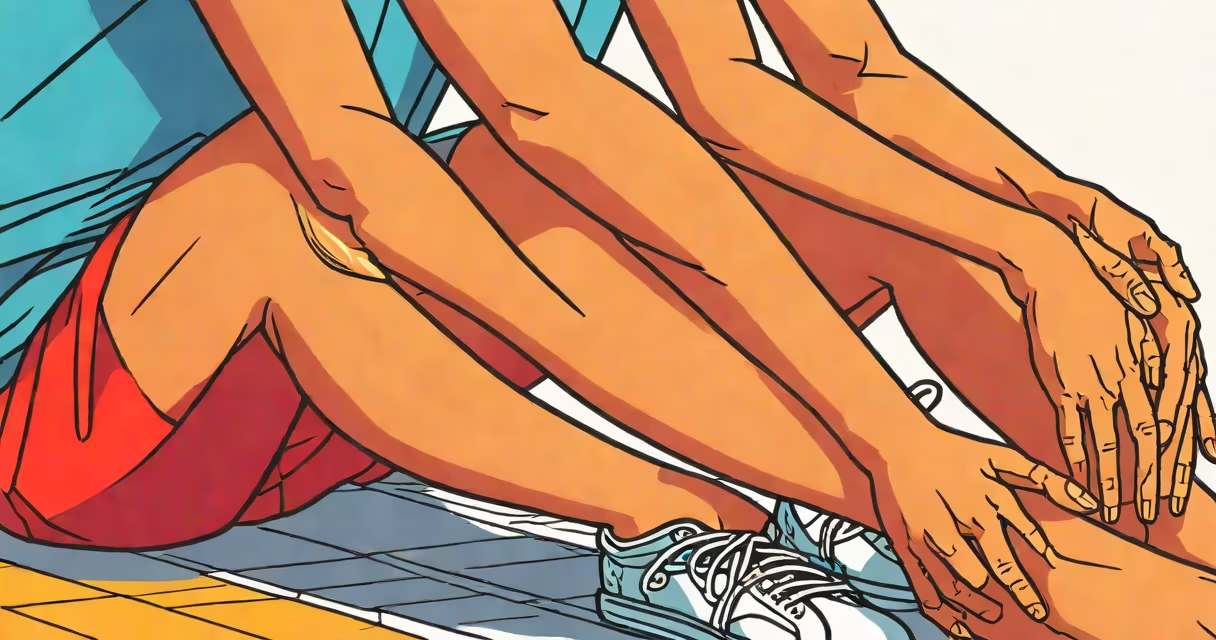
Pain below my kneecap refers to discomfort localized beneath the front of the knee joint, typically under or just below the patella (kneecap). It commonly arises from overuse, misalignment, or degeneration of structures involved in knee movement.
This pain often worsens during activities that load the knee, such as climbing stairs, squatting, or prolonged sitting with bent knees. It may feel sharp, dull, or achy and tends to develop gradually rather than appear suddenly.
Common underlying conditions include patellofemoral pain syndrome (PFPS), patellar tendinitis (jumper's knee), and early-stage osteoarthritis. These differ in cause, location, and response to treatment.
The knee joint functions as a hinge between the femur (thigh bone) and tibia (shin bone), stabilized by ligaments and guided by the patella. The patella sits in a groove at the end of the femur and moves up and down during leg flexion and extension.
When the quadriceps muscles contract, they pull on the patellar tendon, which connects the kneecap to the tibia. Repeated stress on this tendon or misalignment of the patella can lead to inflammation, microtears, or cartilage wear.
For example, someone who runs 10 miles weekly without proper warm-up or strength training may develop irritation in the patellar tendon. The pain usually starts as a dull ache during activity and progresses to persistent soreness even at rest.
Several distinct conditions can produce pain below the kneecap. They vary in onset, location, and risk factors.
| Type | Location of Pain | Typical Triggers | Key Risk Factors |
|---|---|---|---|
| Patellofemoral pain syndrome (PFPS) | Under or around the kneecap | Sitting long periods, descending stairs, squatting | Weak hip abductors, flat feet, sudden increase in activity |
| Patellar tendinitis (jumper's knee) | Just below the kneecap, at the tendon insertion | Jumping, running, repetitive knee bending | High-impact sports, poor landing mechanics |
| Osteoarthritis | Beneath the kneecap, often symmetric | Weight-bearing, prolonged standing | Aging, prior injury, obesity |
Patellofemoral pain syndrome affects about 23% of runners and is most common in young adults and adolescents. It results from uneven pressure on the patella due to muscle imbalances or poor tracking.
Patellar tendinitis occurs in athletes who jump frequently-basketball players, volleyball players, and track jumpers. A 2021 study in the Journal of Orthopaedic & Sports Physical Therapy found that 60% of elite jumpers reported symptoms consistent with tendinopathy.
Osteoarthritis develops slowly. It involves the breakdown of cartilage in the joint, leading to bone-on-bone contact and pain. According to the CDC, nearly 1 in 5 adults aged 45 and older report knee osteoarthritis symptoms.
Many people assume pain below the kneecap is always due to a single issue-like "runner's knee"-but the term is misleading. Runner's knee is a lay term for PFPS, but it doesn't apply to all cases.
Another frequent error is attributing the pain solely to the knee itself. In reality, weak gluteal muscles or tight hamstrings can alter knee alignment and contribute to strain. A 2019 study in the British Journal of Sports Medicine showed that hip strength deficits were present in 78% of patients with PFPS.
Some confuse pain below the kneecap with meniscus tears. Meniscal injuries typically cause pain along the joint line, not directly under the kneecap. Swelling, locking, or catching sensations suggest different pathology.
I once treated a 28-year-old recreational runner who reported pain below the kneecap after increasing her weekly mileage from 15 to 30 miles. She described a dull ache that worsened when descending hills and sitting for long periods.
Physical exam revealed tenderness at the patellar tendon insertion and reduced quadriceps strength. MRI showed no structural damage but signs of chronic tendon stress. Diagnosis: patellar tendinitis.
After six weeks of eccentric strengthening exercises (slow lowering of the leg while standing on the toes), reducing running volume, and wearing a patellar strap during activity, her pain resolved completely.
Pain below my kneecap becomes concerning if it persists beyond two weeks despite rest, swelling appears, or the knee gives way during walking. These signs may indicate a more serious condition like a stress fracture or ligament tear.
Imaging such as X-ray or MRI may be needed to rule out fractures or cartilage damage. The American Academy of Orthopaedic Surgeons recommends seeing a specialist if pain interferes with daily function or worsens at night.
Early intervention improves outcomes. A physical therapist can assess movement patterns and correct biomechanical faults before long-term damage occurs.