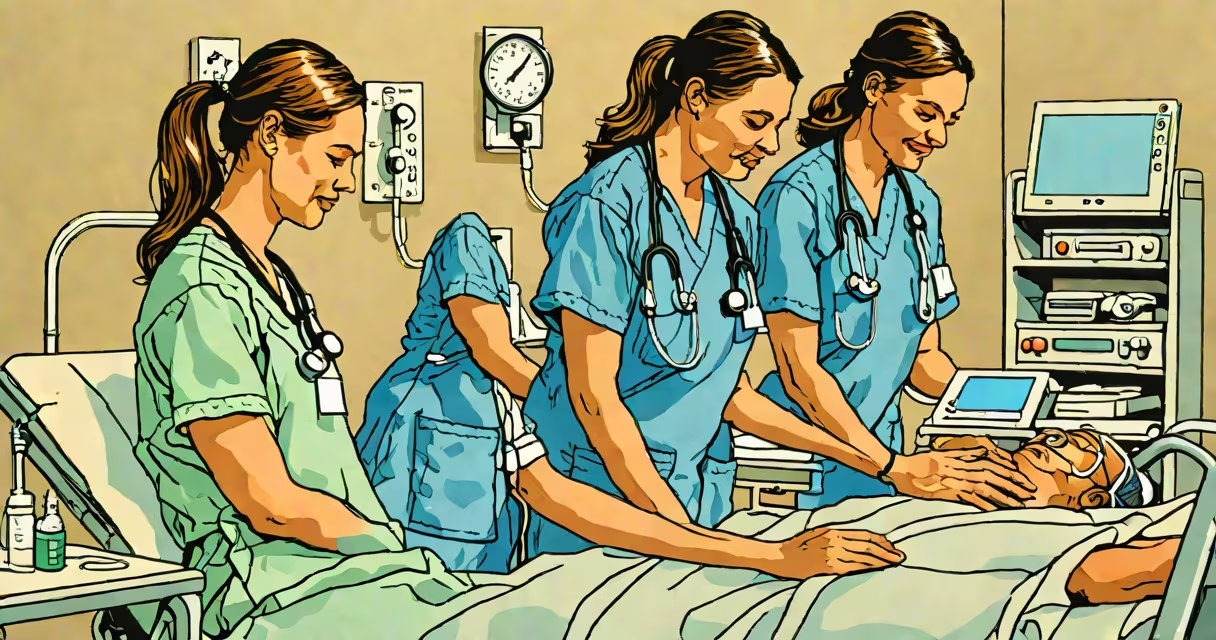
Nursing students perform direct patient care tasks under licensed nurse supervision during clinicals, gaining hands-on experience in hospitals, clinics, and long-term care facilities. These rotations are required by state boards and accredited nursing programs to meet federal education standards.
Clinicals are the bridge between classroom theory and real-world practice. Students apply pharmacology, anatomy, and pathophysiology knowledge while working with actual patients. They take vitals, administer medications, document care, and participate in care planning-all under the watchful eye of a registered nurse or clinical instructor.
The National Council of State Boards of Nursing (NCSBN) requires clinical hours as part of licensure eligibility. A 2022 NCSBN report confirmed that 98% of accredited nursing programs include clinical rotations lasting 500-1,000 hours across multiple specialties.
Each clinical session lasts 6-12 hours and occurs weekly during the academic term. Students are assigned to specific units-medical-surgical, pediatrics, obstetrics, mental health, or emergency care-based on their program's curriculum sequence.
Before entering the clinical site, students complete orientation, sign confidentiality agreements, and receive a uniform and identification badge. They attend a pre-conference meeting with their instructor to review patient assignments, expected learning objectives, and safety protocols.
During the shift, students follow a structured workflow: assess patients using standardized tools like the Glasgow Coma Scale, assist with procedures such as catheter insertion or wound dressing changes, and update electronic health records (EHRs) under supervision. After the shift, they reflect on experiences in a debriefing session.
Nursing programs rotate students through different care environments to build diverse competencies. The table below outlines common clinical settings and typical student responsibilities.
| Setting | Typical Student Tasks | Supervising Role |
|---|---|---|
| Medical-Surgical Unit | Monitor important signs, assist with ambulation, prepare IV medications, document care plans | Registered Nurse (RN) |
| Pediatrics Ward | Administer oral meds, comfort crying infants, explain procedures to parents | RN or Pediatric Nurse Practitioner |
| Emergency Department | Support triage, assist with rapid assessments, manage equipment during crises | Charge Nurse or ER RN |
| Long-Term Care Facility | Perform fall risk assessments, coordinate mobility aids, support end-of-life care | Staff RN or Licensed Practical Nurse (LPN) |
Students may also train in simulation labs before entering real clinical sites. These labs replicate high-acuity scenarios-such as cardiac arrest or sepsis-with mannequins that respond to interventions. According to the Association of American Medical Colleges (AAMC), simulation-based training improves clinical decision-making accuracy by 34% compared to traditional methods alone.
Many assume nursing students perform complex procedures independently. This is false. All actions require approval and oversight. A student cannot start an IV, prescribe medication, or make treatment decisions without a licensed provider present.
Another misconception is that clinicals are solely about physical tasks. In reality, students spend significant time communicating with patients and families. They learn to explain diagnoses in plain language, obtain informed consent, and provide emotional support during stressful moments.
I once observed a student in a geriatric unit calmly explain a new medication regimen to a patient with dementia. The patient's daughter later told me she felt reassured because the student "spoke slowly and listened." That moment revealed how clinicals teach empathy as much as technique.
Clinicals reduce the gap between academic learning and professional readiness. A 2021 study published in the Journal of Nursing Education found that students who completed full clinical requirements scored 22% higher on NCLEX-RN practice exams than those with reduced hours.
These experiences also expose students to systemic challenges. They witness understaffing, communication breakdowns, and disparities in access to care-issues that shape future advocacy efforts.
For example, a student in a rural clinic noted that patients often delayed seeking care due to transportation barriers. This insight led her to join a community health initiative focused on mobile outreach-something she wouldn't have considered without clinical exposure.
After completing clinicals, students are better prepared for the NCLEX-RN exam and entry-level positions. The American Nurses Association (ANA) states that clinical experience is a key predictor of early career success and retention in nursing roles.
Understanding what nursing students do in clinicals reveals a structured, supervised environment designed to build competence and confidence. These rotations are not optional-they are essential for safe, effective patient care.