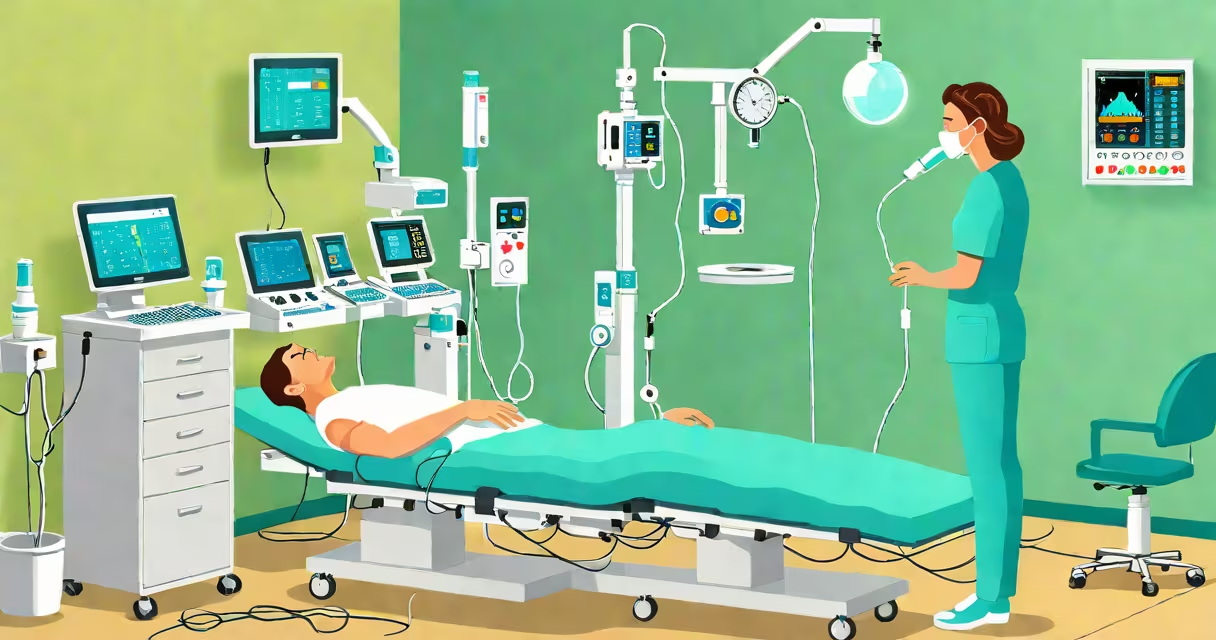
An anesthesia tech prepares and maintains anesthesia delivery systems, assists anesthesiologists during surgery, and ensures patient safety through equipment readiness and monitoring. They work in operating rooms, ambulatory surgery centers, and hospitals, supporting surgical teams before, during, and after procedures.
Anesthesia techs are trained professionals who handle the technical side of anesthesia administration. Their primary responsibility is to set up, test, and maintain anesthesia machines, vaporizers, ventilators, and monitoring devices. They verify that all equipment functions within safe parameters before surgery begins. This includes checking gas cylinder pressures, calibrating flow meters, and confirming that alarms and backup systems are operational.
During surgery, they monitor important signs displayed on anesthesia monitors, assist with positioning patients, and hand instruments or supplies to the anesthesiologist. After surgery, they clean and disinfect equipment, document usage, and prepare machines for the next procedure. Their work reduces the risk of equipment failure during critical moments.
Every surgical case begins with a pre-op check. The anesthesia tech arrives early to inspect the anesthesia machine. They confirm that oxygen, nitrous oxide, and volatile anesthetic agents are properly connected and that the scavenging system is functioning. A malfunction in any component can delay surgery or endanger the patient.
For example, during a laparoscopic cholecystectomy, the tech verifies that the ventilator is set to deliver 6 mL/kg tidal volume and that the end-tidal CO₂ monitor is calibrated. If the machine fails to deliver the correct concentration of sevoflurane, the tech adjusts the vaporizer and runs a leak test. They then notify the anesthesiologist, who may decide to switch to a different agent or delay the case.
After the procedure, the tech performs a post-op checklist: emptying waste gas lines, cleaning the breathing circuit, and logging device usage. These steps prevent cross-contamination and ensure compliance with hospital infection control policies.
There are two main levels of certification recognized in the U.S.: Certified Anesthesia Technician (Cer.A.T.) and Certified Anesthesia Technologist (Cer.A.T.). The Cer.A.T. credential is issued by the American Society of Anesthesia Technologists and Technicians (ASATT), while the Cer.A.T. requires a bachelor's degree and clinical training.
| Role Type | Education Requirement | Certification Body | Typical Work Setting |
|---|---|---|---|
| Technician (Cer.A.T.) | Associate degree or technical certification | ASATT | Hospitals, outpatient clinics |
| Technologist (Cer.A.T.) | Bachelor's degree in anesthesia technology | ASATT | Academic medical centers, research facilities |
According to the Bureau of Labor Statistics, employment for anesthesia technicians is projected to grow 11% from 2022 to 2032-faster than average. This growth stems from increased surgical volumes and aging populations requiring more procedures.
Many assume anesthesia techs administer drugs. That is incorrect. Only licensed anesthesiologists, nurse anesthetists, or physician assistants may deliver anesthetic agents. The tech's role is strictly supportive: they prepare the equipment, monitor machine performance, and assist with setup and cleanup.
A frequent error is confusing anesthesia techs with surgical technologists. Surgical techs focus on sterile field management and instrument passing during operations. Anesthesia techs specialize in anesthesia delivery systems and patient monitoring devices. The two roles often collaborate but have distinct scopes.
Another misconception is that anesthesia techs only work in operating rooms. While ORs are the most common setting, they also support pain management clinics, emergency departments, and intensive care units. In trauma centers, they may assist in rapid sequence intubations during resuscitation.
I observed a morning shift at a Level I trauma center. At 6:30 a.m., the anesthesia tech arrived to prepare three operating rooms. Room 1 was scheduled for a craniotomy. The tech checked the anesthesia machine's oxygen sensor, confirmed the vaporizer was filled with desflurane, and tested the low-pressure alarm. When the alarm failed to trigger, they flagged the issue and initiated a replacement protocol.
During the case, the tech monitored the end-tidal CO₂ waveform and noticed a sudden drop. They alerted the anesthesiologist, who discovered a dislodged endotracheal tube. The tech quickly retrieved a new tube and assisted with re-intubation. The procedure resumed within five minutes.
After surgery, the tech cleaned the breathing circuit using a high-level disinfectant, documented the machine's usage hours, and reported a minor leak in the inspiratory limb. The hospital's biomedical engineering team repaired it the next day.
Studies show that equipment-related errors contribute to 15% of intraoperative adverse events, according to the Anesthesia Patient Safety Foundation. Anesthesia techs reduce this risk by ensuring machines are calibrated and functional before patient contact.
At Johns Hopkins Hospital, a 2021 audit found that surgical delays due to anesthesia machine malfunctions dropped by 40% after implementing standardized pre-op checks led by certified techs. The study emphasized that consistent equipment readiness improves both efficiency and patient outcomes.
When I worked briefly as a lab assistant in a university medical center, I saw how a single uncalibrated ventilator caused a failed animal anesthesia induction. The tech had skipped the calibration step. That incident reinforced the importance of routine checks-even when time is tight.
Understanding what an anesthesia tech does clarifies their essential role in surgical safety. They are not just equipment handlers-they are frontline defenders against technical failure in high-stakes environments.