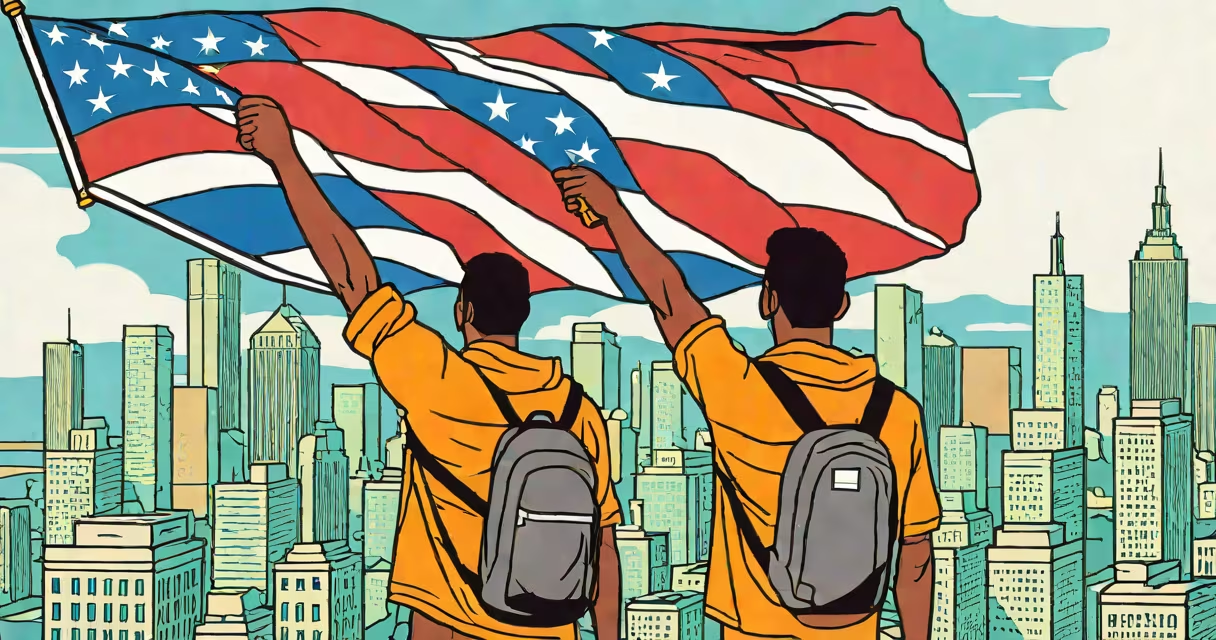
Nationalism is a political and cultural ideology that places the nation-defined by shared language, history, territory, or ethnicity-at the center of identity and collective action. It asserts that national unity should guide policy, loyalty, and social cohesion.
Nationalists believe the nation is the primary source of belonging and legitimacy. They advocate for policies that protect national borders, preserve cultural heritage, and promote domestic economic interests. This orientation often shapes foreign policy, immigration laws, and education systems.
While nationalism can inspire civic pride and national resilience, it can also justify exclusion, xenophobia, and authoritarian control. The term is not inherently positive or negative-it reflects a worldview shaped by context, history, and interpretation.
Nationalism operates through symbols, narratives, and institutions that reinforce a shared sense of identity. Flags, anthems, public holidays, and state-controlled media serve as tools to cultivate national consciousness. These elements are not neutral-they are curated to emphasize continuity, sacrifice, and collective destiny.
For example, in Japan, the government promotes the concept of *wa* (harmony) and the myth of imperial continuity to sustain national unity. State schools teach a version of history that emphasizes national resilience and cultural uniqueness. This narrative fosters loyalty to the state and discourages dissent framed as disloyalty.
In contrast, in post-Soviet Ukraine, nationalism emerged as a response to Russian aggression. After the 2014 annexation of Crimea, nationalist movements gained traction among civilians who saw Ukrainian identity as under threat. Volunteer battalions formed, often using symbols like the black-and-yellow banner of the Ukrainian Insurgent Army, to signal resistance and cultural survival.
Nationalism is not monolithic. Scholars distinguish between civic and ethnic nationalism based on how the nation is defined.
| Type | Definition | Example | Key Difference |
|---|---|---|---|
| Civic Nationalism | Defines the nation by shared values, citizenship, and legal rights regardless of ethnicity. | France's republican model: "Liberté, égalité, fraternité" applies to all citizens. | Open to immigrants who adopt national ideals. |
| Ethnic Nationalism | Links nationhood to bloodline, ancestry, or ethnic origin. | Pre-World War II Germany: Nazi ideology tied German identity to racial purity. | Excludes those deemed outsiders based on heritage. |
A key distinction lies in inclusivity. Civic nationalism allows for assimilation; ethnic nationalism assumes a fixed, inherited identity. The former supports pluralism; the latter often leads to marginalization.
Some forms of nationalism blend both models. India's constitution declares itself a secular republic, yet Hindu nationalist groups have pushed for a state defined by Hindu cultural dominance. This tension fuels ongoing debates about what it means to belong in a diverse nation.
Nationalism is frequently mistaken for patriotism. While both involve love of country, patriotism typically expresses affection for a nation's achievements and ideals without demanding exclusivity. Patriotism can coexist with global cooperation; nationalism often opposes it.
For example, during the 2020 pandemic, many Americans expressed patriotic pride in healthcare workers and scientific innovation. This was not nationalism-it focused on shared human effort. But when President Trump repeatedly invoked "America First" rhetoric, linking foreign aid cuts to national strength, he crossed into nationalist framing.
A less obvious point: nationalism is not always tied to political power. A person can be a nationalist without holding office. In 2016, a group of French high school students organized a protest against proposed immigration reforms. They wore yellow vests-a symbol adopted from the 2018 gilets jaunes movement-and chanted "La France, c'est nous" ("France is us"). Their actions were nationalist in tone, even though they lacked institutional authority.
Another misconception is that nationalism only exists in authoritarian regimes. In reality, democratic nations like Canada and New Zealand use nationalist narratives to promote unity. Canada's official multiculturalism policy includes national holidays like Canada Day, which celebrate both indigenous roots and colonial history. These events reinforce a shared identity without erasing diversity.
When Russia invaded Ukraine in February 2022, Ukrainian nationalists rallied around the idea of national survival. The government declared martial law and activated volunteer battalions. Citizens from Kyiv to Kharkiv took up arms, not necessarily because they identified as radical nationalists, but because they believed their nation's existence was at stake.
Ukrainian President Volodymyr Zelenskyy became a symbol of national resistance. His speeches, delivered in Ukrainian with minimal translation, emphasized unity and sovereignty. He said, "I need ammunition, not a ride," rejecting offers of evacuation. His refusal to leave the capital was interpreted as a nationalist act-not out of aggression, but out of commitment to national leadership during crisis.
This moment illustrates how nationalism functions not as a doctrine, but as a mobilizing force. It is not about ideology alone-it is about action, sacrifice, and perceived threat.
I once attended a community meeting in Portland, Oregon, where residents discussed local land-use policies. A woman stood up and said, "This neighborhood belongs to people who've lived here for generations. We're not asking to exclude anyone-we're asking to be heard." Her statement carried nationalist undertones: a claim to place-based identity, historical presence, and cultural continuity. She wasn't calling for violence or borders. But she was asserting that certain voices deserved priority in decisions affecting their home.
This moment showed me that nationalism isn't always loud or extreme. It can be quiet, localized, and defensive. It doesn't require a flag or a rally. It lives in the way people define belonging.
To be a nationalist is to see the nation as the central unit of meaning, loyalty, and political action. It is not synonymous with hatred or war-it can express pride, resilience, and protection of shared values. Yet it carries risks when it denies rights to minorities or dismisses international cooperation.
Understanding what it means to be a nationalist requires examining context, intent, and impact. Not all nationalist movements are the same. Some uphold democracy; others undermine it. The distinction lies not in the label, but in how identity is claimed and exercised.