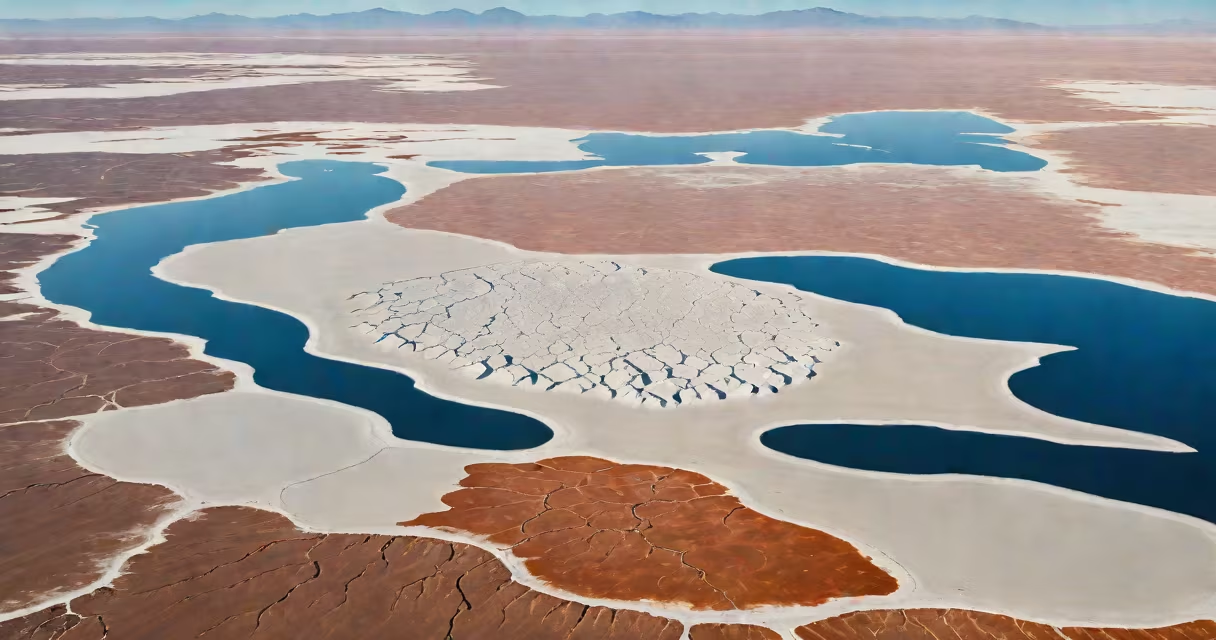
Strange places on Earth are natural locations with unusual geological, atmospheric, or ecological characteristics that defy common expectations. These sites include salt flats that reflect the sky like mirrors, lakes that float on water due to high mineral density, and caves with glowing underground rivers. They exist due to rare combinations of climate, geology, and chemistry.
These places aren't fictional or mythological-they're documented, accessible, and often visited. The Uyuni Salt Flat in Bolivia, for example, covers 10,582 square kilometers and becomes a giant mirror during the rainy season. Scientists have studied such sites to understand extreme environments and even test space equipment. NASA used the Salar de Uyuni to calibrate satellite instruments because its reflective surface mimics the Moon's surface.
Some strange places are dangerous. The Valley of Ten Thousand Smokes in Alaska contains fumaroles-cracks in the ground that emit hot gases. Others are deceptive: Lake Natron in Tanzania turns animals into stone-like statues due to high alkalinity. These sites challenge assumptions about what's possible in nature.
Most strange places arise from specific interactions between rock layers, water flow, temperature shifts, and chemical processes. For example, the Grand Prismatic Spring in Yellowstone National Park gets its vivid colors from thermophilic bacteria thriving in hot water. The water reaches 70°C (158°F), and different bacterial strains grow at different temperatures, creating rings of red, orange, yellow, and blue.
Mineral concentration plays a key role. When water evaporates slowly in closed basins, dissolved salts remain behind. Over thousands of years, this builds thick crusts. The Dead Sea, for instance, has a salinity of 34%, making it nearly impossible to sink. Swimmers float easily, and no fish survive. This high salt content results from evaporation in a desert basin with no outlet.
Some formations depend on rare atmospheric conditions. The Darvaza Gas Crater in Turkmenistan burns continuously since 1971, when Soviet geologists drilled into a methane-rich pocket and it collapsed. They expected the fire to burn out in weeks-but it hasn't. The crater remains a 60-meter-wide inferno fueled by natural gas seeping through porous rock.
These sites fall into distinct categories based on their dominant feature:
| Type | Key Feature | Example Location | Scientific Cause |
|---|---|---|---|
| Salt Flats | Flat, reflective surfaces formed by dried lake beds | Salar de Uyuni, Bolivia | Evaporation of saline water in arid regions |
| Alkaline Lakes | Lakes with pH levels above 10, killing most life | Lake Natron, Tanzania | High concentrations of sodium carbonate and silica |
| Gas Craters | Craters burning with continuous methane flames | Darvaza, Turkmenistan | Subsurface gas pockets ignited during drilling |
| Underground Rivers | Rivers flowing beneath rock layers | Waitomo Caves, New Zealand | Water dissolving limestone over millennia |
Each category reveals how Earth's systems interact under extreme conditions. Alkaline lakes form when volcanic activity introduces minerals into closed basins. Underground rivers develop where water erodes soluble rock like limestone, forming cave networks. These processes take thousands to millions of years-yet their effects are visible today.
Many assume strange places are man-made or mythical. The Door to Hell in Turkmenistan is often called "the end of the world." But it's not a portal-it's a result of human error. Soviet geologists drilled into a gas field in 1971, expecting to find oil. Instead, they hit a cavern filled with methane. To prevent gas release, they set it on fire. The flame has burned for over 50 years.
Another myth is that Lake Natron's petrified animals are supernatural. In reality, the lake's high alkalinity (pH 10-12) causes calcium carbonate to deposit on animal bodies, hardening them like stone. Photographers like Nicknamed have captured these forms, leading to viral images. But the process is purely chemical, not magical.
Even the idea that strange places are always remote is false. Some are near cities. The Blue Lagoon in Iceland, a popular tourist site, is a geothermal spa fed by runoff from a nearby power plant. Its milky-blue color comes from dissolved silica and minerals. It's not a natural lake-it's a byproduct of industrial heat use. Yet it feels otherworldly.
I've seen the Salar de Uyuni firsthand during a trip to South America. From a hilltop, the entire field looked like a liquid sky. The reflection was so perfect that planes flying overhead appeared to hover above the ground. I stood still for minutes, unsure whether I was looking at land or sky. The effect is strongest in January and February, when rain fills the shallow layer of water over the salt crust.
Scientists study these sites to understand extremophiles-organisms that survive in harsh conditions. The microbes in Lake Natron's waters thrive at pH levels that would destroy most life. Their enzymes function in alkaline solutions, offering insights for biotechnology. Researchers at the University of California, Riverside, have isolated genes from such organisms for use in industrial cleaning agents.
Remote sensing also benefits. The reflective surface of Salar de Uyuni allows satellites to measure Earth's curvature and atmospheric changes with high accuracy. According to NASA's Earth Observatory, the site is used annually to calibrate the calibration of orbiting sensors. Without such natural reference points, satellite data would drift over time.
These places aren't just curiosities. They inform climate science, biology, and engineering. The existence of stable microbial ecosystems in high-salinity lakes suggests that life could survive in similar conditions on Mars. The European Space Agency has modeled Martian soil using samples from the Atacama Desert, another strange place with low moisture and intense UV exposure.
What are the strange places on Earth? They are natural sites shaped by rare physical and chemical processes. From reflective salt flats to burning craters and petrifying lakes, they reveal how Earth's systems operate under extreme conditions. These locations are not fantasy-they are real, measurable, and scientifically valuable.
Understanding them requires moving beyond wonder to inquiry. Each site offers clues about planetary formation, survival limits, and environmental resilience. They remind us that Earth still holds mysteries, even in the age of satellites and drones.