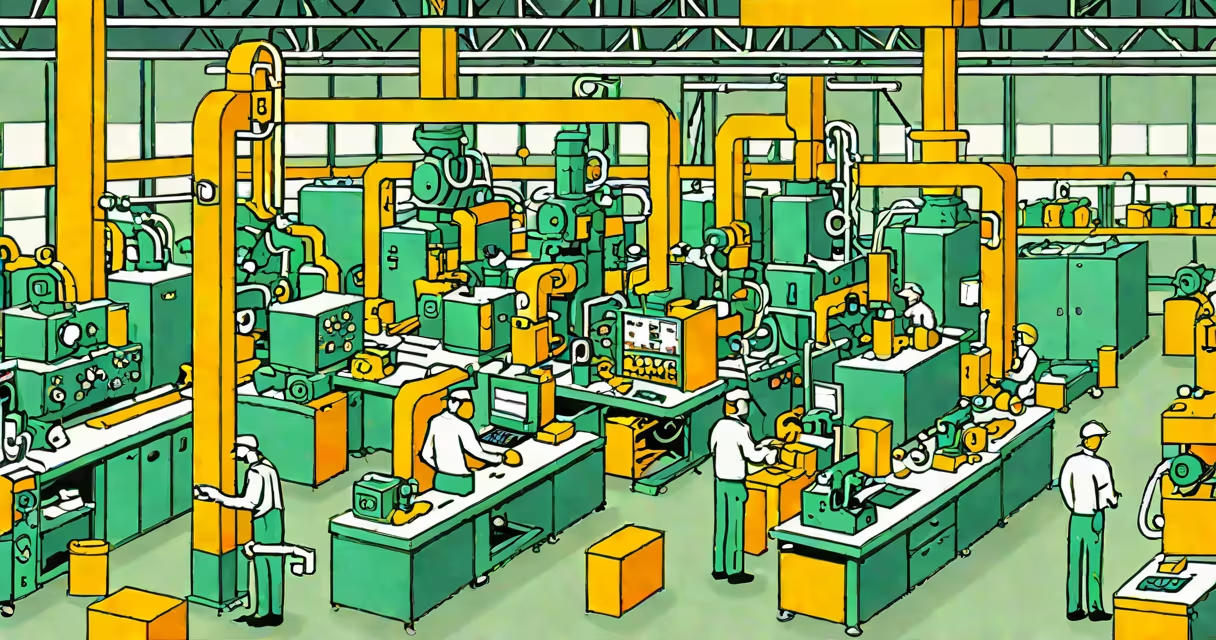
Being vertically integrated means a company controls multiple stages of its supply chain-from raw material sourcing through manufacturing, distribution, and retail-instead of relying on independent suppliers and partners. This structure allows direct oversight of quality, timing, and cost across the entire process.
Vertical integration is not a single action but a strategic decision to bring operations inside the company. A manufacturer that buys a mine to secure its ore supply, then builds its own factories and sells directly to consumers, is vertically integrated. The goal is to reduce dependency on external parties, cut inefficiencies, and capture more profit from each stage.
For example, Apple designs its own chips, manufactures them in partner plants, and sells them through its retail stores and online platform. This control extends from silicon wafer processing to customer service. The company doesn't outsource key components or rely on third-party retailers to set prices or manage inventory.
Vertical integration operates along a production continuum. A company can integrate backward-controlling upstream inputs-or forward-controlling downstream delivery. Backward integration involves acquiring suppliers of raw materials or components. Forward integration includes taking ownership of distribution channels, logistics, or sales platforms.
Backward integration reduces exposure to volatile input prices. When a carmaker owns its steel mill, it avoids sudden price spikes caused by global commodity fluctuations. Forward integration lets a brand bypass intermediaries. A clothing brand that runs its own e-commerce site and fulfillment centers can adjust pricing and shipping speed without consulting a distributor.
Both types require significant capital and operational coordination. A company must manage new facilities, hire specialized staff, and maintain consistent standards across diverse functions. But the trade-off is greater control and reduced risk from supply disruptions.
The table below outlines the two primary forms and their practical applications.
| Type | Definition | Example |
|---|---|---|
| Backward Integration | Controlling earlier stages of production (e.g., raw materials, parts) | A smartphone maker buying a lithium mining operation |
| Forward Integration | Controlling later stages (e.g., distribution, retail, customer service) | An organic food producer opening its own grocery stores |
Some companies pursue both. Amazon began as an online retailer, then built its own warehouses, delivery networks, and even developed its own cloud computing infrastructure (AWS). This blend of forward and backward integration gives Amazon deep control over product availability, delivery times, and data flow.
Not all integration is equal. Full vertical integration-owning every step from resource extraction to final sale-is rare. Most firms integrate selectively, focusing on stages where they gain the most advantage. A brewery may own its grain supplier and bottling plant but still contract brewing to a third party due to scale or expertise limitations.
Companies adopt vertical integration to improve efficiency, stabilize margins, and improve product consistency. According to Harvard Business Review, firms that integrate strategically can reduce supply chain delays by up to 30% and lower procurement costs by 15% compared to those using external vendors.
Control over quality is a major driver. A fashion brand that produces its own fabrics ensures dye consistency and fabric durability. Without integration, variations between batches from different mills could lead to customer complaints or returns. By managing the process internally, the brand maintains a uniform standard.
Another benefit is faster response to market changes. During the 2020 pandemic, many automakers struggled with chip shortages because they relied on external suppliers. Tesla, which had invested in in-house semiconductor design and testing, maintained production longer than rivals. Its ability to adapt quickly stemmed from internal control over critical components.
Many assume vertical integration automatically improves performance. That's not true. Over-integration can lead to higher fixed costs, reduced flexibility, and slower innovation. A company that owns its suppliers may become less responsive to market shifts because it's locked into long-term contracts or outdated equipment.
There's also a difference between vertical integration and vertical alignment. Alignment refers to coordinated relationships with partners-like a manufacturer and supplier sharing forecasts. Integration means actual ownership. A company can align with suppliers without integrating. Confusing the two leads to poor investment decisions.
One non-obvious fact: vertical integration doesn't eliminate risk-it redistributes it. Owning a factory doesn't protect against labor strikes, regulatory changes, or environmental damage. In fact, internal operations often face more scrutiny from regulators and unions. A company that integrates backward into mining may face stricter environmental reporting requirements than one that purchases materials externally.
I once visited a vertically integrated textile mill in North Carolina. The owner showed me how his team designed fabrics, spun yarn, dyed cloth, and shipped finished goods-all under one roof. He said the biggest challenge wasn't production-it was hiring skilled workers. Even with full control, he couldn't scale fast enough during peak demand because training new staff took months. That experience taught me that integration demands more than capital-it requires talent and adaptability.
Not every business benefits from vertical integration. Startups with limited funding often cannot afford to build or buy upstream assets. A small software developer may lack the resources to run its own data centers. Instead, it uses cloud services from AWS or Google Cloud-outsourcing infrastructure while keeping focus on core development.
Also, integration can reduce competitive pressure. When a company controls both supply and distribution, it may limit access for smaller players. Regulators have challenged such arrangements. The U.S. Department of Justice has filed antitrust cases against firms that used vertical integration to stifle competition, including a 2018 case involving a major pharmaceutical company that controlled both drug manufacturing and pharmacy benefit management.
Vertical integration works best when a company has clear advantages in a specific stage-whether through technology, scale, or expertise. If a firm lacks a distinct edge, outsourcing remains more efficient.
Netflix began as a DVD rental service. It moved into content creation and distribution by producing original shows and streaming them directly to users. This forward integration eliminated dependence on studios and cable networks. As of 2023, Netflix produced over 60% of its original programming in-house, reducing licensing fees and increasing viewer retention.
Another example is Tesla. The company designs its own batteries, builds gigafactories to produce them, and installs them in vehicles and home energy systems. It also operates its own service centers and sales teams. This level of integration allows Tesla to update software remotely, fix issues faster, and maintain consistent user experiences across devices.
These cases show that vertical integration is not about size-it's about strategic control. Small firms can integrate selectively. A local coffee roaster might buy beans directly from farmers (backward integration) and sell through a café and online store (forward integration), even without national reach.
Being vertically integrated means a company owns and manages multiple stages of its supply chain. It's a deliberate move to reduce external dependencies, improve quality, and increase profitability. But it's not a universal solution. Success depends on capital, expertise, and market conditions.
Understanding this concept helps explain why some brands deliver consistent products, respond quickly to demand, and maintain pricing power. For others, outsourcing remains smarter. The key is matching integration to strategy-not chasing the model because it's popular.