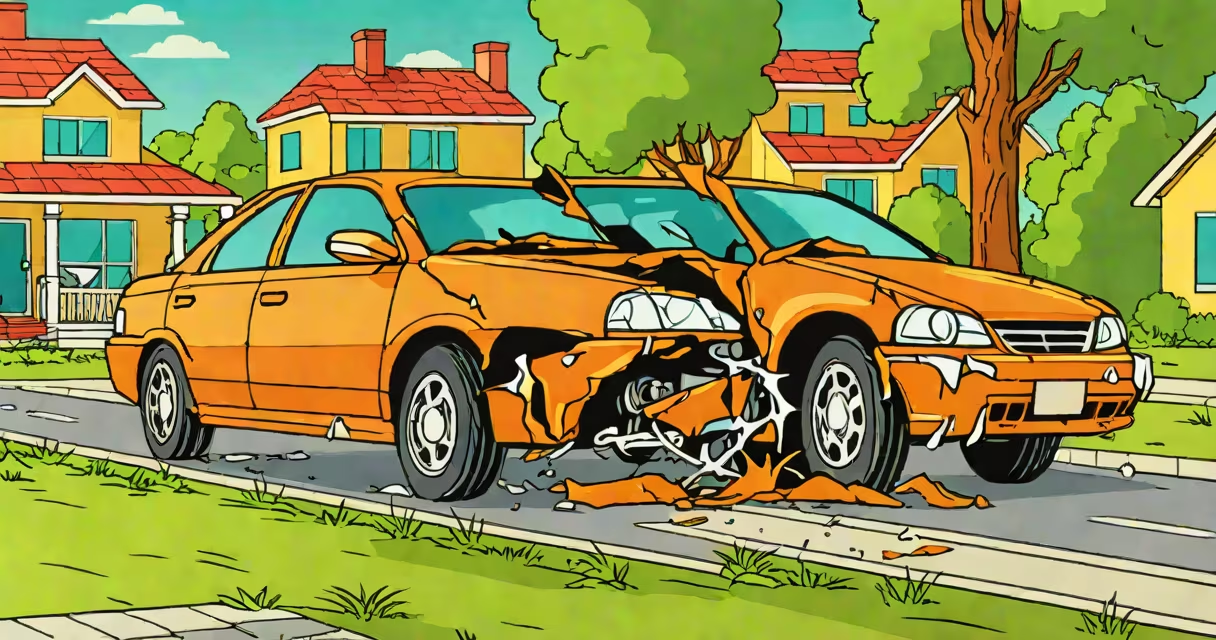
Property damage car insurance covers the cost to repair or replace another person's vehicle or physical property-like a fence, guardrail, or street sign-after an accident you caused. This coverage applies when you're at fault, regardless of whether the other party was driving.
This type of insurance is part of liability coverage required in most U.S. states. It doesn't pay for your own car repairs. Instead, it protects others from financial loss due to your actions behind the wheel. The amount paid depends on the policy's limit, typically $25,000 to $50,000 per incident.
For example, if you hit a parked car while backing out of a driveway and dent the bumper, your property damage coverage pays for the repair. If you collide with a traffic light pole and break it, the insurer may cover the replacement cost up to your policy limit.
When you cause an accident involving someone else's property, the injured party files a claim with your insurance company. Adjusters assess the damage and determine the repair cost. If the cost is under your policy's limit, the insurer pays it directly to the repair shop or the property owner.
If the damage exceeds your limit, you're personally responsible for the difference. For instance, a $40,000 repair bill with a $30,000 limit means you owe $10,000 out of pocket unless you have additional coverage.
Claims are processed based on state laws and policy terms. Most insurers require documentation such as police reports, photos of damage, and repair estimates. Without proof, the claim may be denied.
Property damage coverage includes tangible, physical damage to objects or structures. It does not cover personal belongings inside a vehicle or intangible losses like lost wages.
| Eligible Damage Type | Examples | Typical Coverage Limit |
|---|---|---|
| Other vehicles | Dented fenders, broken headlights, totaled cars | $25,000-$50,000 per incident |
| Fixed structures | Guardrails, traffic signals, lampposts, building walls | Same as above |
| Private property | Parking garages, driveways, fences, storefront windows | Varies by policy |
Damage to public infrastructure-like city-owned sidewalks or road signs-is usually covered under municipal liability policies, not individual auto insurance. However, if your car damages a private fence or gate, your policy likely covers it.
A common misunderstanding is that property damage coverage includes rental car costs while your car is being repaired. That's incorrect. Rental reimbursement is a separate optional add-on.
Property damage car insurance does not cover:
For example, if you rear-end a delivery van and the driver's laptop is destroyed, your property damage coverage won't pay for the laptop. That falls under the other driver's complete or personal property insurance.
Another key distinction: property damage coverage doesn't apply if you're hit by another driver. In that case, their liability policy covers your losses. You must file a claim with their insurer, not your own.
Many drivers assume that "full coverage" includes all types of damage. But full coverage is a marketing term-it means liability, collision, and complete combined. Property damage is only one piece of that puzzle.
Consider this scenario: You drive through a red light and hit a cyclist's bicycle. The bike is totaled. Your property damage coverage pays for the bike's replacement value-up to your limit. But if the cyclist suffered a broken arm, that injury would be handled separately under bodily injury liability.
Here's a non-obvious fact: Some states require minimum property damage limits even if you don't own a car. For example, California mandates $5,000 in property damage liability for all registered vehicles. Failure to meet this requirement results in license suspension.
I once observed a case where a driver hit a mailbox during a snowstorm. The mailbox was worth $120. The driver had a $25,000 property damage limit. The insurer paid the full $120, plus $45 in removal labor. The driver didn't realize the claim would go on their record-even for small amounts. That's why even minor incidents affect premiums.
Property damage coverage is mandatory in all 50 U.S. states and Washington D.C. Minimum limits vary: $10,000 in Florida, $25,000 in New York, and $50,000 in California. These limits exist to ensure victims aren't left paying out of pocket for damage they didn't cause.
Insurance companies use actuarial models to set rates. A history of at-fault accidents increases your premium because you're statistically more likely to cause property damage again. Conversely, a clean record lowers your rate.
Businesses often buy higher limits. A delivery driver with a $100,000 property damage policy avoids personal liability if they crash into a warehouse door. That level of protection is rare for personal drivers but essential for commercial fleets.
Property damage is part of liability insurance. Collision insurance covers your car when you crash into something-like a tree or another vehicle-regardless of fault. Complete covers non-collision events: theft, fire, hail, animal strikes.
Think of it this way: If you hit a stopped car at a red light, your property damage coverage pays for the other car's repairs. Your collision insurance pays for your car's repairs. If you swerve to avoid a deer and flip your car, complete covers the damage.
Without property damage coverage, you face personal liability. In 2022, the National Association of Insurance Commissioners reported that 62% of at-fault drivers in accidents involving property damage were sued. Most cases settled for between $10,000 and $30,000-amounts well within typical policy limits.
For context, a 2021 study by the Insurance Information Institute found that average property damage claims cost $4,300. Claims over $10,000 are rare but do happen-especially in urban areas with high-value infrastructure.
Property damage car insurance covers the cost to repair or replace another person's vehicle or physical property when you cause an accident. It does not cover your own car, injuries, or personal items. Limits vary by state and policy. Always verify your coverage level and consider increasing it if you live in a high-traffic area or frequently drive commercial vehicles.