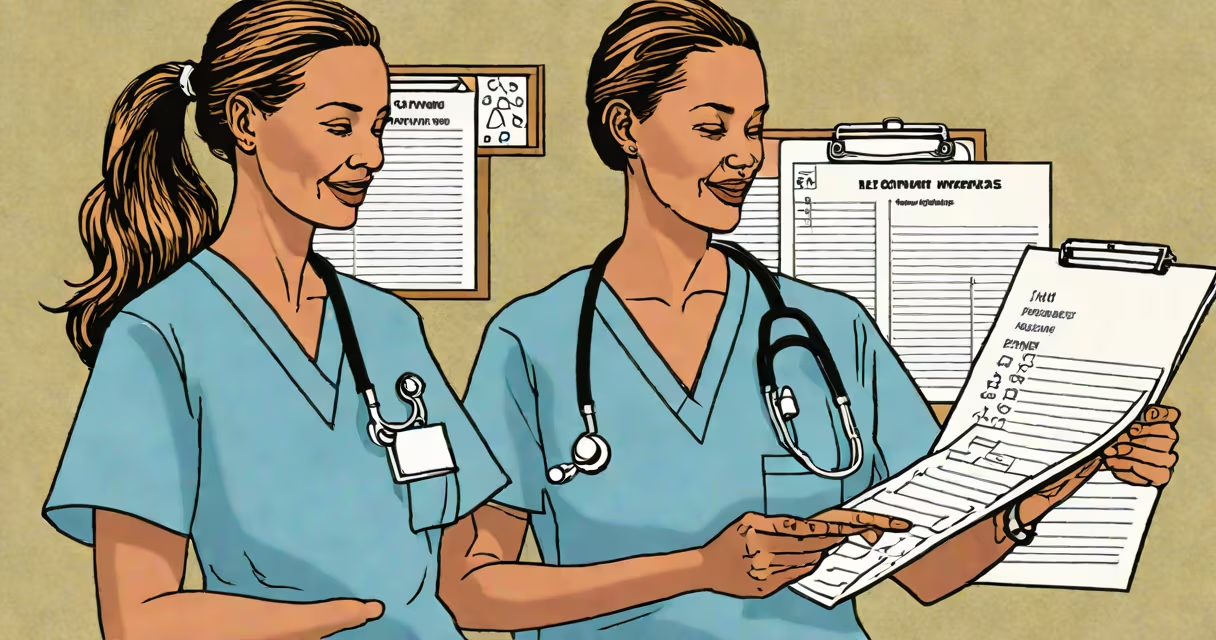
What is lpn lvn? Licensed Practical Nurses (LPNs) and Licensed Vocational Nurses (LVNs) are entry-level healthcare professionals who provide basic patient care under the supervision of registered nurses or physicians. They work in hospitals, long-term care facilities, outpatient clinics, and home health settings.
LPNs and LVNs complete state-approved educational programs lasting 11 to 12 months and pass the NCLEX-PN exam to become licensed. Their duties include monitoring important signs, administering medications, changing dressings, and documenting patient progress. They are not authorized to perform complex procedures or make independent clinical decisions.
While LPN and LVN are functionally equivalent roles, the title varies by state. LPN is used in most states, while LVN is used in Texas and California. Both titles require the same training, licensing, and scope of practice. The difference is purely geographic and administrative.
LPNs and LVNs operate within a defined scope of practice established by state boards of nursing. They report to RNs or physicians and follow detailed care plans. They do not diagnose conditions or adjust treatment protocols independently.
In a skilled nursing facility, an LPN may check blood pressure every four hours, administer oral medications, and report changes in a resident's mental status. They document observations in electronic health records and communicate concerns to the supervising RN. They do not assess patients for new symptoms or initiate emergency interventions.
A real-world example: In a California nursing home, an LVN named Maria checks Mr. Thompson's temperature, pulse, and respiration rate every six hours. She administers his morning insulin injection based on the doctor's written order. When he reports dizziness, she notifies the RN, who evaluates him for hypoglycemia. Maria does not alter the medication plan.
Both LPN and LVN programs are offered at community colleges, technical schools, and some universities. Programs typically include classroom instruction in anatomy, physiology, pharmacology, and medical terminology, plus supervised clinical rotations in hospitals and long-term care centers.
Upon completion, candidates must pass the National Council Licensure Examination for Practical Nurses (NCLEX-PN). The exam consists of 85 to 145 multiple-choice questions assessing safe and effective patient care. The passing score is set by the National Council of State Boards of Nursing (NCSBN).
State-specific regulations define what LPNs and LVNs can and cannot do. For example, in Florida, LPNs may start intravenous fluids under direct supervision. In New York, they may not administer IV medications unless specifically permitted by the supervising RN.
| State | Common Title | Scope Example |
|---|---|---|
| California | Licensed Vocational Nurse (LVN) | Can administer certain oral and injectable medications with RN oversight. |
| Texas | Licensed Vocational Nurse (LVN) | Permitted to perform wound care and collect specimens. |
| New York | Licensed Practical Nurse (LPN) | Cannot initiate IV therapy without RN authorization. |
| Ohio | Licensed Practical Nurse (LPN) | Can insert urinary catheters with written protocol. |
The NCSBN reports that 94% of LPN/LVN candidates who complete accredited programs pass the NCLEX-PN on their first attempt, indicating consistent program quality across institutions.
Many people assume LPNs and LVNs are interchangeable with certified nursing assistants (CNAs). This is incorrect. CNAs are unlicensed support staff trained in basic hygiene and mobility assistance. They do not administer medications or perform assessments.
Another misconception is that LPNs and LVNs can work independently. They cannot. All actions must be approved by a licensed professional. An LPN cannot sign off on a care plan or discharge a patient without RN or physician approval.
A key distinction often missed: LPNs and LVNs are not "junior" versions of RNs. They are distinct roles with different responsibilities. While RNs manage care teams and develop treatment plans, LPNs and LVNs execute them under supervision.
Many LPNs and LVNs pursue further education to become Registered Nurses (RNs). A common route is enrolling in an LPN-to-RN bridge program, which typically takes 12 to 18 months. These programs build on existing clinical experience and allow faster entry into advanced nursing roles.
I personally observed this progression during a rotation at a community college in Arizona. A student named David completed his LVN program and then enrolled in a bridge track. He worked part-time as an LVN while studying. After 15 months, he passed the NCLEX-RN and began working as an RN in a surgical unit.
Some employers offer tuition reimbursement for LPNs and LVNs seeking RN degrees. According to the U.S. Bureau of Labor Statistics, 63% of LPNs and LVNs in long-term care facilities were employed in roles requiring at least an associate degree in nursing by 2023.
For those interested in advancing beyond RN roles, LPNs and LVNs can later pursue master's degrees in nursing administration, education, or specialized clinical practice. However, this requires completing a bachelor's degree first.
What is lpn lvn? It is a licensed role in healthcare that delivers foundational patient care under supervision. The terms LPN and LVN refer to the same profession, differentiated only by state law. Both require formal education, clinical training, and licensure through the NCLEX-PN exam.
Understanding the scope of practice prevents misassignment of responsibilities and ensures patient safety. LPNs and LVNs are important members of healthcare teams, especially in high-volume settings like nursing homes and outpatient clinics.