The National Association of Intercollegiate Athletics (NAIA) is a governing body for college sports in the United States that oversees athletic competition at smaller institutions, typically with student bodies under 1,500. It offers competitive athletics for schools that do not compete in the NCAA's Division I, II, or III levels.
NAIA was founded in 1937 as the National Association of Intercollegiate Basketball. It evolved into a broader athletic organization after expanding beyond basketball to include football, track, swimming, and other sports. Today, it sanctions competition in 26 sports across two divisions: Division I and Division II. Schools must meet academic and financial standards to join, including minimum enrollment thresholds and compliance with amateurism rules.
Unlike the NCAA, which operates under a more centralized model with high-profile media deals and national championships in major sports, the NAIA emphasizes regional competition and affordability. Its member institutions often serve rural or religious-affiliated communities, such as Bethel University (Tennessee), Carroll College (Montana), and Southern Nazarene University (Oklahoma). These schools prioritize integrating athletics into a broader educational mission rather than building national brand recognition through sports.
Each NAIA school fields teams in multiple sports, with eligibility determined by academic standing, standardized test scores, and adherence to amateur status. Athletes must maintain a minimum GPA and complete a certain number of credit hours annually to remain eligible. The association sets rules around recruiting, scholarships, and competition schedules.
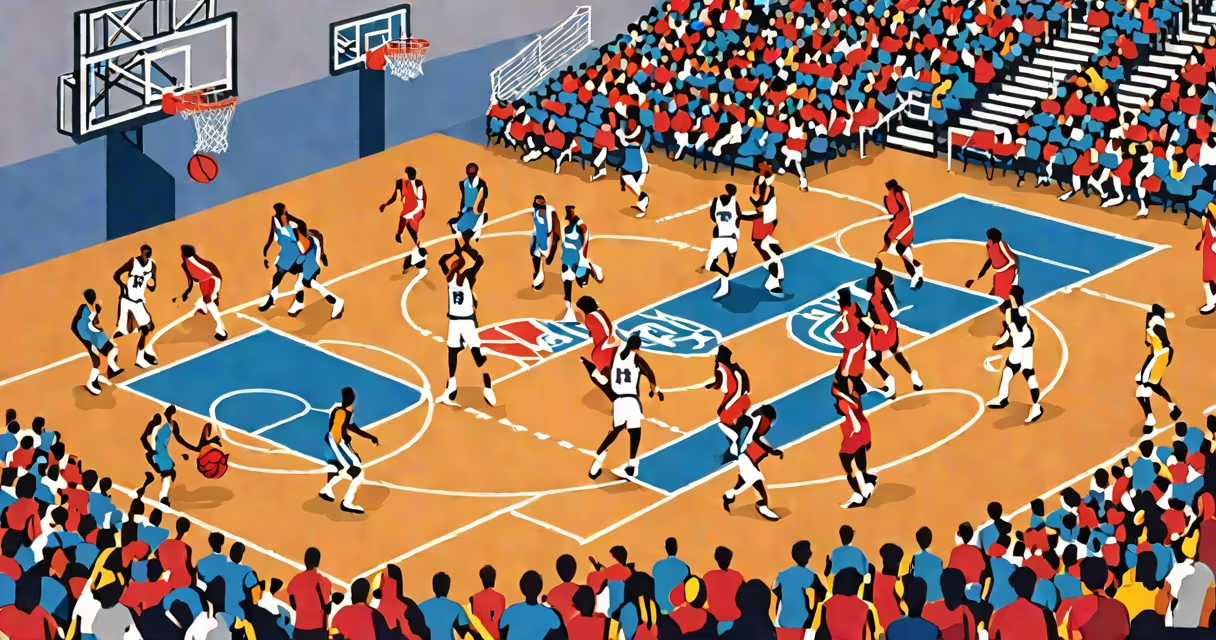
NAIA tournaments are held annually, culminating in national championships for each sport. For example, the NAIA Men's Basketball Championship features 64 teams selected through a combination of automatic bids (conference champions) and at-large selections. The event is hosted at a single site-typically in Kansas City, Missouri-over a week-long period. In 2023, the championship drew over 12,000 attendees and was broadcast on ESPN2 and the ESPN app.
NAIA schools offer athletic scholarships, but they are generally smaller than those available in NCAA Division I. A typical NAIA scholarship covers between $2,000 and $8,000 per year, depending on the sport and institution. This makes NAIA a viable option for student-athletes seeking financial aid while attending schools with lower tuition costs.
NAIA membership includes public, private, religious, and community colleges. The following table outlines key differences between NAIA Division I and Division II:
| Feature | Division I | Division II |
|---|---|---|
| Athletic Scholarship Limits | Up to 25 full scholarships per sport | Up to 15 full scholarships per sport |
| Minimum Enrollment | 500 students | 300 students |
| Championship Host Site | Kansas City, Missouri | Same location as DI |
| Typical School Size | 1,000-2,500 students | 500-1,500 students |
Division I schools tend to have larger budgets and more resources dedicated to athletics. They also host higher-profile events and attract more media attention. Division II schools focus on local engagement and regional rivalries. Both divisions require schools to undergo annual compliance audits to ensure adherence to NAIA rules.
NAIA is used primarily by institutions that want to offer collegiate athletics without the financial burden or regulatory complexity of NCAA Division I. Schools in states like Oklahoma, Texas, and Indiana have high concentrations of NAIA members due to strong traditions in small-school sports.
For student-athletes, NAIA provides access to competitive play, scholarships, and pathways to professional leagues. Over 700 NAIA athletes have signed contracts with professional teams since 2010, including 12 who joined NBA G League affiliates. Notable alumni include former NBA player Chris Johnson (played at Lewis-Clark State College, ID), who averaged 18.3 points per game in his senior season and earned a summer league tryout with the Portland Trail Blazers.
One common misconception is that NAIA is less legitimate than NCAA sports. This is incorrect. NAIA athletes compete against NCAA teams in exhibition games, and several NAIA schools have reached national semifinals in sports like men's basketball and women's volleyball. In 2022, the University of Charleston (WV) won the NAIA Women's Volleyball National Championship, defeating a team from the NCAA Division II level in a preseason exhibition match.
Many people assume NAIA is synonymous with "junior college" or "community college." This is false. NAIA schools are four-year degree-granting institutions. Community colleges operate under different accreditation bodies and typically do not offer bachelor's degrees. The NAIA does not sanction sports at two-year institutions.
Another frequent error is equating NAIA with the NCAA. While both oversee collegiate athletics, their structures differ. The NCAA has three divisions and a complex governance system with regional offices and enforcement committees. The NAIA has a centralized office in Kansas City and fewer administrative layers. As of 2023, the NAIA had 262 member schools; the NCAA had over 1,100 schools across its three divisions.
A lesser-known fact: NAIA schools are required to report athlete injury data annually to the NAIA Sports Medicine Committee. This data is used to assess risk factors and improve safety protocols. In 2021, the association released a study showing that concussion rates among NAIA football players were 18% lower than in NCAA Division II, attributed to stricter helmet inspection policies and mandatory baseline testing.
I attended a NAIA basketball tournament in 2022 at the Municipal Auditorium in Kansas City. The atmosphere was electric-families filled the stands, and student sections chanted in unison. One player, a 6'1" guard from MidAmerica Nazarene University, scored 32 points in the semifinal game. He later told me he chose NAIA because it offered a full scholarship and a chance to play immediately, unlike NCAA schools that often require redshirting.
Consider a student applying to college with a 3.2 GPA and a 1050 SAT score. At an NCAA Division I school, this profile might not qualify for athletic consideration. But at a NAIA school like William Jewell College (MO), the same student could receive a partial scholarship and play in the NAIA national tournament. The school's coaching staff evaluates recruits based on both academics and performance, not just rankings.
What is NAIA? It is a distinct, accredited athletic organization that serves small and mid-sized colleges across the U.S. It provides structured competition, financial support, and career development for student-athletes who may not fit the mold of traditional collegiate sports powerhouses. The NAIA remains a critical alternative to the NCAA, especially for schools focused on education, accessibility, and regional impact.