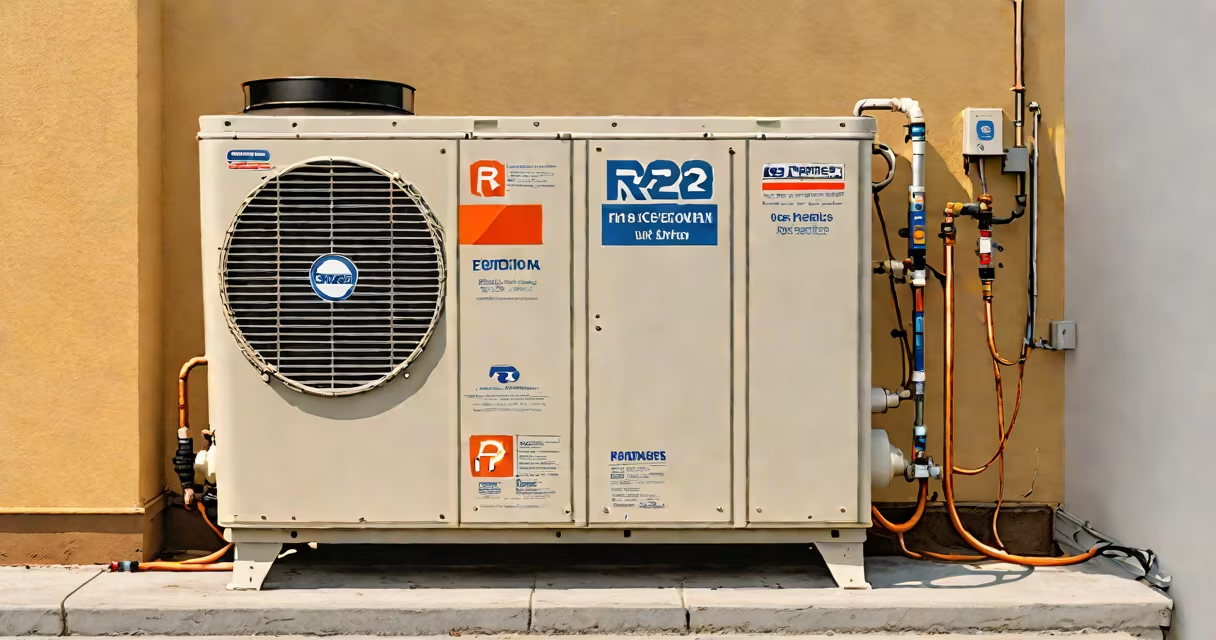
R-22 refrigerant is a hydrochlorofluorocarbon (HCFC) widely used in residential and commercial air conditioning systems manufactured before 2010. It was the standard cooling agent in split-system AC units and heat pumps until phased out under international environmental agreements.
Manufactured primarily by DuPont under the trade name Freon 22, R-22 operates efficiently in vapor-compression cycles by absorbing heat during evaporation and releasing it during condensation. It functions effectively in systems designed for pressures between 100 and 160 psi at typical operating temperatures.
The phaseout of R-22 began in 2010 under the Montreal Protocol and U.S. Environmental Protection Agency (EPA) regulations. Production and import ended in 2020, making new R-22 unavailable for purchase. Only recycled or reclaimed R-22 may be used for servicing existing equipment.
R-22 circulates through a closed-loop system consisting of a compressor, condenser coil, expansion valve, and evaporator coil. As liquid R-22 passes through the expansion valve, pressure drops sharply, causing partial evaporation. This phase change absorbs heat from indoor air passing over the evaporator coil, cooling the space.
The resulting low-pressure vapor travels to the compressor, which increases its temperature and pressure. The hot, high-pressure gas then flows into the condenser coil, where it releases heat to the outdoors and returns to a liquid state. The cycle repeats continuously while the system runs.
A typical residential AC unit uses 3 to 4 pounds of R-22. A leak of just 10% can reduce efficiency by 15%, increasing energy costs and strain on components. Repairing leaks requires specialized tools and EPA-certified technicians due to strict handling rules.
R-22 belongs to the HCFC class of refrigerants, which contain chlorine and contribute to stratospheric ozone depletion. Its ozone depletion potential (ODP) is 0.055, meaning it depletes ozone at about 5.5% the rate of CFC-11, the benchmark.
| Refrigerant | Type | ODP | Global Warming Potential (GWP) | Used In |
|---|---|---|---|---|
| R-22 | HCFC | 0.055 | 1,810 | Pre-2010 AC systems |
| R-410A | HFC | 0 | 2,088 | Newer AC systems (post-2010) |
| R-32 | HFC | 0 | 675 | Modern mini-split systems |
| R-454B | Hydrofluoroolefin (HFO) | 0 | 466 | Newest residential and commercial systems |
Replacements like R-410A and R-32 operate at higher pressures than R-22, requiring different compressors, lubricants (POE oil vs. mineral oil), and system designs. Mixing R-22 with newer refrigerants causes system failure and safety risks.
For example, installing R-410A in an R-22 system leads to compressor burnout within hours due to incompatible oil circulation and pressure differentials. The EPA mandates that HVAC technicians use only approved refrigerants in their respective systems.
Approximately 12 million residential and commercial air conditioners in the U.S. still use R-22. These units were manufactured before 2010 and remain operational due to long equipment lifespans. The average lifespan of an AC system is 15 years, with many lasting beyond 20 years.
When repairs are needed, technicians may use reclaimed R-22. The EPA allows limited use of recycled refrigerant for maintaining existing systems, but prohibits using new R-22 for repairs. This restriction aims to prevent market incentives for keeping obsolete equipment running.
One common misconception is that R-22 can be topped off indefinitely. In reality, a drop in refrigerant level indicates a leak. Ignoring it leads to reduced cooling, increased energy consumption, and eventual compressor damage. A technician must locate and repair the leak before adding refrigerant.
R-22 is often confused with R-134a, a refrigerant used in automotive air conditioning. While both are fluorinated compounds, R-134a has zero ozone depletion potential and is not regulated under the same phaseout schedule. Using R-134a in an R-22 system causes immediate system failure.
A critical distinction is that R-22 is not banned outright-it's restricted. Equipment made before 2010 can still be repaired and operated legally. However, the cost of servicing R-22 systems has risen since 2020 due to scarcity and recycling requirements.
For example, a 2005 window unit with a leaking R-22 charge now costs $350 to $500 to refill, compared to $120 in 2015. This price increase reflects supply constraints and compliance costs. Many homeowners choose to replace aging systems rather than pay for ongoing repairs.
During a service call in 2022, I inspected a 15-year-old central AC unit with a 20% R-22 leak. After repairing the joint and evacuating the system, we charged it with reclaimed R-22. The system cooled effectively, but the homeowner later replaced it due to rising repair costs and inefficiency.
The U.S. EPA enforces the Clean Air Act Amendments, which mandate that only certified technicians handle refrigerants. Technicians must pass the EPA Section 608 certification exam to legally work with R-22 and other regulated substances.
Violations carry fines up to $37,500 per incident. The EPA tracks refrigerant usage through the Refrigerant Management Program, requiring documentation of purchases, disposal, and recycling. Unauthorized release of R-22 into the atmosphere is illegal and contributes to ozone layer degradation.
According to the EPA, global R-22 consumption declined by 98% between 2000 and 2020. The Montreal Protocol's phaseout schedule successfully reduced emissions despite continued demand for retrofits and repairs.
R-22 refrigerant is a hydrochlorofluorocarbon used in pre-2010 air conditioning systems. Its production and import ended in 2020 due to environmental regulations. Only reclaimed or recycled R-22 may be used for repairs, and new systems must use alternatives like R-410A or R-32.
Understanding what is R-22 refrigerant helps homeowners and technicians make informed decisions about maintenance, upgrades, and compliance. As older systems reach end-of-life, replacing them with newer, more efficient models reduces environmental impact and operating costs.