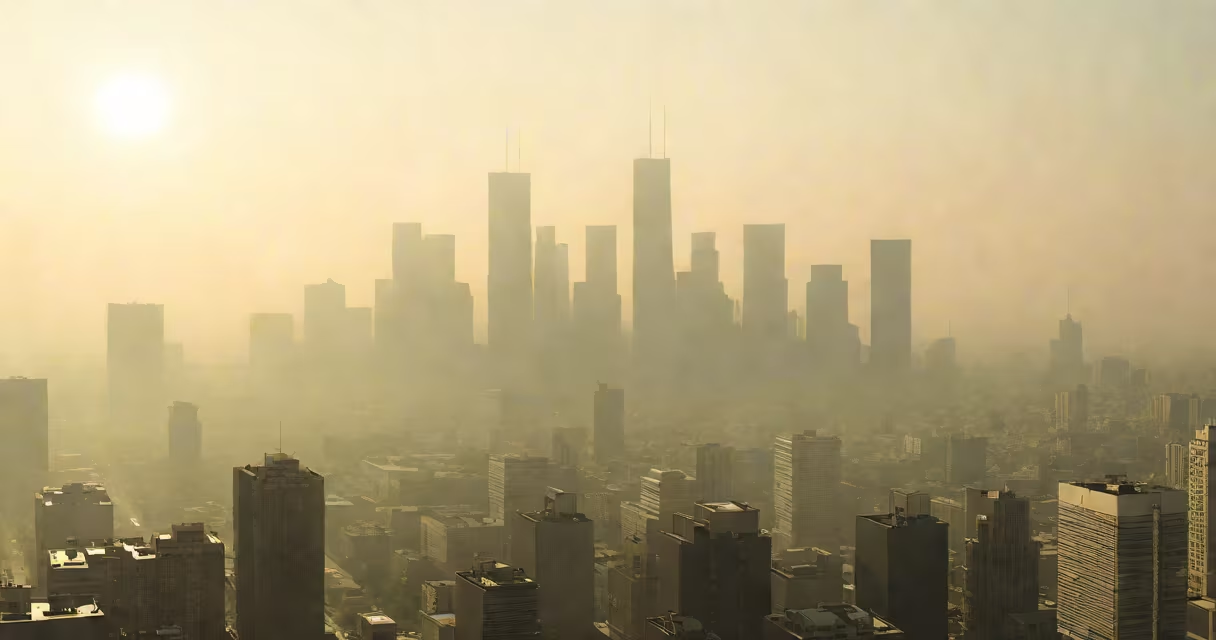
PM2.5 refers to airborne particulate matter with a diameter of 2.5 micrometers or less-about 1/30th the width of a human hair. These microscopic particles originate from combustion processes, industrial emissions, vehicle exhaust, wildfires, and secondary chemical reactions in the atmosphere. They pose serious health risks because they bypass the body's natural defenses and reach deep into the lungs and bloodstream.
Unlike larger particles such as PM10 (which affect only the upper airways), PM2.5 penetrates alveoli and enters systemic circulation. The World Health Organization classifies PM2.5 as a Group 1 carcinogen due to its link with lung cancer and cardiovascular disease. Long-term exposure increases mortality rates even at levels below current regulatory standards.
PM2.5 concentrations vary widely by location and season. In cities like Delhi, Beijing, and Los Angeles, levels regularly exceed 50 µg/m³ during winter months. In contrast, rural areas may see under 10 µg/m³. Monitoring is done via air quality stations using laser scattering or beta attenuation methods. Real-time data is published by agencies such as the U.S. Environmental Protection Agency (EPA) and the European Environment Agency.
PM2.5 forms through two primary pathways: primary and secondary. Primary PM2.5 is emitted directly-diesel engine exhaust, smoke from wood stoves, construction dust, and sea spray. Secondary PM2.5 forms in the atmosphere when gases like sulfur dioxide (SO₂), nitrogen oxides (NOₓ), ammonia (NH₃), and volatile organic compounds (VOCs) react chemically under sunlight and humidity.
For example, SO₂ from coal-fired power plants oxidizes in the atmosphere to form sulfate aerosols. NOₓ from vehicles combines with ammonia to create ammonium nitrate particles. These secondary components make up 60-80% of PM2.5 in many urban environments. Their formation depends heavily on temperature, humidity, and wind patterns, which influence atmospheric chemistry and dispersion.
Once formed, PM2.5 can travel hundreds of kilometers. A wildfire in British Columbia can improve PM2.5 levels in Seattle within 24 hours. Similarly, industrial emissions from northern China frequently drift across the Sea of Japan, affecting air quality in Hokkaido. Satellite imagery from NASA's MODIS instrument tracks these plumes, enabling early warnings for vulnerable populations.
PM2.5 is not a single substance but a mixture of solids and liquids. Its composition varies by region and time of year. Common constituents include elemental carbon (soot), organic carbon, sulfates, nitrates, ammonium, and trace metals like lead and arsenic.
| Source Type | Primary Contributors | Typical Composition | Geographic Prevalence |
|---|---|---|---|
| Transportation | Diesel engines, brake wear, tire abrasion | Elemental carbon, heavy metals | Urban centers globally |
| Residential Heating | Wood stoves, kerosene heaters | Organic carbon, soot | Europe, North America, parts of Asia |
| Industrial Processes | Cement kilns, steel mills, refineries | Sulfates, nitrates, metals | East Asia, Eastern Europe |
| Natural Events | Wildfires, dust storms, volcanic eruptions | Organic carbon, mineral dust, ash | Western U.S., Australia, Mediterranean |
Secondary PM2.5 dominates in regions with high precursor emissions. In California's Central Valley, nitrate and sulfate dominate winter PM2.5. In India's Indo-Gangetic Plain, organic carbon from crop burning and biomass cooking contributes over 50% of PM2.5 mass during winter.
Exposure to PM2.5 is linked to increased risk of asthma attacks, heart attacks, stroke, and premature death. The Global Burden of Disease Study estimates that ambient PM2.5 caused 4.2 million deaths worldwide in 2019. In the U.S., the EPA attributes 100,000+ annual deaths to long-term exposure above 10 µg/m³.
Children, elderly individuals, and people with pre-existing conditions are most vulnerable. A 2021 study published in *The Lancet Planetary Health* found that children exposed to PM2.5 above 15 µg/m³ had reduced lung function growth and higher incidence of chronic bronchitis. Even short-term spikes-such as those during wildfire events-can trigger hospitalizations.
Environmental effects include reduced visibility, acid deposition, and altered cloud formation. PM2.5 acts as cloud condensation nuclei, influencing rainfall patterns. In mountainous regions, increased particle loading reduces snow albedo, accelerating melting. This feedback loop intensifies climate impacts in sensitive ecosystems.
Many confuse PM2.5 with PM10 or general "smog." PM10 includes particles up to 10 micrometers in diameter-larger, less penetrative. Smog is a visible mixture of fog and pollutants, often including ozone and PM2.5, but not synonymous with either.
Another myth is that indoor air is safe. Indoor PM2.5 levels can exceed outdoor levels due to cooking, smoking, cleaning products, and poorly maintained HVAC systems. A 2020 study in *Environmental Science & Technology* found indoor PM2.5 was 2-3 times higher in homes with gas stoves compared to electric ones.
Some assume "clean" air means low PM2.5. But air quality depends on multiple pollutants. A city may have low PM2.5 but high ozone levels-another dangerous pollutant. The American Lung Association's 2023 State of the Air report shows that 120 million Americans live in areas with unhealthy ozone or PM2.5 levels.
In November 2023, Delhi recorded a 24-hour average PM2.5 level of 380 µg/m³-over 15 times the WHO's recommended daily limit of 5 µg/m³. This spike resulted from agricultural residue burning in Punjab, vehicle emissions, industrial activity, and stagnant weather. Schools closed, hospitals reported a 40% rise in respiratory cases, and emergency services advised vulnerable groups to stay indoors.
During the event, personal air monitors showed indoor PM2.5 levels reaching 150 µg/m³ even in sealed rooms. This demonstrates that ventilation alone cannot protect against extreme outdoor pollution. Only HEPA filters and tightly sealed spaces provide meaningful protection.
Real-time PM2.5 data is available through platforms like AirNow.gov (U.S.), IQAir.com, and local government dashboards. Devices such as PurpleAir sensors offer community-based monitoring, though accuracy varies. For reliable results, use EPA-certified instruments.
Individuals can reduce exposure by checking local air quality indexes (AQI), using air purifiers with HEPA filters, avoiding outdoor exercise during high-pollution periods, and supporting policies that reduce emissions. Cities like Copenhagen and Singapore have lowered PM2.5 levels by 30-50% over a decade through congestion pricing, clean energy mandates, and green infrastructure.