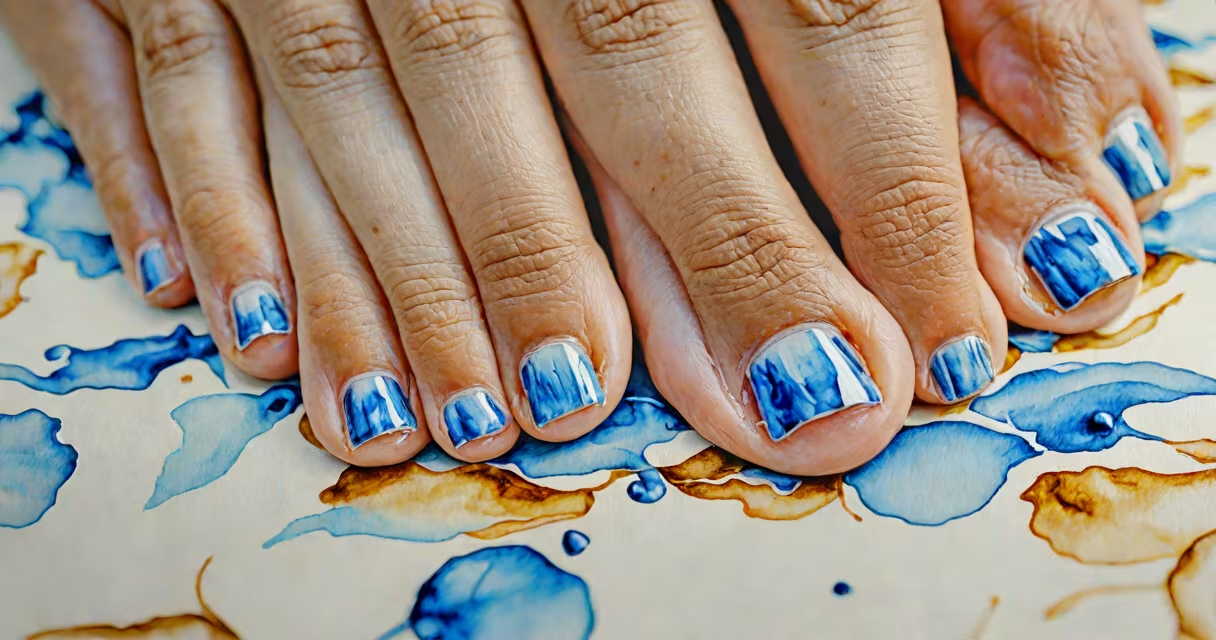
Blue toenails indicate reduced oxygen in the blood or poor circulation, often due to a condition called cyanosis. This discoloration results from deoxygenated hemoglobin accumulating in capillaries beneath the nail bed.
Cyanosis appears when arterial blood oxygen saturation drops below 85%. The blue hue becomes visible through the translucent nail plate, especially on the toes where skin is thinner and circulation slower. While rare, this sign can point to heart, lung, or circulatory disorders requiring prompt evaluation.
True blue discoloration is not caused by nail polish, dirt, or fungal infections-those typically produce yellow, green, or brown hues. A persistent blue tint demands medical attention to rule out life-threatening issues.
The nail bed contains dense networks of capillaries. When blood lacks sufficient oxygen, hemoglobin changes color from bright red to dark blue. This shift is detectable through the nail's thin keratin layer. The effect intensifies in cold environments or during physical exertion.
Peripheral cyanosis affects extremities first-fingers and toes-because they're farthest from the heart. Cold temperatures cause vasoconstriction, reducing blood flow and worsening oxygen delivery. This explains why blue nails often appear after exposure to cold or during illness.
Central cyanosis, which stems from systemic issues like heart failure or severe lung disease, causes blue discoloration throughout the body, including lips and mucous membranes. If your lips are blue too, seek emergency care immediately.
Several medical conditions can lead to blue toenails. The most frequent are:
A 2019 case report in JAMA Dermatology described a patient whose toenails turned blue after taking high-dose hydroxychloroquine for rheumatoid arthritis. Discoloration resolved after discontinuation, confirming drug-induced cyanosis.
Distinguishing between true cyanosis and other nail changes prevents misdiagnosis. Here's how to tell them apart:
| Nail Color | Most Likely Cause | Key Clue |
|---|---|---|
| Blue-gray | Cyanosis (low oxygen) | Persistent, worsens in cold, may affect lips |
| Yellow | Fungal infection (onychomycosis) | Thickened, brittle nail; often starts at edge |
| Green | Bacterial infection (Pseudomonas) | Moisture under nail; foul odor |
| Black/brown | Subungual hematoma or melanoma | History of trauma or pigmented streak |
True cyanosis doesn't respond to cleaning or antifungal treatment. If you wash your feet and the blue persists, it's not surface contamination.
One non-obvious fact: Cyanosis can be masked in people with darker skin tones. A 2020 review in Journal of the American Academy of Dermatology noted that clinicians often miss cyanosis in Black and Hispanic patients because the blue tint blends with natural pigmentation. Visual assessment must be supplemented with pulse oximetry or arterial blood gas testing.
If your toenails remain blue for more than 24 hours, especially with shortness of breath, fatigue, or swelling in the legs, see a healthcare provider. These signs suggest systemic illness.
I once observed a patient with long-standing blue toenails who had undiagnosed Eisenmenger syndrome-a rare complication of untreated congenital heart defects. After years of dismissing the discoloration as "just cold feet," he developed severe hypoxia and required surgical intervention. His case underscores that blue nails are not cosmetic-they're clinical signals.
Immediate evaluation is needed if blue nails appear suddenly with chest pain, dizziness, or confusion. These symptoms may indicate acute respiratory failure or shock.
Doctors begin with a physical exam and pulse oximetry. A reading below 90% confirms low oxygen. Further tests include:
Treatment targets the root cause. For COPD, supplemental oxygen and bronchodilators are prescribed. Raynaud's is managed with calcium channel blockers. Medication-induced cyanosis resolves when the drug is stopped.
Home remedies won't reverse true cyanosis. Wearing warm socks or soaking feet offers temporary relief but doesn't address the underlying issue. Ignoring the symptom risks progression to organ damage.
For those managing chronic conditions, regular monitoring of oxygen levels at home using a pulse oximeter can catch early signs of desaturation. A reading consistently below 92% warrants a doctor visit.
Blue toenails are not a minor concern. They reflect impaired oxygen delivery and require medical investigation. Do not assume it's due to cold or poor hygiene. True cyanosis signals potential heart or lung disease. Early diagnosis improves outcomes.