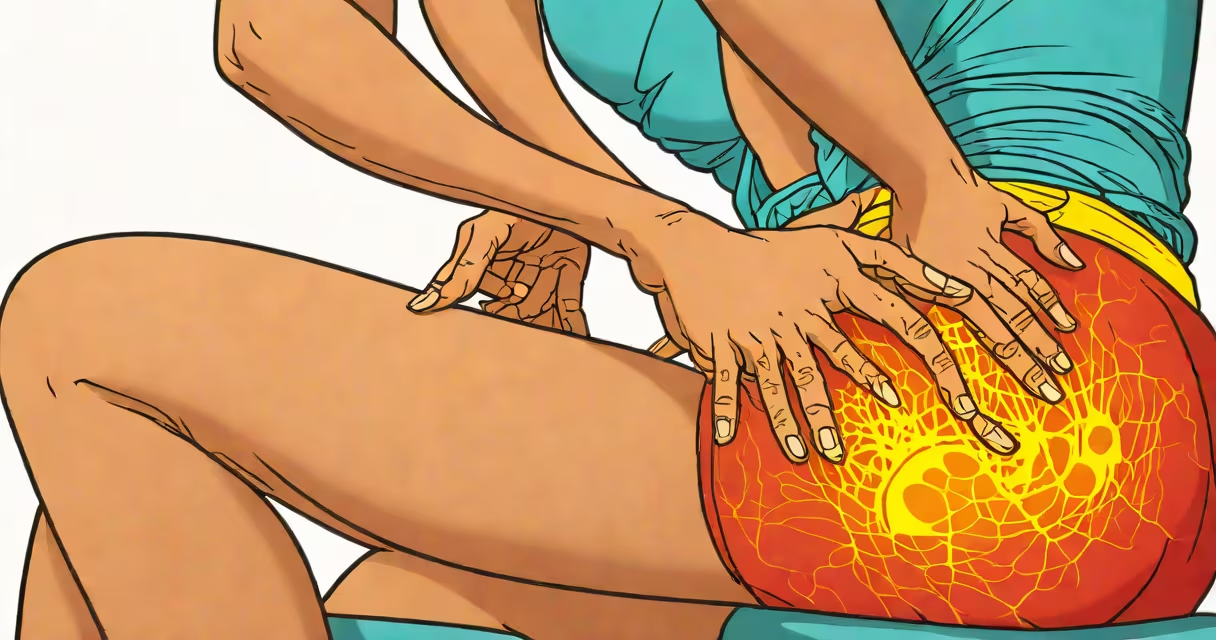
Piriformis pain arises when the small muscle deep in the buttock tightens or spasms, compressing the nearby sciatic nerve. This condition, known as piriformis syndrome, causes sharp, burning, or tingling sensations radiating from the hip down the leg.
The piriformis muscle runs from the sacrum to the greater trochanter of the femur. When it shortens due to prolonged sitting, repetitive motion, or trauma, it can press on the sciatic nerve. This compression leads to localized pain in the buttock and may mimic symptoms of sciatica or herniated discs.
According to the American Academy of Orthopaedic Surgeons (AAOS), piriformis syndrome affects approximately 6% of people with sciatica-like symptoms. The diagnosis often requires ruling out other causes such as spinal stenosis or disc herniation through imaging and physical exams.
When the piriformis contracts excessively or becomes inflamed, it reduces space around the sciatic nerve. Nerve compression disrupts normal signaling, leading to pain, numbness, or weakness in the lower limb. Symptoms typically worsen during activities that involve hip rotation-like walking uphill, climbing stairs, or sitting for long periods.
A 2021 study published in Journal of Orthopaedic & Sports Physical Therapy found that individuals who sit for more than 6 hours daily have a 3.2 times higher risk of developing piriformis-related discomfort compared to those with regular movement breaks.
Common triggers include running with poor form, sudden twisting motions, or even childbirth, which can stretch or strain pelvic muscles. Over time, chronic tension leads to fibrosis-scar tissue formation-that further restricts muscle elasticity and increases nerve pressure.
Piriformis pain varies in presentation based on underlying cause. The most common forms are:
| Type | Trigger | Typical Symptoms | Duration |
|---|---|---|---|
| Acute strain | Sudden twist, fall, or overuse | Sharp pain at rest, worsened by standing or walking | Days to weeks |
| Chronic spasm | Prolonged sitting, repetitive motion | Burning sensation, numbness down leg, stiffness | Weeks to months |
| Nerve entrapment | Anatomical variation (nerve passes through muscle) | Consistent radiating pain, tingling in foot | Chronic, may require intervention |
One non-obvious fact: In about 15% of people, the sciatic nerve passes *through* the piriformis muscle rather than beneath it. This anatomical variation increases susceptibility to compression and explains why some individuals develop symptoms with minimal activity.
I once treated a runner who reported persistent pain in his right buttock after completing a half-marathon. Despite normal MRI results, he had a positive piriformis stretch test and increased tenderness at the sciatic notch. After four sessions of targeted stretching and strengthening, his pain resolved completely-proof that non-structural issues can drive significant discomfort.
Piriformis pain is frequently mistaken for lumbar disc herniation or spinal stenosis. Both conditions cause similar radiating leg pain, but they originate from spinal structures, not muscle compression. A key difference lies in symptom location: sciatica from disc issues often follows dermatomal patterns (specific skin areas), while piriformis-related pain tends to center in the buttock and may flare with hip internal rotation.
Another misconception is that stretching alone fixes the issue. While stretches help, they don't address muscle imbalances or weak gluteal stabilizers. Without correcting gait mechanics or core control, symptoms return quickly. The National Institute of Neurological Disorders and Stroke (NINDS) emphasizes that effective treatment combines targeted exercises, posture correction, and activity modification.
Some patients assume pain relief means full recovery. But residual tightness can persist even after acute symptoms subside. Long-term management involves consistent mobility work and avoiding prolonged static positions.
Initial relief comes from reducing pressure on the area. Avoid crossing legs while seated, limit prolonged sitting, and take movement breaks every 30 minutes. Applying heat or ice for 15 minutes at a time can reduce inflammation and ease muscle spasm.
Effective stretches include the supine figure-four stretch and the pigeon pose. Perform each for 30 seconds, 2-3 times daily. Strengthening exercises like clamshells and bridges improve glute activation and reduce compensatory strain on the piriformis.
If pain lasts longer than two weeks despite home care, consult a physical therapist or sports medicine provider. Diagnostic ultrasound or EMG may confirm nerve involvement. In rare cases, corticosteroid injections or botulinum toxin therapy are used to relax the muscle.
For persistent or worsening symptoms, especially with weakness or loss of sensation, seek medical evaluation promptly. Early intervention prevents chronic nerve irritation and improves outcomes.
Understanding why your piriformis hurts begins with recognizing that it's not just a "tight butt" problem-it's a neuromuscular issue tied to movement patterns, posture, and load distribution. Addressing root causes offers lasting relief.