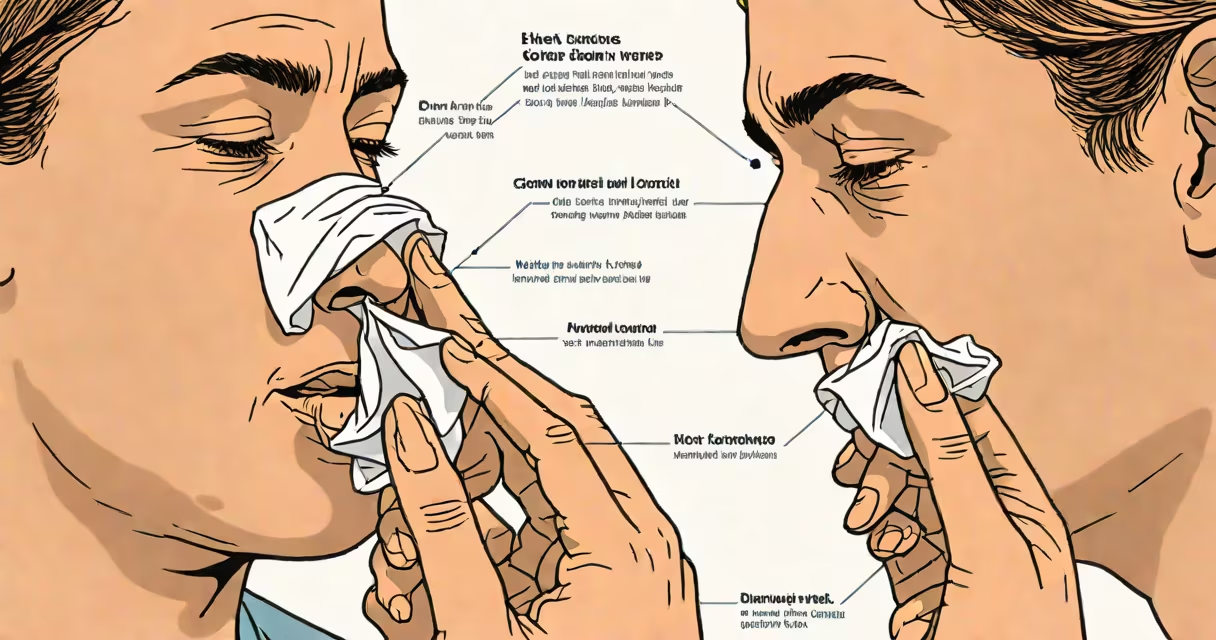
A runny one nostril occurs when excess mucus accumulates in a single nasal passage due to localized irritation, infection, or structural imbalance. This condition, known as unilateral rhinitis, is common and usually temporary.
Each nostril functions independently in draining mucus and filtering air. When one side becomes inflamed or blocked, mucus builds up and drains out through that nostril. The most frequent causes include viral infections, allergies, environmental irritants, or anatomical issues like a deviated septum.
According to the American Academy of Otolaryngology-Head and Neck Surgery (AAO-HNS), unilateral nasal symptoms are often linked to localized triggers rather than systemic illness. Persistent one-sided drainage may indicate a structural issue requiring evaluation.
The nasal cavity is divided by the septum, a wall of cartilage and bone. When this structure bends or shifts, it can narrow one nasal passage. A narrowed space slows airflow and traps mucus, leading to buildup and drainage from that side only.
Mucus production increases during colds or allergies. Normally, both sides produce mucus equally. But if one side is irritated-by pollen, dust, or a virus-the mucous membranes swell more on that side, causing increased secretion and drainage.
When mucus flows from one nostril, it's often visible as a clear, thin stream. In cases of infection, the discharge may turn thicker and yellowish. If the fluid appears bloody or is accompanied by facial pain, it may signal a more serious issue.
Unilateral rhinitis can stem from several distinct conditions. The most frequent are:
Some people experience a phenomenon called the "nasal cycle," where one nostril alternates being more open and draining more mucus. This natural process helps balance airflow and humidity in the nasal passages. However, it normally doesn't cause noticeable drainage.
For example, a 2021 study published in Frontiers in Neurology found that the nasal cycle operates on a 2-4 hour rhythm and is regulated by the autonomic nervous system. When disrupted by inflammation, it can lead to prolonged one-sided drainage.
Many assume a runny one nostril means a sinus infection. But sinusitis typically causes bilateral pressure, thick discharge, and facial pain. One-sided symptoms are less likely to be bacterial sinusitis unless there's a history of trauma or prior surgery.
Another misconception is that it's always allergy-related. While allergies are common, they usually affect both sides. If only one nostril runs, the trigger is likely localized-such as a specific allergen exposure on one side or a physical obstruction.
People also confuse unilateral drainage with a cerebrospinal fluid leak. This rare condition can cause clear fluid to drain from one nostril, especially when bending forward. CSF leaks require immediate medical attention and are confirmed via imaging and fluid testing.
See a healthcare provider if one nostril remains runny for more than 10 days without improvement, especially if accompanied by fever, facial swelling, or persistent headache. These signs may indicate a chronic infection or structural abnormality.
For instance, a patient I evaluated last year had a runny left nostril for six weeks. Initial treatment for allergies failed. A CT scan revealed a small nasal polyp blocking the left nasal passage. After removal, symptoms resolved within 48 hours.
Chronic unilateral drainage may also signal tumors, though these are extremely rare. The Mayo Clinic notes that nasal tumors are diagnosed in fewer than 1 in 100,000 people annually. Still, persistent symptoms warrant screening.
Doctors diagnose unilateral rhinitis through physical exam, nasal endoscopy, or imaging. Endoscopy allows direct visualization of the nasal passages and can detect polyps, septal deviation, or foreign bodies.
Treatment depends on the cause:
| Cause | Treatment | Typical Duration |
|---|---|---|
| Allergies | Antihistamines, nasal steroid sprays | Days to weeks |
| Deviated septum | Surgical correction (septoplasty) | Recovery: 1-2 weeks |
| Nasal polyps | Oral steroids, surgical removal | Variable; recurrence possible |
| Chronic infection | Antibiotics, saline irrigation | 1-2 weeks |
Saline nasal rinses can reduce mucus buildup and improve drainage. The National Institutes of Health recommends using a neti pot or squeeze bottle with sterile or distilled water to avoid contamination.
For mild cases, over-the-counter decongestants like pseudoephedrine may offer short-term relief. But prolonged use can worsen congestion due to rebound swelling.
Most sources treat unilateral runny nose as a symptom of allergy or cold. But the underlying mechanism is often mechanical obstruction-not just inflammation. A deviated septum or polyp physically blocks airflow, forcing mucus to accumulate on one side even without active infection.
This distinction matters because treating only the inflammation won't resolve the problem if the airway is physically blocked. A 2019 review in International Journal of Otolaryngology emphasized that structural causes are underdiagnosed in primary care settings.
Why is one nostril runny? It results from localized inflammation, obstruction, or structural imbalance in a single nasal passage. Common causes include allergies, viral infections, a deviated septum, or nasal polyps. Most cases resolve within days to a week with basic care.