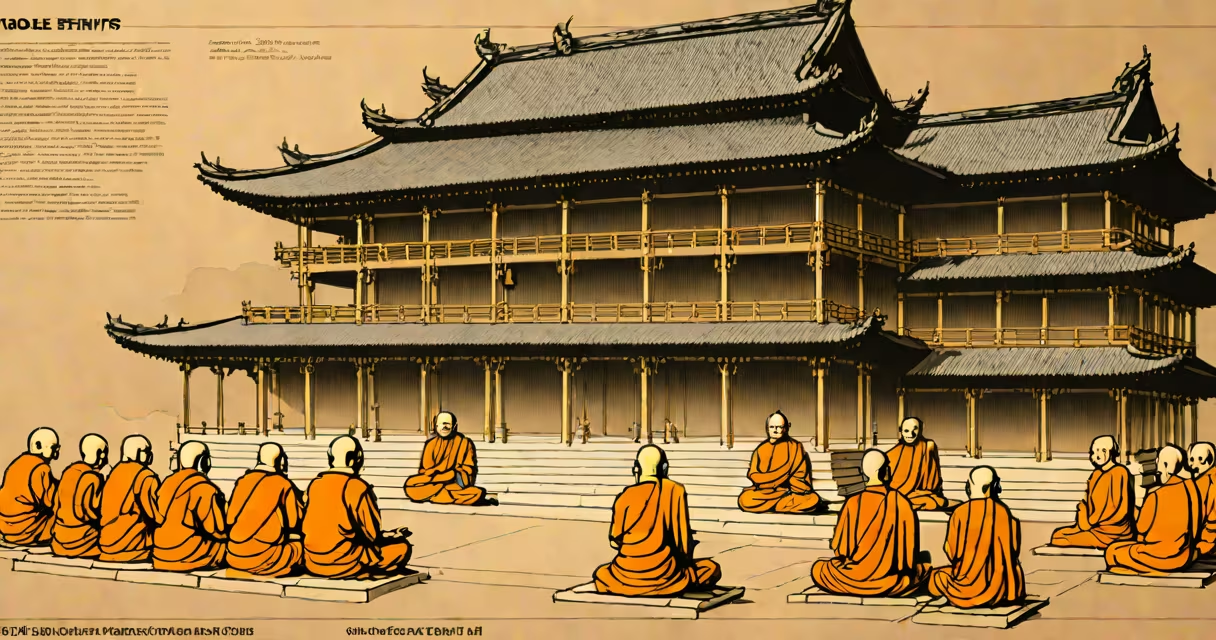
The four noble truths of Buddhism are the core structure of Buddha's teachings: life involves suffering (dukkha), suffering arises from craving and attachment, suffering can end through detachment, and the path to ending suffering is the Eightfold Path. These truths are not metaphysical beliefs but practical observations about human experience, forming the basis of Buddhist meditation and ethical conduct.
Buddha taught these truths during his first sermon at Sarnath, India, around 500 BCE. They are not abstract philosophy but diagnostic and therapeutic tools for mental and emotional well-being. The first truth identifies dukkha-not just physical pain, but dissatisfaction, impermanence, and existential unease. The second explains its cause: tanha, or craving-desire for pleasure, existence, or non-existence. The third asserts that cessation of suffering is possible. The fourth outlines the method: the Eightfold Path, which includes right view, right intention, right speech, right action, right livelihood, right effort, right mindfulness, and right concentration.
These truths are not meant to be accepted on faith. Buddha instructed followers to test them personally. As stated in the Samaññaphala Sutta, "Just as a man who is sick and knows his illness, seeks treatment," so too should one examine suffering and its remedy. This empirical approach distinguishes early Buddhism from dogmatic systems. The truths are not about punishment or sin but about understanding patterns of mind and behavior that lead to distress.
Each truth functions as a step in a clinical model of psychological healing. The first truth diagnoses the problem: all conditioned experience contains stress, discomfort, or dissatisfaction. This includes birth, aging, illness, death, separation from loved ones, and unfulfilled desires. Even joy is impermanent and thus inherently unstable. The Pali Canon records that Buddha said, "All conditioned things are unsatisfactory" (anicca).
The second truth identifies the root cause: craving (tanha). This includes desire for sensory pleasures, existence (wanting to continue living), and non-existence (wanting to cease). Craving fuels rebirth in samsara-the cycle of repeated becoming and suffering. Modern psychology confirms this: attachment to outcomes, identities, and possessions correlates strongly with anxiety and depression. A 2016 study published in Journal of Positive Psychology found that people who reduced materialistic goals reported higher long-term well-being.
The third truth offers relief: Nibbana (nirvana), the cessation of craving and suffering. It is not a place but a state of freedom-freedom from attachment, aversion, and delusion. The term means "blowing out," like a candle flame extinguished. It is not annihilation but release from the causes of pain. The Buddha described it as "the unconditioned," beyond language and conceptualization.
The fourth truth provides the method: the Eightfold Path. Not a list of rules, but a balanced training in ethics, mental discipline, and wisdom. Right view begins with understanding the four noble truths themselves. Right intention involves cultivating renunciation, goodwill, and harmlessness. Right speech, action, and livelihood form the ethical foundation. Right effort, mindfulness, and concentration build mental clarity and focus.
Different schools interpret the truths with varying emphasis. Theravāda Buddhism, preserved in Pali texts, treats them as a direct path to enlightenment. Mahāyāna traditions emphasize compassion and bodhisattva vows, viewing the truths as steps toward universal liberation. Zen Buddhism often presents them through koans-paradoxical riddles-to disrupt logical thinking and awaken insight.
Table: Comparison of Key Buddhist Traditions' Approach to the Four Noble Truths
| Tradition | Focus | View of Truths |
|---|---|---|
| Theravāda | Individual liberation | Literal, diagnostic structure; central to monastic training |
| Mahāyāna | Universal salvation | Interpreted through emptiness (śūnyatā); truths are empty of inherent existence |
| Zen | Direct experience | Used in koans; e.g., "What is the sound of one hand clapping?" |
A common misconception is that the four noble truths are pessimistic. They are not. While they acknowledge suffering, their purpose is liberation. The Buddha did not teach despair-he offered a solution. As the Anguttara Nikāya states: "I have taught the Dhamma not for the sake of sorrow, but for the sake of peace."
Many assume the first truth means life is inherently bad. That's incorrect. Dukkha refers to the unsatisfactoriness of all conditioned phenomena-everything subject to change. A sunset is beautiful, but because it fades, it carries a subtle ache. The truth is not that life is suffering, but that clinging to transient experiences causes pain.
Another error is treating the Eightfold Path as a checklist. It is not. The eight elements are interdependent. Right view informs right intention, which shapes right speech. Practicing one without the others leads to imbalance. For example, someone may speak kindly (right speech) while harboring ill will (wrong intention), undermining ethical integrity.
There's also confusion between nibbāna and heaven. Nibbāna is not a reward or afterlife destination. It is the end of craving, not a place. The Buddha refused to describe it directly, saying it lies beyond conceptual thought. As he said in the Udāna: "It is not possible to describe it with words."
I once worked with a software engineer who struggled with burnout. He'd work 14-hour days, chasing promotions and recognition. His mind was always racing. After reading the four noble truths, he began noticing how his craving for achievement caused constant tension. He started practicing right mindfulness-observing thoughts without judgment. Within weeks, he noticed less reactivity. He didn't quit his job, but he changed his relationship to it. He stopped identifying with performance. His sleep improved. He reported feeling "lighter." This aligns with research from the University of Oxford showing that mindfulness-based interventions reduce stress-related symptoms by 30% in high-pressure professions.
Consider a person grieving. The first truth acknowledges the pain. The second truth reveals that clinging to memories or wishing for return intensifies suffering. The third truth offers hope: peace is possible. The fourth truth guides action-cultivating kindness, accepting impermanence, and seeking support. This process isn't about denying grief but transforming it through awareness.
Modern life amplifies the conditions the truths address: constant stimulation, social comparison, and the illusion of control. The four noble truths offer a timeless structure for mental resilience. They're not religious doctrine-they're a psychological toolkit. According to the American Psychological Association, cognitive-behavioral therapy (CBT) shares structural similarities with the Eightfold Path, particularly in identifying maladaptive thoughts and replacing them with balanced perspectives.
Understanding the four noble truths of Buddhism explained is not about converting to a religion. It's about recognizing patterns of suffering and learning how to disengage from them. The truths are accessible to anyone willing to observe their own mind. As the Buddha said: "You yourself must strive. The Buddhas only show the way."