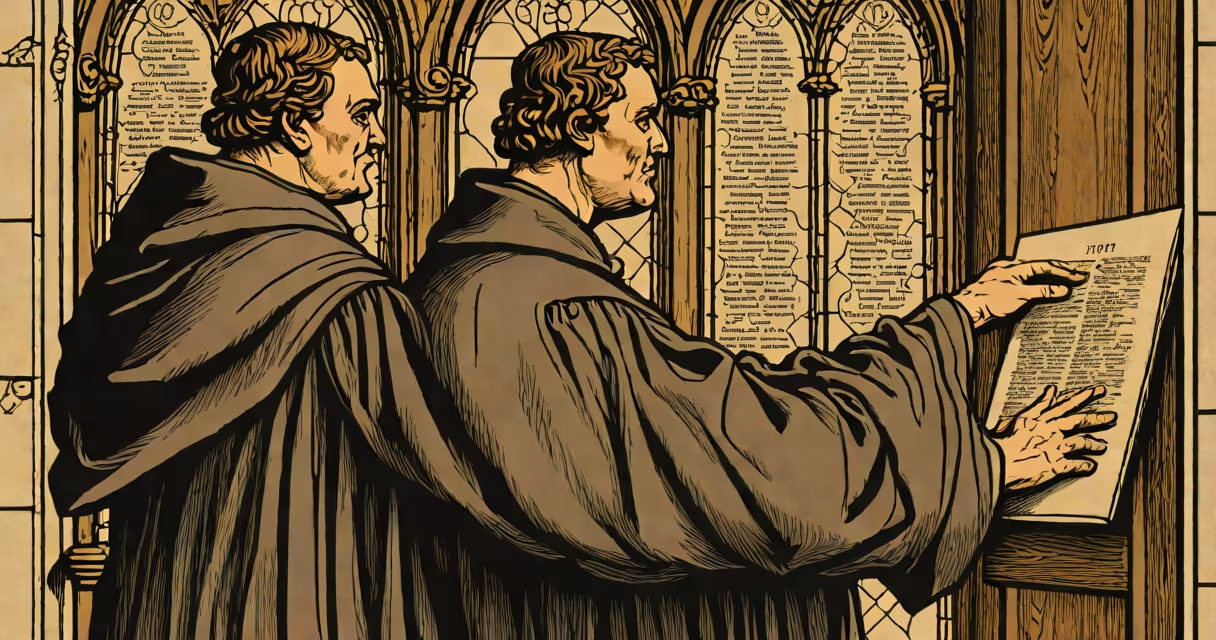
The 5 solas meaning refers to five Latin phrases that summarize the theological foundations of the Protestant Reformation: sola scriptura (Scripture alone), sola fide (faith alone), sola gratia (grace alone), sola christo (Christ alone), and soli deo gloria (to God alone be the glory). These principles emerged in the 16th century as a response to perceived errors in Roman Catholic doctrine and practice.
Sola scriptura asserts that the Bible is the sole infallible authority for Christian belief and practice. This contrasts with Catholic teaching, which holds that tradition and church authority interpret Scripture. The Reformers argued that Scripture alone is sufficient for salvation and doctrine. For example, Martin Luther based his opposition to indulgences on passages like Ephesians 2:8-9, which state salvation comes through grace by faith, not works.
Sola fide means justification is by faith alone. This rejects the idea that good works or sacramental participation earn salvation. Paul writes in Romans 1:17, "The righteous will live by faith," a verse Luther called the "door to paradise." The Reformers believed faith in Christ's atonement, not human effort, reconciles people to God. A person's standing before God depends entirely on Christ's work, not their performance.
Sola gratia emphasizes that salvation is entirely a gift of divine grace. No human merit contributes to it. Ephesians 2:5 says, "Even when we were dead in our sins, [God] made us alive with Christ." This doctrine dismantled the medieval notion that penance and prayers could balance divine justice. Grace is unearned and freely given, as stated in Titus 2:11: "The grace of God has appeared, bringing salvation to all people."
Sola christo declares that Christ alone is the mediator between God and humanity. This counters the Catholic practice of praying to saints and venerating Mary. John 14:6 states, "I am the way and the truth and the life. No one comes to the Father except through me." The Reformers insisted that Christ's sacrifice on the cross is the only basis for forgiveness and reconciliation.
Soli deo gloria means all glory belongs to God alone. This principle redirects worship and purpose away from human achievement and toward divine sovereignty. It appears in Revelation 4:11: "You are worthy, our Lord and God, to receive glory and honor and power." The Reformers rejected the idea that religious leaders or institutions could claim credit for spiritual success.
| Sola | Meaning | Biblical Basis | Reformation Context |
|---|---|---|---|
| sola scriptura | Scripture alone is the ultimate authority | 2 Timothy 3:16-17; Psalm 119:105 | Rejection of papal authority and church tradition as equal to Scripture |
| sola fide | Justification by faith alone | Romans 1:17; Galatians 2:16 | Challenge to indulgences and penance systems |
| sola gratia | Salvation by grace alone | Ephesians 2:8-9; Titus 3:5 | Rejection of merit-based salvation models |
| sola christo | Christ alone is the savior | John 14:6; Acts 4:12 | Opposition to saint veneration and intercessory prayer |
| soli deo gloria | All glory to God alone | Revelation 4:11; 1 Corinthians 10:31 | Refusal to attribute spiritual success to human effort |
These five principles were not formally codified as a single list during the Reformation. They emerged gradually from debates and writings. The term "5 solas" became common in the 19th century as a shorthand for Protestant identity. Historian Mark Noll notes in The Scandal of the Evangelical Mind that the solas represent a "reorientation of Christian theology around the authority of Scripture and the sufficiency of Christ."
A common misconception is that the solas were invented by Martin Luther. He did not use the phrase "5 solas" in his writings. The concept evolved over time through the work of John Calvin, Philipp Melanchthon, and later theologians. The first known use of the term "five solas" appears in a 19th-century German theological treatise, not in Reformation-era documents.
Another misunderstanding is that sola scriptura means believers should interpret the Bible without guidance. That's incorrect. The Reformers emphasized careful exegesis and reliance on the Holy Spirit, not personal whims. As John Calvin wrote in Institutes of the Christian Religion, "Scripture is not to be interpreted according to our own understanding, but by the Spirit who inspired it."
Consider a real-world example: a pastor preaching on salvation. Under sola fide, they teach that a person is declared righteous not because they attend church regularly or give money, but because they trust in Christ. Sola gratia explains that this faith itself is a gift from God. Sola scriptura ensures the sermon is grounded in biblical texts, not tradition. Sola christo keeps the focus on Jesus' death and resurrection. Soli deo gloria closes the message by affirming that God receives all praise for the work of redemption.
I once attended a Lutheran service where the sermon focused on Ephesians 2:8-9. The pastor emphasized that salvation is not earned through tithing or volunteering. He quoted Luther's commentary: "Faith is not something we do to earn grace. It is the hand that receives what God gives." The congregation responded with quiet reflection, not applause. That moment illustrated how the 5 solas meaning shapes worship and belief in practice.
While the 5 solas meaning originated in 16th-century Europe, they remain central to evangelical, Reformed, and many Baptist traditions today. According to Pew Research Center data from 2021, 72% of U.S. Protestants agree that the Bible is the final authority in matters of faith. This reflects the enduring influence of sola scriptura.
Understanding the 5 solas meaning helps distinguish Protestant theology from Catholic, Orthodox, and other Christian traditions. It clarifies why certain practices differ-such as the role of sacraments, the nature of priesthood, and the structure of church governance. These differences are not arbitrary. They stem from foundational convictions about God, scripture, and salvation.