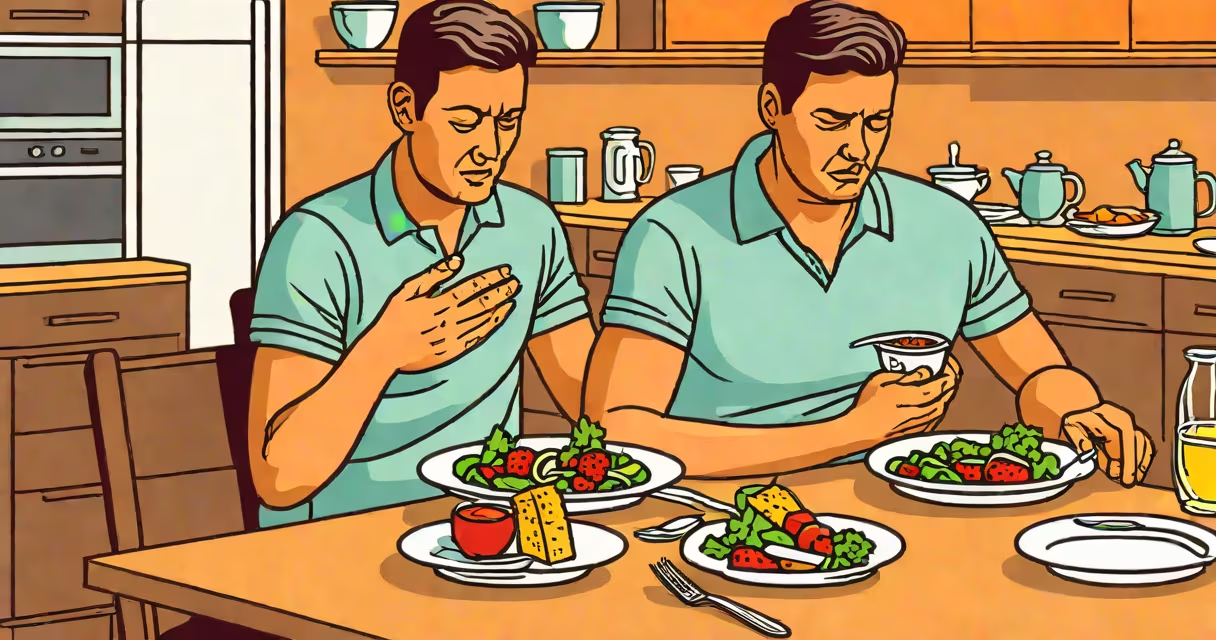
Abdominal pain that worsens after eating is a symptom pattern indicating that digestion triggers or intensifies discomfort in the belly. It often points to conditions affecting the stomach, small intestine, or pancreas, including gastritis, peptic ulcers, gallbladder disease, or food intolerances.
This symptom arises when the digestive process irritates inflamed tissue, increases acid production, or causes spasms in the gastrointestinal tract. The timing-within 15 minutes to two hours after a meal-is a key diagnostic clue. Pain may feel sharp, burning, cramping, or dull, depending on the underlying cause.
According to the American Gastroenterological Association, postprandial pain affects approximately 15% of adults seeking gastroenterology care, with functional gastrointestinal disorders and structural diseases both contributing. Early recognition improves outcomes.
Pain after eating occurs when the act of digesting food stimulates physiological changes that exceed the body's tolerance. For example, increased gastric acid secretion during digestion can erode the lining of the stomach or duodenum, leading to ulceration and localized pain. This mechanism underlies peptic ulcer disease, which accounts for about 10% of chronic abdominal pain cases in primary care settings.
Other mechanisms include mechanical obstruction, such as from a gallstone blocking the common bile duct, or excessive intestinal motility due to irritable bowel syndrome (IBS). In IBS, visceral hypersensitivity amplifies normal gut sensations, turning mild distension into significant pain after eating.
A 2021 study published in Gastroenterology found that patients with postprandial pain had higher levels of pro-inflammatory cytokines in the gut mucosa compared to controls, suggesting immune activation plays a role beyond simple mechanical irritation.
Several distinct conditions produce abdominal pain that worsens after eating. Recognizing the pattern helps narrow diagnosis.
| Condition | Pain Timing | Location | Key Triggers |
|---|---|---|---|
| Peptic ulcer | 15-60 min after meals | Epigastric (upper middle) | Spicy foods, alcohol, NSAIDs |
| Gallstones | 30-90 min after fatty meals | Right upper quadrant | Fried foods, high-fat dairy |
| Irritable bowel syndrome (IBS) | 30-120 min after meals | Lower abdomen, diffuse | High-FODMAP foods, stress |
| Chronic pancreatitis | 1-2 hours after eating | Epigastric, radiating to back | Alcohol, fatty meals |
For instance, a patient with gallstones typically reports right upper quadrant pain after a steak dinner. The pain may last 30 to 90 minutes and resolve slowly. A CT scan confirms gallstones in 85% of symptomatic cases, according to the American College of Radiology.
Food-specific triggers are common. Nuts, for example, contain oils that stimulate gallbladder contraction. In individuals with gallbladder dysfunction, this can cause biliary colic. This specific reaction highlights how dietary components directly influence symptom onset.
Many people dismiss postprandial pain as routine indigestion. But persistent or worsening pain after eating is not normal. It signals that something requires medical evaluation.
Red flags include weight loss, blood in stool, vomiting, or pain that wakes you at night. These signs suggest serious pathology-such as malignancy, strictures, or autoimmune conditions-and warrant prompt investigation.
One overlooked factor is medication-induced pain. Proton pump inhibitors (PPIs) reduce acid but can mask symptoms of ulcers. Conversely, NSAIDs like ibuprofen suppress protective mucus layers in the stomach, increasing ulcer risk. A 2020 review in The Lancet Gastroenterology & Hepatology found that long-term NSAID use increases peptic ulcer incidence by 3.4 times.
Diagnosis begins with a detailed history, focusing on meal timing, food types, pain quality, and associated symptoms. Physical exam findings such as tenderness in the epigastrium or a palpable mass may guide further testing.
Common tests include upper endoscopy to visualize ulcers or inflammation, abdominal ultrasound for gallstones, and breath tests for H. pylori infection-a bacterium linked to 90% of duodenal ulcers. Blood work checks for markers of inflammation or malabsorption.
Treatment targets the root cause. For H. pylori, a 14-day antibiotic regimen achieves eradication in 85% of cases. For gallstones, cholecystectomy resolves symptoms in 92% of patients within six months, per the National Institutes of Health.
As a clinician, I've seen patients delay care for months, assuming their pain was stress-related. One woman reported severe epigastric pain after lunch for eight weeks. Endoscopy revealed a 2.3 cm gastric ulcer. After treatment with omeprazole and clarithromycin, her pain resolved completely in four weeks.
Abdominal pain that worsens after eating is often mistaken for heartburn or acid reflux. While both involve post-meal discomfort, heartburn typically presents as a burning sensation behind the sternum, not in the abdomen. True gastric pain is located lower, often in the upper central area.
Another confusion is between functional pain and organic disease. Functional gastrointestinal disorders like IBS lack visible structural damage but still cause real pain. Distinguishing them requires ruling out organic causes through testing.
Pain after eating is not always related to food intake. Some patients report pain after drinking water or even at rest. This suggests a separate issue-like chronic pancreatitis or referred pain from the spine-where eating merely coincides with symptom onset.
Postprandial pain is not a standalone diagnosis. It's a signpost pointing toward specific pathologies. Ignoring it risks missing treatable conditions like early-stage pancreatic cancer, which presents with vague abdominal pain after meals and is often diagnosed late.
Understanding abdominal pain that worsens after eating leads to earlier intervention. Identifying the trigger-whether it's a fatty meal, a specific food, or a medication-can prevent complications. If pain persists beyond a few days or recurs frequently, consult a healthcare provider.
Recognizing the pattern and acting on it improves outcomes. Abdominal pain that worsens after eating should never be dismissed as normal.