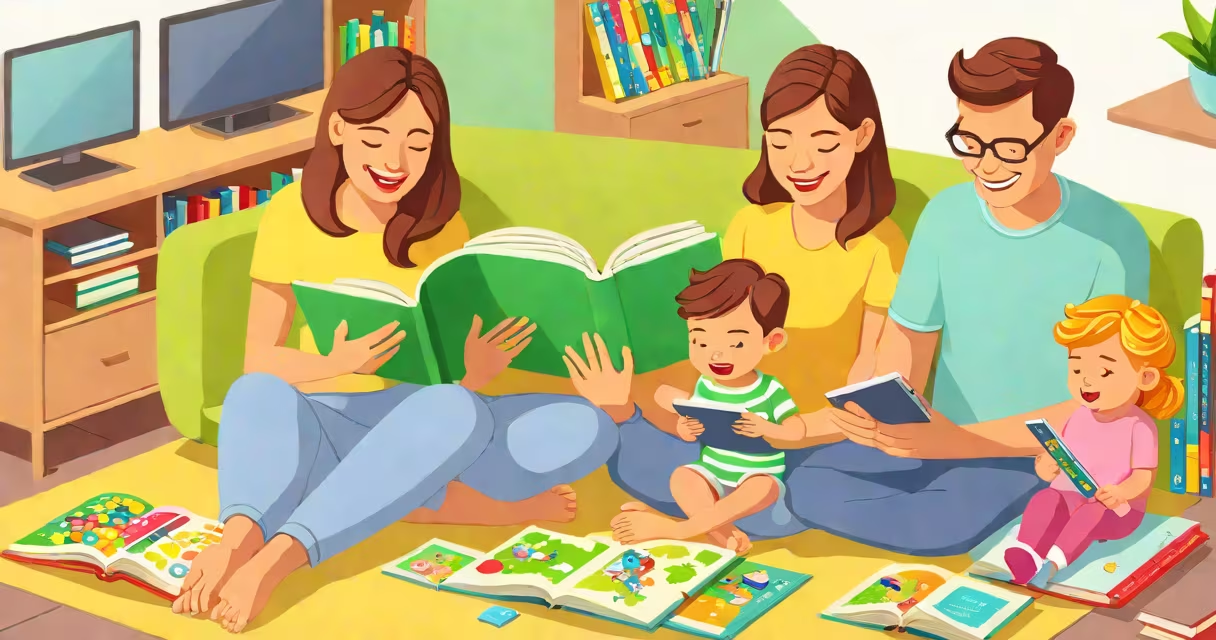
Read aloud stories for kids are narrated books where an adult or recorded voice reads text aloud to children, typically during shared reading sessions. This practice builds vocabulary, listening skills, and emotional bonds through consistent storytelling. The format includes picture books, audiobooks, and live readings designed for ages 2 to 8.
These stories work by pairing spoken language with visual cues from illustrations. When a voice articulates words while showing images, children link sounds to meanings. This dual input strengthens neural pathways for language acquisition. Research from the National Institute of Child Health and Human Development confirms that regular read-aloud sessions improve phonological awareness and narrative comprehension in preschoolers.
Most read aloud stories follow a predictable structure: a beginning with setting, a middle with conflict or action, and an end with resolution. This structure helps children anticipate events and understand cause-and-effect relationships. For example, in *The Very Hungry Caterpillar* by Eric Carle, the caterpillar eats increasing amounts of food each day-counted aloud-before transforming into a butterfly. The repetition of "He ate through..." reinforces sequencing and counting.
Read aloud stories fall into three main categories based on delivery method and interaction level:
| Type | Delivery Format | Best For | Example |
|---|---|---|---|
| Live Reading | Adult reads aloud in person | Emotional engagement, eye contact, responsive interaction | A parent reading *Where the Wild Things Are* at bedtime |
| Recorded Audio | Pre-recorded narration, often with music or sound effects | Consistency, multitasking, accessibility during travel | Storyline app narrating *Goodnight Moon* with soft lullaby music |
| Interactive Digital | Animated video with touch-responsive elements and voiceover | Active participation, motor skill integration, tech familiarity | ABCmouse's version of *The Cat in the Hat* with clickable objects and character voices |
Live reading remains the most effective for cognitive and emotional development. A 2021 study published in *Pediatrics* found that children exposed to daily live read-alouds had 30% higher vocabulary growth over six months compared to those who only heard recordings.
Children who hear stories regularly develop stronger foundational literacy skills. The American Academy of Pediatrics recommends at least 20 minutes of daily shared reading starting from birth. This routine supports brain development in areas responsible for memory, attention, and language processing.
For example, a 4-year-old listening to *Green Eggs and Ham* by Dr. Seuss hears rhyming patterns, alliteration ("Sam-I-Am"), and repeated phrases. These features make language predictable and memorable. After hearing the story five times, the child may begin to recite lines independently-a sign of internalized syntax and rhythm.
Read aloud stories also build emotional intelligence. Characters face fears, resolve conflicts, and express feelings. When a child hears a character cry or feel shy, they learn to recognize and label emotions. This mirrors real-life social experiences and fosters empathy.
Many assume that read aloud stories are only for learning to read. That's incorrect. While they support early literacy, their primary role is communication and connection. A child doesn't need to decode words to benefit from a story told with expression, pauses, and gestures.
Another myth is that only picture books qualify. In reality, read aloud stories include chapter books, folktales, and even nonfiction. *National Geographic Kids* magazine features short articles about animals narrated in a conversational tone-perfect for read-aloud sessions with older preschoolers.
Some parents believe they must read perfectly. But children respond more to enthusiasm than pronunciation accuracy. My daughter, now 6, still remembers the time I mispronounced "chrysanthemum" as "kris-an-them-um." She laughed, then asked me to say it again-this moment became a family ritual. What mattered wasn't perfection-it was presence.
Start with books that match your child's interests and developmental stage. For toddlers, choose titles with repetitive phrases, bold visuals, and tactile elements. Try *Dear Zoo* by Rod Campbell-each page reveals a new animal behind a flap. The surprise element keeps attention focused.
For ages 4-7, select stories with clear plot arcs and emotional stakes. *Charlotte's Web* by E.B. White offers rich dialogue and moral questions. Reading aloud allows children to process themes like friendship and loss through discussion afterward.
Set a consistent time-like 15 minutes before bed-to reduce resistance. Make it a ritual: dim lights, sit close, pause for questions. Children learn that stories are safe spaces for curiosity and wonder.
Read aloud stories for kids are not just about teaching letters or sounds. They're about sharing moments, building trust, and nurturing minds. When a child listens to a story, they aren't just absorbing words-they're learning how to listen, dream, and belong.