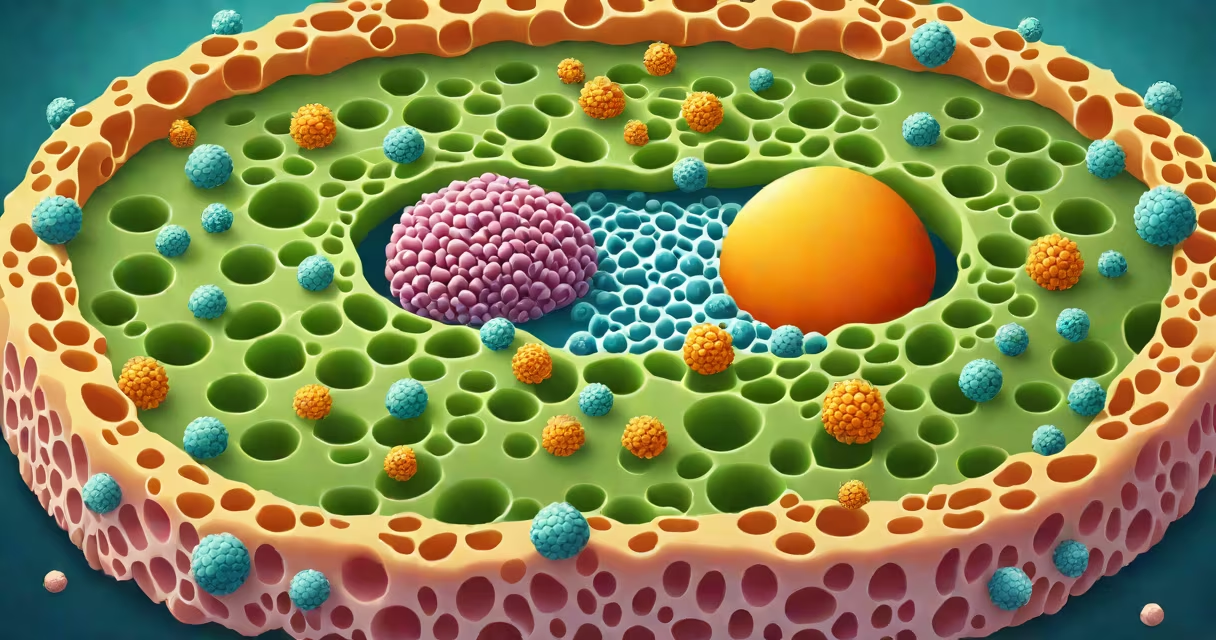
Animal cells are eukaryotic cells that lack cell walls and chloroplasts, contain membrane-bound organelles, and serve as the fundamental units of multicellular organisms. They rely on mitochondria for energy production and maintain internal balance through complex regulatory systems.
Animal cells differ from plant cells in several structural and functional ways. They lack rigid cell walls, which allows flexibility in shape and movement. They do not perform photosynthesis because they lack chloroplasts. Instead, they obtain energy by breaking down glucose in mitochondria through aerobic respiration. The absence of a cell wall enables animal cells to form tight junctions and specialized tissues such as nerves and muscles.
These cells are organized around a central nucleus containing DNA. The nucleus controls gene expression and coordinates cellular activities. Surrounding the nucleus is the cytoplasm, a gel-like matrix where most metabolic reactions occur. Organelles like lysosomes, Golgi apparatus, and endoplasmic reticulum carry out specific tasks essential for survival.
The plasma membrane forms the outer boundary of the cell. Composed of a phospholipid bilayer with embedded proteins, it regulates what enters and exits the cell. Ion channels and transporters maintain electrochemical gradients critical for nerve signaling and muscle contraction.
The nucleus houses chromatin, which condenses into chromosomes during cell division. Nuclear pores allow selective exchange of molecules between the nucleus and cytoplasm. The nucleolus within the nucleus synthesizes ribosomal RNA and assembles ribosomal subunits.
Centrosomes organize microtubules during cell division. They contain centrioles-cylindrical structures made of nine triplet microtubules-that help form the spindle fibers responsible for separating chromosomes.
Each organelle performs a specialized function. Mitochondria generate ATP through oxidative phosphorylation. A single human liver cell contains about 1,000 mitochondria, producing enough energy to power thousands of cellular processes per second.
Lysosomes contain hydrolytic enzymes that break down waste materials and cellular debris. They maintain pH around 5.0, optimal for enzyme activity. Deficiencies in lysosomal enzymes cause inherited disorders such as Tay-Sachs disease.
The endoplasmic reticulum exists in two forms: rough ER, studded with ribosomes for protein synthesis, and smooth ER, involved in lipid metabolism and detoxification. In liver cells, smooth ER metabolizes drugs and alcohol.
Animal cells differentiate into hundreds of specialized types based on function. Neurons transmit electrical signals across synapses. Red blood cells carry oxygen using hemoglobin. Skeletal muscle cells contract via actin and myosin filaments.
Epithelial cells line surfaces and form barriers. For example, intestinal epithelial cells absorb nutrients through microvilli-finger-like projections that increase surface area. A single villus can host over 1,000 microvilli, enhancing absorption efficiency by up to 600 times.
Immune cells like macrophages engulf pathogens through phagocytosis. These cells extend pseudopods to surround and digest foreign material, then present antigens to activate adaptive immunity.
| Cell Type | Primary Function | Unique Feature |
|---|---|---|
| Neuron | Signal transmission | Myelinated axons for rapid impulse conduction |
| Red Blood Cell | Oxygen transport | Disc-shaped, lacks nucleus and mitochondria |
| Adipocyte | Energy storage | Large lipid droplet displaces nucleus to periphery |
| Epidermal Cell | Barrier protection | Produces keratin for skin resilience |
Many assume all animal cells have the same structure. This is false. Cell morphology varies widely depending on location and role. For example, sperm cells have streamlined shapes optimized for motility, while oocytes are large and nutrient-rich to support early embryonic development.
Another misconception is that animal cells lack vacuoles. While they don't have large central vacuoles like plant cells, they do possess small vesicles for storage and transport. Endosomes and lysosomes are specialized vesicles involved in sorting and degrading materials.
A lesser-known fact: animal cells can undergo apoptosis, a programmed cell death process triggered by internal or external signals. This prevents damaged cells from becoming cancerous. Apoptosis involves caspase activation and DNA fragmentation, leading to cell shrinkage and membrane blebbing.
I once observed a live culture of human fibroblasts under a phase-contrast microscope. After adding a fluorescent dye targeting mitochondria, I watched the organelles move along microtubule tracks in real time. The changing motion demonstrated how intracellular transport relies on motor proteins like kinesin and dynein.
Medical research uses animal cell lines extensively. HeLa cells, derived from cervical cancer tissue in 1951, remain one of the most widely used cell lines in biology. They grow rapidly, survive freezing, and have contributed to discoveries in virology, genetics, and drug testing.
Understanding animal cell facts supports advances in regenerative medicine. Induced pluripotent stem cells (iPSCs) are reprogrammed adult cells that regain the ability to differentiate into any cell type. Researchers use iPSCs to model diseases and test treatments without human trials.
Plant cells have rigid cell walls made of cellulose, which provide structural support. Animal cells lack this feature, allowing them to change shape and migrate through tissues. This difference explains why immune cells can squeeze through capillary walls-a process called diapedesis.
Plant cells contain chloroplasts for photosynthesis. Animal cells do not. Instead, they depend on ingested food for carbon and energy. This metabolic dependency shapes the evolution of digestive systems and circulatory networks.
While both cell types have nuclei and mitochondria, only animal cells form centrosomes with centrioles. Centrioles anchor the mitotic spindle and are essential for accurate chromosome segregation during cell division.
Knowledge of animal cell facts enables deeper understanding of health, disease, and biological innovation. From basic biology to advanced medical therapies, these microscopic units define life as we know it.