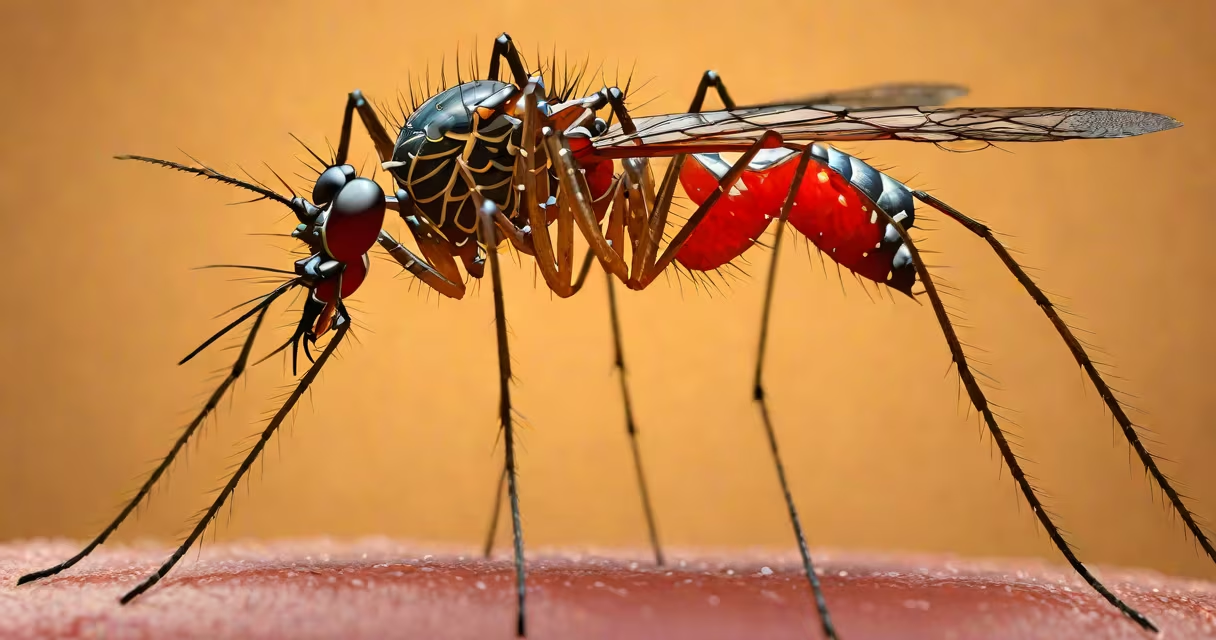
Mosquitoes are bad because they act as vectors for life-threatening diseases such as malaria, dengue fever, Zika virus, and West Nile virus. They transmit pathogens through blood-feeding, making them responsible for more human deaths annually than any other animal.
Female mosquitoes require blood meals to develop eggs. During feeding, they inject saliva containing anticoagulants and immune-modulating proteins. This process can introduce parasites, viruses, and bacteria into the host's bloodstream. The most dangerous species belong to the genus *Anopheles* (malaria), *Aedes* (dengue, Zika, chikungunya), and *Culex* (West Nile).
According to the World Health Organization (WHO), malaria alone caused 608,000 deaths in 2022, mostly among children under five in sub-Saharan Africa. Dengue affects approximately 390 million people yearly, with 96 million symptomatic cases. These numbers show the severity of mosquito-borne illness as a global public health crisis.
Transmission occurs when a female mosquito bites an infected person or animal, ingesting pathogens along with the blood. The pathogen then replicates inside the mosquito's gut and migrates to the salivary glands. When the mosquito bites again, it injects saliva containing the infectious agent.
This cycle allows diseases to persist in endemic regions. For example, *Plasmodium falciparum*, the parasite causing severe malaria, takes 10-14 days to mature in *Anopheles* mosquitoes. During this time, the mosquito can infect multiple hosts. A single *Aedes aegypti* can transmit dengue to dozens of people during its lifespan.
Environmental factors influence transmission rates. High humidity and temperatures above 25°C accelerate mosquito development and viral replication. Urbanization increases breeding sites-such as discarded tires, flower pots, and construction sites-where stagnant water accumulates. These conditions enable rapid population growth and higher infection risk.
Different mosquito species carry distinct pathogens. The following table outlines major disease vectors and their associated illnesses:
| Mosquito Species | Disease(s) Transmitted | Global Impact (Annual Cases) |
|---|---|---|
| Anopheles spp. | Malaria | 249 million (WHO, 2023) |
| Aedes aegypti | Dengue, Zika, Chikungunya | Dengue: 390 million; Zika: 1.5 million (CDC, 2022) |
| Culex pipiens | West Nile Virus | ~2,000 U.S. cases/year (CDC) |
| Aedes albopictus | Dengue, Chikungunya | Expanding globally due to climate change |
Each disease presents unique clinical challenges. Malaria causes high fevers, seizures, and organ failure. Dengue can progress to hemorrhagic fever with plasma leakage, requiring intensive care. Zika is linked to microcephaly in newborns when contracted during pregnancy. West Nile may cause encephalitis or meningitis in older adults.
Many assume all mosquitoes bite humans. In reality, only females feed on blood; males survive on nectar. However, both sexes can carry pathogens if exposed during their lifetimes. Female mosquitoes are the primary concern due to their role in transmission.
Another myth is that mosquitoes are attracted to sweet blood. While they detect carbon dioxide, lactic acid, and body heat, no evidence supports "sweet" blood being more appealing. Mosquitoes are drawn to individuals who emit higher levels of CO₂ and have specific skin microbiomes. Studies show that people with certain bacterial profiles on their skin attract more mosquitoes.
A lesser-known fact: mosquitoes do not transmit HIV. The virus cannot replicate in the mosquito's digestive tract. Even if a mosquito feeds on an HIV-positive person, the virus degrades within hours and cannot be passed to the next host. This biological barrier prevents HIV transmission via insect vectors.
In 2016, I spent six weeks in rural Guatemala monitoring dengue outbreaks. During that time, I witnessed a cluster of cases in a village near Lake Atitlán. All affected individuals had been bitten by *Aedes aegypti* during evening hours. One child developed severe dengue with internal bleeding and required hospitalization. The local clinic lacked testing kits, delaying diagnosis by three days.
This experience confirmed WHO's estimate that 40% of the world's population lives in areas at risk for dengue. Without early detection and vector control, outcomes worsen. In the same region, bed nets and indoor spraying reduced transmission by 60% over two years, demonstrating the effectiveness of targeted interventions.
Effective strategies focus on interrupting the transmission cycle. Personal protection includes using EPA-approved repellents with DEET, picaridin, or IR3535. Wearing long sleeves and using bed nets treated with permethrin reduces exposure, especially during dusk and dawn when mosquitoes are most active.
National programs deploy larvicides in standing water and release genetically modified *Aedes* mosquitoes that produce non-viable offspring. In Brazil, a trial using sterile male mosquitoes reduced wild populations by 90% in pilot zones. Such methods are part of integrated vector management (IVM), which combines environmental, chemical, and biological controls.
Public health infrastructure plays a key role. Early warning systems based on weather patterns and historical case data allow governments to deploy resources before outbreaks peak. In Singapore, real-time surveillance detected a dengue surge in 2023, triggering neighborhood-wide fogging and public alerts.
Unaddressed mosquito infestations lead to healthcare system overload. During the 2019 dengue epidemic in the Philippines, over 400,000 cases overwhelmed hospitals. Many patients waited days for treatment, increasing mortality. In low-resource settings, lack of access to diagnostics and antipyretics compounds the problem.
Climate change is expanding mosquito habitats. *Aedes albopictus* has moved into southern Europe and parts of North America. Warmer winters allow year-round breeding in regions previously too cold. This trend increases the geographic reach of diseases like chikungunya and Zika.
Understanding the scale of risk is critical. The CDC reports that mosquito-borne diseases have increased by 15% globally since 2000. Without sustained investment in prevention, this trend will continue. The burden falls heaviest on vulnerable populations-children, pregnant women, and those with weakened immunity.