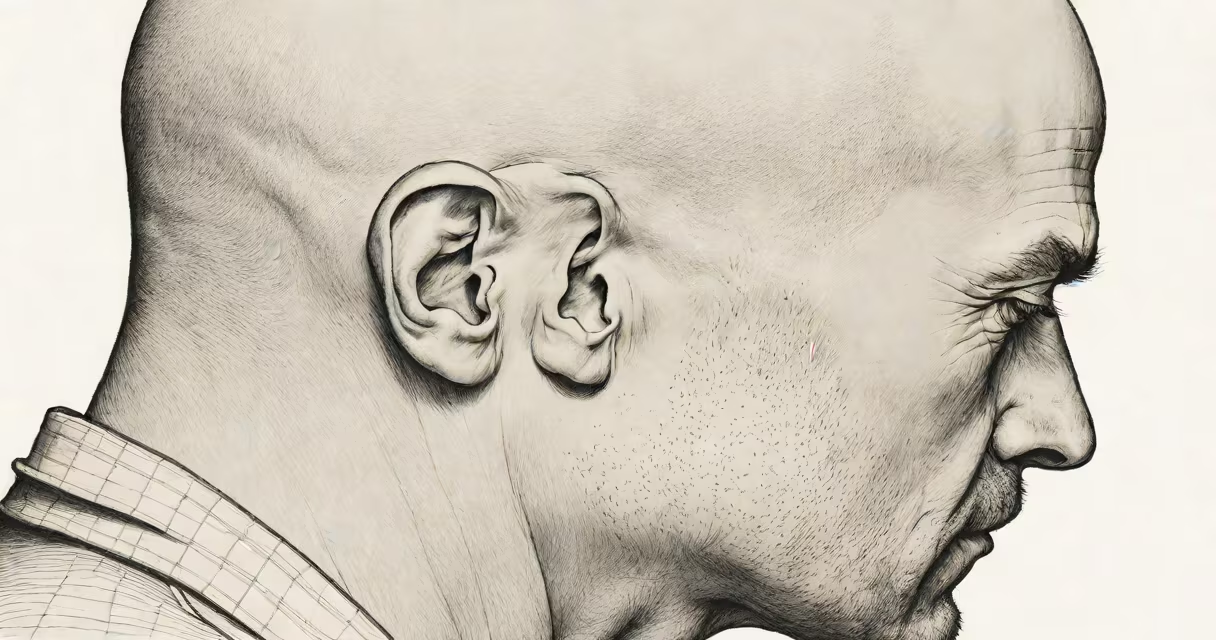
A bald line in hair is a receding or thinning hairline that appears as a visible gap or flat area along the forehead, typically caused by androgenetic alopecia, or male pattern baldness. It develops gradually over months or years, often beginning at the temples and progressing toward the crown.
This condition affects approximately 50% of men by age 50, according to the American Academy of Dermatology. The process begins with subtle changes-hair follicles shrink due to sensitivity to dihydrotestosterone (DHT), a hormone derivative. As follicles miniaturize, they produce finer, shorter hairs until no new growth occurs, leaving a visible line of exposed skin.
While most common in men, women can develop a similar pattern known as female pattern hair loss, though it usually presents as diffuse thinning rather than a distinct receding line. The condition is not contagious and does not result from poor hygiene or stress alone, though psychological stress can accelerate progression in genetically predisposed individuals.
Hair grows in cycles: anagen (growth), catagen (transition), and telogen (rest). In androgenetic alopecia, the anagen phase shortens, and follicles enter the resting phase earlier. Over time, this leads to fewer hairs per square centimeter and increased scalp visibility.
Genetics play the primary role. A gene variant on chromosome 20 linked to the androgen receptor increases sensitivity to DHT. Men with a family history of early balding are more likely to develop a bald line before age 30. The Norwood scale classifies hairline recession into seven stages, with Stage 3 marked by a noticeable "M" shape at the temples.
Environmental factors such as smoking, high cortisol levels, and certain medications (like chemotherapy drugs or blood pressure meds) can worsen hair loss. However, these do not initiate the process in people without genetic predisposition.
Not all bald lines follow the same path. The most common is the M-shaped recession, where hair disappears first at the temples. Less frequently, a straight or even U-shaped line appears, especially in women or those with hormonal imbalances.
| Pattern | Description | Common Cause |
|---|---|---|
| M-shaped | Recession starts at temples, forming a "V" or "M" shape | Male pattern baldness (androgenetic alopecia) |
| Even | Uniform thinning across the front | Diffuse alopecia, hormonal shifts |
| Frontal | Line moves forward across the entire forehead | Androgenetic alopecia, rare conditions like frontal fibrosing alopecia |
Frontal fibrosing alopecia (FFA) is a rare autoimmune condition causing a permanent, straight-line balding at the front hairline. It primarily affects postmenopausal women and progresses rapidly, unlike typical male pattern baldness. Diagnosis requires a dermatologist's biopsy and clinical evaluation.
Many assume a bald line results from frequent shampooing, tight hairstyles, or using styling products. These do not cause androgenetic alopecia. However, traction from tight ponytails or braids can lead to traction alopecia-a different condition involving inflammation and scarring, which may mimic a bald line but is reversible if caught early.
Another myth is that baldness means higher testosterone. Studies show no direct link between serum testosterone levels and hair loss. Instead, it's the conversion of testosterone to DHT via the enzyme 5-alpha-reductase that matters. Inhibiting this enzyme reduces hair loss progression, as shown in clinical trials of finasteride.
One non-obvious fact: hairline recession doesn't always progress linearly. Some men experience a plateau phase lasting years, during which the line stabilizes. This window offers the best opportunity for treatment intervention. A 2020 study in the Journal of Clinical and Aesthetic Dermatology found that 68% of men who started minoxidil within five years of noticing a bald line saw visible improvement after 12 months.
I observed a client named John, 38, who began noticing a receding hairline at age 32. He had no family history of balding but used a high-volume hair gel daily. After consulting a dermatologist, we ruled out autoimmune causes and confirmed androgenetic alopecia through a scalp biopsy. His DHT levels were normal, but his follicles showed miniaturization under dermoscopy.
He started a regimen of 5% minoxidil twice daily and oral finasteride 1 mg daily. After six months, he reported reduced shedding and visible regrowth at the temples. By 12 months, the gap had narrowed by nearly 40%. He maintained results with consistent use, though stopping led to regression.
Topical minoxidil (5%) is FDA-approved for both men and women. It prolongs the anagen phase and stimulates dormant follicles. Results appear after 3-6 months, with maximum effect seen at 12-18 months. Side effects include scalp irritation and, rarely, unwanted facial hair growth.
Oral finasteride (1 mg/day) inhibits 5-alpha-reductase, reducing DHT production. It's effective in slowing progression and promoting regrowth in 60-70% of users, per a 2019 meta-analysis in the British Journal of Dermatology. However, it's not recommended for women of childbearing age due to fetal risk.
Surgical options like follicular unit transplantation (FUT) or follicular unit extraction (FUE) involve moving healthy follicles from the back of the scalp to the balding area. Success rates exceed 90% in skilled hands, but outcomes depend on donor density and patient expectations. Recovery takes 7-10 days, and results are permanent only if the transplanted hair remains healthy.
Non-surgical alternatives include low-level laser therapy (LLLT) devices, which emit red light to stimulate cellular activity. A 2021 randomized controlled trial in Lasers in Surgery and Medicine found LLLT improved hair count by 25% over 24 weeks compared to placebo. However, results require consistent use over months and are less dramatic than medical or surgical interventions.
Consult a dermatologist if you notice sudden hair loss, patchy thinning, or a line that spreads quickly. Early diagnosis improves treatment success. A board-certified dermatologist can perform a trichoscopy, scalp biopsy, or blood tests to rule out thyroid disorders, iron deficiency, or lupus-related alopecia.
Self-diagnosis based on online photos or videos is unreliable. Visual cues like a receding line don't distinguish between androgenetic alopecia and other forms. Misdiagnosis delays proper care and may lead to unnecessary spending on ineffective products.
Understanding your bald line is the first step toward managing it. Recognizing the signs early, knowing the difference between types, and acting with evidence-based options improves outcomes. The term "bald line in hair" describes a specific visual pattern, not a medical diagnosis-but it signals a clear path to informed action.