Becoming a pathologist requires completing medical school, a four-year pathology residency, and often a one- to two-year fellowship in a subspecialty such as hematopathology or forensic pathology. This path leads to board certification and licensure to practice in clinical or anatomic pathology.
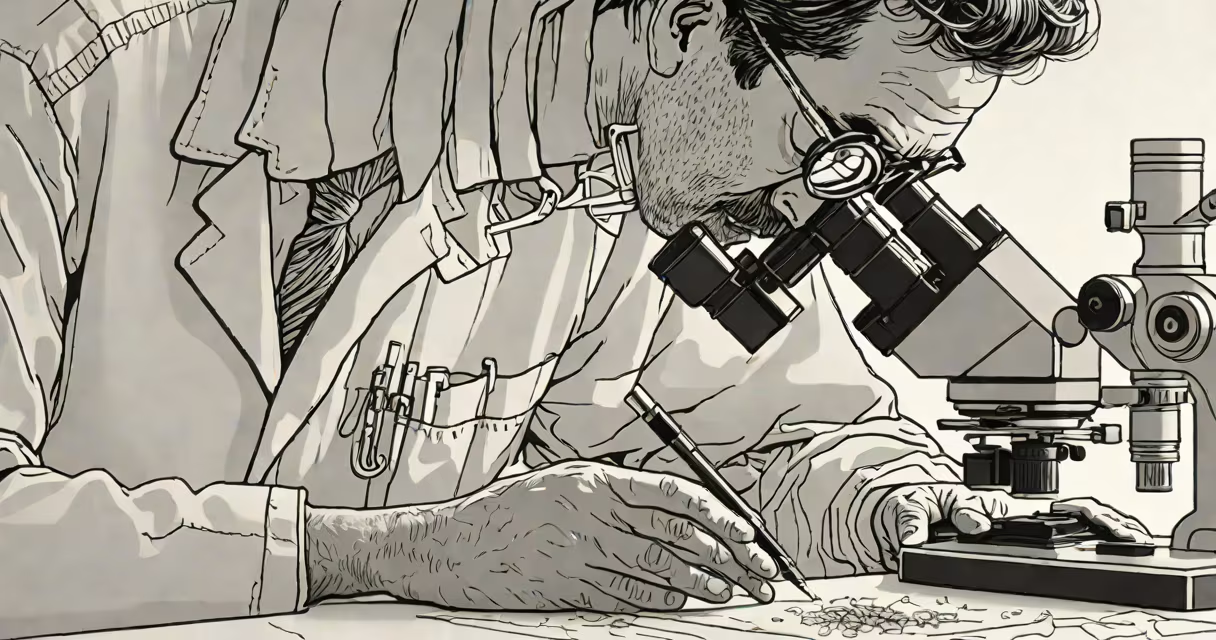
Pathologists are physicians who diagnose disease by analyzing tissues, fluids, and cells. They work behind the scenes in hospitals and laboratories, providing critical insights that guide treatment decisions. Unlike primary care doctors, they rarely see patients face-to-face. Instead, their reports inform oncologists, surgeons, and internists about cancer stages, infection types, and genetic markers.
The role demands precision. A single misread slide can delay treatment or lead to incorrect therapy. For example, a pathologist identifying a rare subtype of lymphoma may alter a patient's chemotherapy regimen. The American Board of Pathology (ABP) certifies specialists after they pass written and oral exams based on real-world cases.
After earning a medical degree (MD or DO), aspiring pathologists enter a pathology residency program accredited by the Accreditation Council for Graduate Medical Education (ACGME). These programs last four years and include rotations in surgical pathology, cytopathology, hematopathology, and clinical pathology.
During the first year, residents learn to interpret biopsies and autopsy findings. By the second year, they begin managing complex cases independently. In the third and fourth years, they take on supervisory roles, teaching medical students and guiding junior residents. Most programs require participation in quality assurance audits and research projects.
For those pursuing subspecialization, a fellowship follows the residency. A fellowship in dermatopathology, for instance, adds another year of focused training. Candidates must apply through the National Residency Matching Program (NRMP), where competition is high-especially for programs at academic medical centers like Johns Hopkins or Mayo Clinic.
There are two main branches of pathology: anatomic and clinical. Anatomic pathology involves examining tissues and organs, while clinical pathology focuses on blood, urine, and other bodily fluids.
| Type | Focus Area | Training Duration | Subspecialties |
|---|---|---|---|
| Anatomic Pathology | Tissue samples, autopsies, surgical specimens | 4 years | Dermatopathology, neuropathology, pediatric pathology |
| Clinical Pathology | Blood tests, microbiology, molecular diagnostics | 4 years | Hematology, clinical chemistry, transfusion medicine |
| Combined AP/CP | Both tissue and fluid analysis | 4 years | Same subspecialties, but dual certification |
Some pathologists pursue combined training in both anatomic and clinical pathology. This dual certification allows them to manage entire diagnostic workflows-from drawing blood to interpreting tissue slides. The ABP offers separate boards for each track, and candidates must pass both exams to earn dual certification.
A common misconception is that all pathologists work in hospitals. While most do, others serve in private labs, pharmaceutical companies, or public health agencies. Forensic pathologists, for example, work with law enforcement to determine cause of death in suspicious cases. The Office of the Chief Medical Examiner in New York City employs pathologists who perform over 10,000 autopsies annually.
Another misunderstanding is that pathologists don't interact with patients. While they don't conduct routine exams, they often consult with clinicians during multidisciplinary tumor boards. At Memorial Sloan Kettering Cancer Center, pathologists participate in weekly meetings where they discuss biopsy results with oncologists and radiologists to refine treatment plans.
Some assume pathology is purely observational. In reality, modern pathology integrates advanced technologies. Digital pathology systems allow pathologists to view whole-slide images remotely. At the University of Pittsburgh Medical Center, pathologists use AI-assisted tools to detect early signs of colorectal cancer in colonoscopy samples. These tools reduce false negatives by 18%, according to a 2022 study published in *The Journal of Pathology*.
Dr. Elena Torres entered medical school at the University of California, San Diego in 2016. After graduating in 2020, she matched into a pathology residency at Cedars-Sinai Medical Center in Los Angeles. Her first year included 12-week rotations in surgical pathology, autopsy, and cytopathology.
In her second year, she diagnosed a rare form of thyroid carcinoma using immunohistochemistry. The case was presented at a national conference and later published in *Archives of Pathology & Laboratory Medicine*. She completed her residency in 2024 and began a fellowship in hematopathology at the Mayo Clinic in Rochester, Minnesota.
She passed the American Board of Pathology exam in June 2025. Her certification allows her to report on bone marrow biopsies, flow cytometry results, and lymph node evaluations. She now works in a tertiary care center, where her diagnoses influence treatment for over 150 patients per month.
One non-obvious fact: many pathologists never see the patient whose sample they're analyzing. Yet their decisions impact outcomes. A 2021 study in *The New England Journal of Medicine* found that accurate pathology reporting reduced unnecessary surgeries by 27% in breast cancer cases.
Becoming a pathologist is a demanding but rewarding path. It requires years of training, attention to detail, and a commitment to scientific rigor. The field continues to evolve with new technologies, but the core mission remains unchanged: to uncover the truth hidden in tissue and fluid.