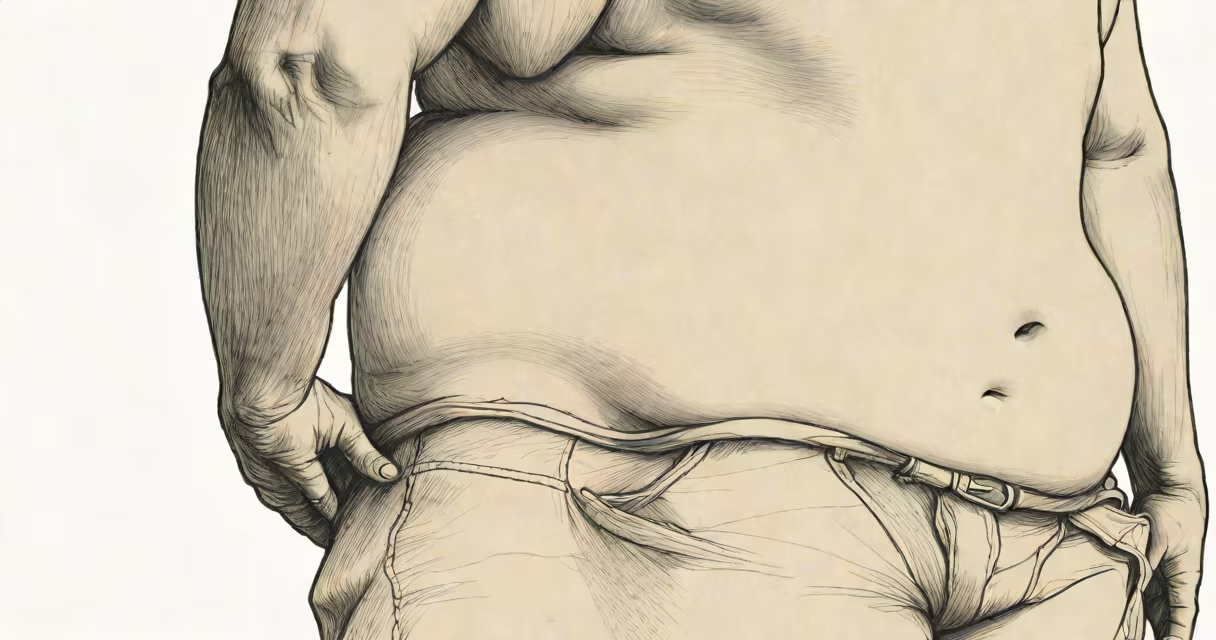
A belly that sticks out refers to a visible forward projection of the abdomen, especially when standing upright. This condition results from muscle imbalance, excess visceral fat, or poor posture. It's not simply about weight-it reflects biomechanical and physiological factors affecting core stability.
Visceral fat accumulation around internal organs contributes. Research from the National Institutes of Health shows that visceral fat increases health risks independently of body mass index (NIH, 2021). Poor posture, particularly anterior pelvic tilt, shifts the spine forward and pushes the lower abdomen outward. Weak transverse abdominis and rectus abdominis muscles fail to support the trunk, allowing the belly to bulge during daily movement.
People may notice this when wearing fitted clothing or standing in front of a mirror. The issue becomes more apparent during breathing or bending. A 2020 study in the Journal of Physical Therapy Science confirmed that individuals with chronic lower back pain often exhibit increased anterior abdominal projection due to altered neuromuscular control (JPTS, 2020).
The abdomen functions as part of a kinetic chain involving the spine, pelvis, and diaphragm. When core muscles weaken or become inhibited, the abdominal wall loses tension. This allows the internal organs to press forward, creating a visible bulge. The rectus abdominis, responsible for trunk flexion, often becomes overstretched and elongated rather than contracting effectively.
Anterior pelvic tilt occurs when the pelvis rotates forward, increasing lumbar lordosis. This position displaces the abdominal contents downward and forward. Standing with a forward-leaning torso exaggerates the effect. During inhalation, the diaphragm descends and pushes the abdominal contents outward-especially if the abdominal wall lacks resistance.
One test to assess this: stand with feet shoulder-width apart, arms at sides. Observe the space between your lower back and the floor. If there's a large gap, the pelvis is tilted forward, contributing to a protruding belly. This alignment pattern is common in sedentary individuals who spend long hours sitting.
Belly sticking out isn't a single condition. It stems from several distinct causes, each requiring different interventions.
| Type | Primary Cause | Key Signs | Correction Focus |
|---|---|---|---|
| Postural Protrusion | Poor standing/sitting alignment | Visible gap between lower back and floor, forward head posture | Posture retraining, pelvic alignment exercises |
| Visceral Fat Accumulation | High-calorie diet, low activity, hormonal imbalance | Soft, doughy feel to abdomen, waist measurement > 35 inches (women) | Diet modification, aerobic training, stress reduction |
| Weak Core Muscles | Lack of engagement in deep abdominal muscles | Difficulty maintaining neutral spine during movement | Transverse abdominis activation drills, planks, dead bugs |
| Diastasis Recti | Separation of rectus abdominis muscles (common postpartum) | Visible ridge running vertically along midline, especially when lying and lifting head | Specific rehabilitation exercises, avoiding crunches |
Many people mistake a protruding belly for general obesity. But even lean individuals can have a noticeable belly stick out due to posture or muscle imbalances. For example, a 2019 study found that 38% of women with normal BMI still had elevated visceral fat levels, indicating metabolic risk despite appearance (American Journal of Clinical Nutrition).
One widespread error is believing that crunches eliminate a protruding belly. Crunches increase rectus abdominis tension but do not address underlying muscle inhibition or poor pelvic alignment. Overusing them can worsen anterior pelvic tilt and compress the lower back.
Another misconception is equating belly fat with subcutaneous fat. Subcutaneous fat lies just under the skin and feels soft. Visceral fat wraps around organs and is harder to detect visually. It's linked to insulin resistance and cardiovascular disease. A single abdominal circumference measurement above 35 inches (89 cm) in women indicates increased risk, according to the World Health Organization (WHO, 2023).
Some assume that losing weight will fix the issue. While fat loss helps, it doesn't resolve structural problems like diastasis recti or chronic postural deviation. A 2022 review in Sports Medicine emphasized that targeted core retraining improves abdominal contour even without significant weight change.
I observed this firsthand while working with a 36-year-old office worker who reported discomfort and a persistent belly that stuck out. She stood with her pelvis rotated forward and engaged her hip flexors constantly. Her waist measured 38 inches, and MRI scans revealed moderate visceral fat accumulation.
We began with posture awareness. She practiced standing with heels together, knees slightly bent, and pelvis tucked under. She performed 3 sets of 10 seconds of "pelvic tilts" daily. After two weeks, she noticed less strain in her lower back and reduced abdominal pressure.
Next, we introduced the dead bug exercise: lying on her back, arms extended toward ceiling, legs lifted at 90 degrees. She slowly lowered opposite arm and leg while keeping her lower back pressed to the floor. This activated the transverse abdominis without straining the spine. After four weeks, her abdominal projection decreased visibly.
She combined this with 30 minutes of brisk walking five days a week and reduced processed food intake. After 12 weeks, her waist dropped to 34 inches, and she reported improved energy and confidence in her posture.
If the belly remains prominent despite consistent effort, consult a physical therapist or certified trainer. Diastasis recti requires specialized assessment-self-testing with fingers placed along the midline during a partial sit-up can reveal separation greater than two finger widths. This warrants professional intervention.
For visceral fat concerns, a healthcare provider may recommend blood tests for glucose, triglycerides, and inflammatory markers. Elevated levels suggest metabolic syndrome, which demands lifestyle changes beyond exercise alone.
Correcting a belly that sticks out begins with identifying the root cause. Postural habits, visceral fat, or muscle weakness each require tailored strategies. Ignoring the difference leads to ineffective routines and frustration.
Targeted exercises improve core function and reduce abdominal protrusion. Explore exercises designed to strengthen the deep abdominal layer and restore proper alignment. Learn how to flatten the belly through nutrition and movement patterns that address both fat storage and structural integrity.
Understanding the mechanics behind a belly that sticks out prevents reliance on quick fixes. Real change comes from addressing the root cause-not just the symptom.