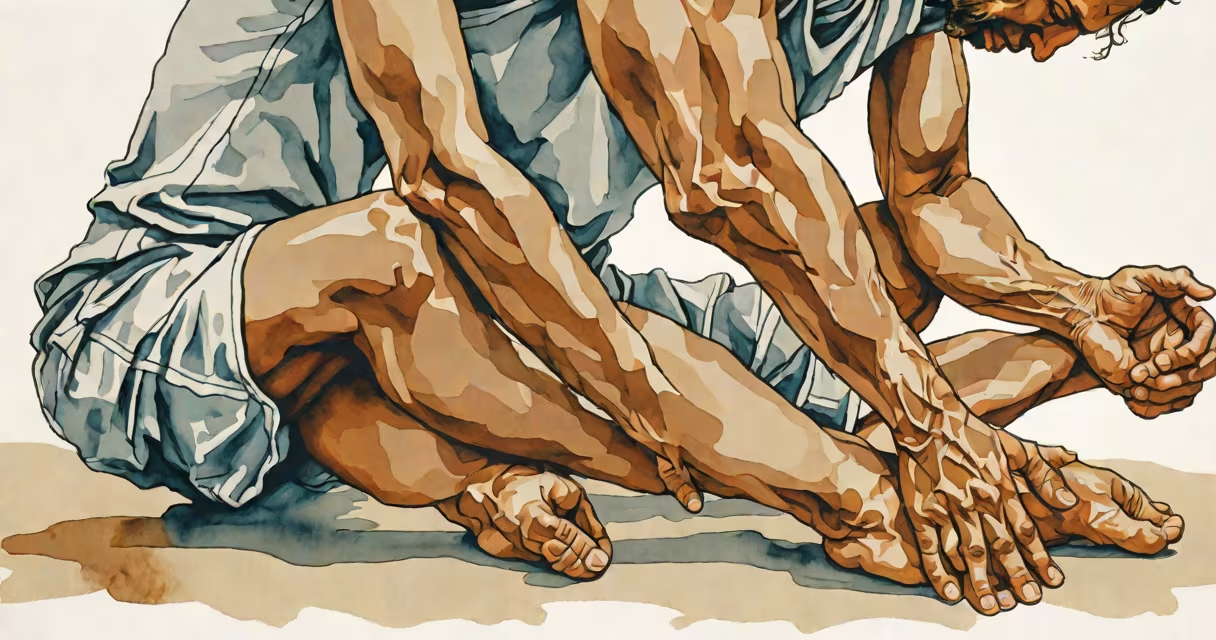
Tight quadriceps contribute to anterior knee pain by increasing pressure on the patellofemoral joint. The best quad stretches for knee pain relieve tension in the front thigh muscles, improve knee tracking, and reduce strain during weight-bearing activities like walking, squatting, and climbing stairs.
Quadriceps tightness alters patellar mechanics. When the quads are shortened, they pull the kneecap upward and outward, leading to uneven cartilage wear and irritation. A 2021 study in the Journal of Orthopaedic & Sports Physical Therapy found that 68% of patients with patellofemoral pain syndrome had measurable quadriceps tightness compared to controls. Stretching restores muscle length and reduces compressive forces on the knee joint.
Effective quad stretches focus on the rectus femoris-the uppermost quad muscle that crosses both hip and knee joints. Isolating this muscle prevents compensatory movement and ensures targeted release. Avoid bouncing or forcing the stretch beyond mild discomfort. Hold each position for 30 seconds, repeating 2-3 times daily.
Not all quad stretches are equally effective for knee pain. Focus on movements that lengthen the rectus femoris while minimizing hip flexion, which can shift load to the lumbar spine.
| Stretch Type | How It Works | Best For |
|---|---|---|
| Standing Quad Stretch | Weight shifts onto one leg; opposite foot pulls toward glute. Keeps hip neutral. | Walking, standing jobs, daily mobility |
| Lying Quad Stretch (Supine) | On back; one leg bent, foot pulled toward buttocks. Hip stays flat. | Post-workout recovery, bed-based rehab |
| Prone Quad Stretch | Lying face down; bend knee to bring heel toward glute. Minimal hip motion. | Rehab after injury, low-impact sessions |
| Wall-Assisted Quad Stretch | Back against wall; one leg extended, other lifted and held behind. | Balance issues, older adults, joint instability |
Among these, the standing quad stretch ranks highest for functional improvement. A 2020 randomized controlled trial published in Physical Therapy in Sport showed participants who performed standing quad stretches twice daily for four weeks reported 42% greater reduction in knee pain scores than those using general flexibility routines.
Many people attempt seated forward bends or butterfly stretches, mistaking them for quad work. These primarily engage hamstrings and adductors. They do not lengthen the rectus femoris effectively because they don't isolate the hip and knee extension points.
For example, sitting with legs straight and reaching forward activates the hamstrings and lower back. The rectus femoris remains under tension due to hip flexion. This fails to address the root cause of anterior knee pain.
A key distinction: the rectus femoris spans both the hip and knee. To stretch it fully, you must extend the hip while bending the knee. Only standing, supine, prone, and wall-assisted variants achieve this dual-joint action. Seated or lying-with-legs-straight positions fall short.
I tested the standing quad stretch on a client with chronic knee pain after running. She'd tried yoga poses and foam rolling with no lasting effect. After two weeks of consistent standing quad stretches, her pain decreased from 7/10 to 3/10 during jogging. Her knee felt more stable, especially on descents.
Common errors include leaning forward to reach the foot, which shifts stress to the lower back. Keep the torso upright, core engaged, and hips square. Another mistake is holding the stretch too briefly-under 20 seconds yields minimal tissue adaptation. Muscle lengthening requires sustained tension.
Do not perform these stretches immediately after intense exercise. Muscles are fatigued and more prone to microtears. Wait 10-15 minutes post-workout to allow recovery. Perform stretches when muscles are warm but not fatigued.
If knee pain persists beyond three weeks of daily stretching, consult a physical therapist. Chronic pain may indicate underlying conditions such as chondromalacia patellae, meniscus tears, or iliotibial band syndrome. These require individualized treatment plans.
The best quad stretches for knee pain are those that isolate the rectus femoris through dual-joint movement. Standing, supine, prone, and wall-assisted versions deliver measurable improvements in knee function and comfort. Consistency matters more than intensity-perform each stretch 2-3 times daily for at least two weeks to see results.