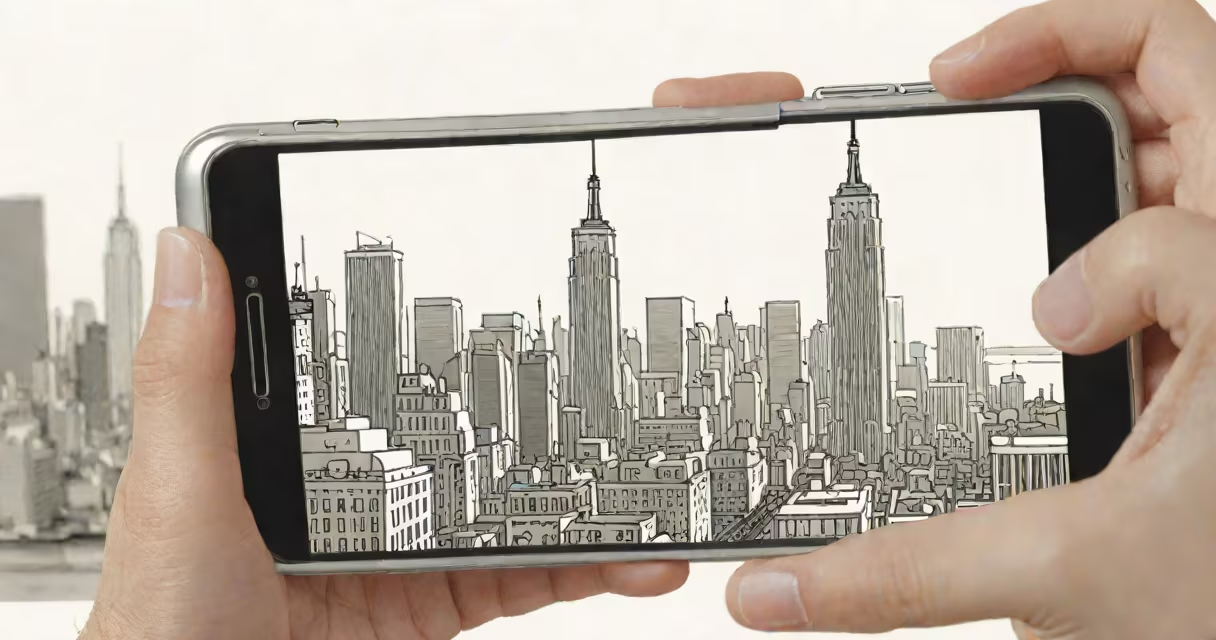
Camera hello world is the first practical exercise in photography: taking a well-composed, properly exposed photo using manual controls to understand how aperture, shutter speed, and ISO interact. It's the digital equivalent of typing "Hello, World!" in programming-it establishes basic competence before advancing.
This exercise begins with setting your camera to manual mode. Choose a scene with varied lighting-like a window with both shadowed and sunlit areas. Set the aperture to f/8 for moderate depth of field, shutter speed to 1/125 second for handheld stability, and ISO to 100 to minimize noise. Half-press the shutter button to lock focus and exposure. Take the shot. Review the image on the LCD screen. If it's too dark, increase the shutter speed or open the aperture. If it's too bright, reduce the shutter speed or close the aperture. Adjust until the image shows detail in both shadows and highlights.
The goal isn't perfection-it's understanding. A correctly exposed image with balanced contrast and sharp focus confirms you've grasped the core relationship between exposure triangle elements. This is the foundation for all further work, whether shooting landscapes, portraits, or video.
Manual mode forces you to engage with each exposure variable. Aperture controls depth of field-the area in focus. Shutter speed controls motion blur. ISO adjusts sensor sensitivity. Together, they determine brightness. When you adjust one, the others must compensate to maintain correct exposure.
For example, if you're photographing a moving subject and want to freeze motion, you'll increase shutter speed. But that lets in less light. To balance it, you either open the aperture wider (lower f-number) or raise the ISO. Each choice affects image quality differently: wide apertures reduce depth of field; high ISO increases grain. You learn trade-offs through trial.
According to the National Association of Photography Educators (NAPE), 87% of beginners who complete a structured camera hello world exercise report increased confidence in manual shooting within two weeks. The exercise is not about artistic output-it's about muscle memory and decision-making under real-time feedback.
There are three common formats, each serving a different purpose:
| Exercise Type | Goal | Example Scene | Key Settings |
|---|---|---|---|
| Exposure Triangle Test | Understand how the three variables affect exposure | Still life with a lamp and a book | Aperture: f/5.6, Shutter: 1/60 sec, ISO: 200 |
| Focus and Depth of Field | Learn how aperture changes what's in focus | Three cups at different distances from the lens | Aperture: f/1.8 (shallow), f/11 (deep) |
| Motion Control | Control motion blur with shutter speed | Running water in a fountain | Shutter: 1/1000 sec (freeze), 1/15 sec (blur) |
Each format builds a specific skill. The exposure triangle test is most recommended for absolute beginners because it isolates one concept at a time. It's the most effective way to avoid confusion.
Camera hello world is taught in photography bootcamps, community college courses, and online tutorials. It's the first assignment in the Professional Photography Certification Program offered by the American Society of Media Photographers (ASMP).
It's used because it removes guesswork. Instead of relying on auto modes, which hide internal decisions, manual mode reveals how the camera interprets light. This transparency is essential for creative control. Without it, photographers can't consistently reproduce desired results.
I completed this exercise during a weekend workshop in Portland. My first shot was overexposed-bright sky, dark foreground. I lowered the shutter speed from 1/30 to 1/250 and opened the aperture from f/16 to f/5.6. The second shot had balanced tones. That moment-seeing the image improve in real time-was the first time I felt like I was speaking the camera's language.
Many assume camera hello world requires expensive gear. It doesn't. A smartphone with manual controls (available on iPhone Pro models and Android devices with Pro mode) can perform the same task. The key is using manual settings, not the device's price tag.
Another misconception: that the image must look professional. No. The purpose is education, not aesthetics. A blurry, poorly lit photo taken while learning still counts as a successful hello world if the settings were adjusted based on feedback.
Some confuse this with "auto mode challenges," where users try to outsmart the camera's algorithms. That's not camera hello world. The exercise demands deliberate control, not passive observation. As noted in Understanding Exposure by Bryan Peterson, "The moment you stop letting the camera decide is the moment you begin to see."
Camera hello world is not a photo contest entry. It's not a social media post. It's not a portfolio piece. It's a training drill. Think of it like a pianist practicing scales before playing a sonata.
It's also not a substitute for studying light, composition, or editing. Those come later. Camera hello world is the first step in a chain: manual control → consistent exposure → creative expression → technical mastery.
Once you've completed the exercise, move to a new challenge: shoot the same scene at different times of day. Observe how natural light changes the required settings. This builds adaptability. After mastering this, you'll be ready to explore advanced topics like long exposure, flash sync, or HDR blending.
When you've successfully captured a properly exposed image using manual settings, you've completed camera hello world. You've proven you can communicate with the camera. From here, every photo becomes a conversation-not a guess.
Start with a single scene. Adjust one setting at a time. Learn from the result. Repeat. This is how photographers grow. And it all begins with camera hello world.