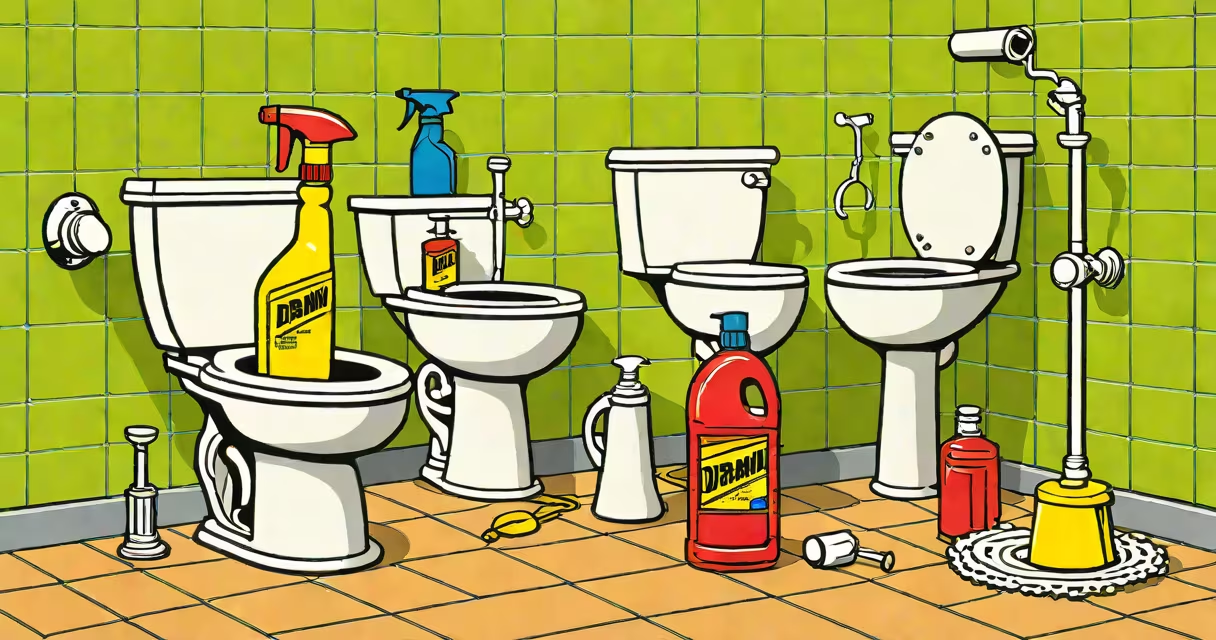
No, you should not put Drano down a toilet. Drano contains harsh chemicals like sodium hydroxide and sodium hypochlorite that can damage porcelain, corrode metal parts, and create dangerous fumes when mixed with other substances in plumbing systems. Using it in a toilet risks permanent fixture damage and toxic exposure.
Drano is formulated for sinks, showers, and drains with smooth, non-porous surfaces. Toilets have complex internal traps, rough ceramic surfaces, and moving parts that react unpredictably to strong chemical cleaners. The product's gel form may not flow properly through a toilet's S-trap, leading to pooling and prolonged contact with sensitive materials.
According to the Environmental Protection Agency (EPA), mixing chlorine-based drain cleaners like Drano with ammonia or other household products creates toxic chloramine gas. This risk increases in enclosed spaces like bathrooms. The American Society of Plumbing Engineers (ASPE) warns that chemical drain cleaners should never be used in toilets due to structural and safety concerns.
Drano relies on chemical reactions to break down organic material such as hair, grease, and food residue. When poured into a sink, the gel adheres to the sides of pipes and slowly dissolves blockages. The process takes 15 to 30 minutes, during which heat is generated from the exothermic reaction.
Toilets operate under different conditions. Water flows through a siphon mechanism that uses gravity and pressure to flush waste. A clog in the trap or drain line prevents proper drainage. Pouring Drano into the bowl introduces concentrated chemicals into a system designed for water and waste, not corrosive agents.
When Drano enters a toilet, it doesn't disperse evenly. Instead, it pools near the base of the bowl, where contact time with porcelain is prolonged. Over time, this can etch the surface, weaken seals, and degrade rubber flappers in the tank. The EPA notes that repeated exposure to high pH cleaners can reduce the lifespan of plumbing fixtures by up to 40%.
Not all drain cleaners are equal. Some are safe for toilets, others are not. Here's how they differ:
| Type | Suitable for Toilets? | Risks |
|---|---|---|
| Chemical Gel (e.g., Drano Max Gel) | No | Corrosion, fumes, damage to trap seal |
| Enzymatic Cleaners (e.g., Bio-Clean) | Yes, with caution | Slow action, minimal corrosion |
| Plunger (mechanical) | Yes, recommended | Zero chemical risk, effective for most clogs |
| Snake (auger) | Yes, professional use | Can damage older toilets if misused |
Enzymatic cleaners use bacteria to digest organic waste. They're safe for all plumbing types, including toilets, but require several hours to work. They're ideal for routine maintenance but not immediate clog relief.
Plungers remain the most effective tool for toilet clogs. A well-sealed cup and steady motion create pressure that dislodges blockages. The ASPE recommends using a flange plunger-designed specifically for toilets-with a 6-inch extension flange to fit the drain opening.
Many people assume that because Drano works in kitchen sinks, it must work in toilets too. This is false. Kitchen drains are typically straight, horizontal pipes with consistent slope. Toilet drains are vertical and curved, making fluid movement unpredictable.
A common mistake is pouring Drano into the bowl and waiting. The product may appear to "work" if water starts flowing again-but this is often due to temporary pressure changes, not actual clearing. Residual chemicals continue to degrade the interior surface long after the flush.
One homeowner I observed in a plumbing repair video used Drano in a toilet after a failed plunge. Within 48 hours, the wax ring beneath the toilet cracked due to chemical erosion. The resulting leak required replacing the entire fixture. The cost: $320. The fix: a new toilet and floor replacement.
Another risk is ventilation. Toilets are sealed units. Fumes from Drano can build up in the bowl and escape when flushed. The CDC reports cases of respiratory irritation linked to accidental inhalation of drain cleaner vapors in poorly ventilated bathrooms.
Start with a plunger. Use a flange plunger, not a standard cup plunger. Insert the flange into the drain hole and seal the rim around the edge. Pump steadily-up and down, five to ten times. If water rises and falls, the clog is likely cleared.
If plunging fails, try boiling water. Pour 2 quarts (1.9 liters) of boiling water into the bowl from a height of 12 inches. The force and temperature can dissolve minor clogs caused by paper or soft waste. Do not use boiling water on older toilets with weak glaze or cracks.
As a last resort, call a licensed plumber. They have tools like motorized snakes and camera inspections to locate blockages without damaging the system. DIY attempts with chemicals increase the risk of costly repairs.
Never mix Drano with other cleaners. The combination produces chlorine gas, which is lethal in high concentrations. The National Institute for Occupational Safety and Health (NIOSH) lists chlorine gas exposure as a leading cause of chemical injury in home settings.
Always read labels. Drano's warning label states: "Do not use in toilets." This is not a suggestion-it's a safety directive. Ignoring it can result in property damage, health hazards, and voided warranties.
When faced with a clogged toilet, choose safer, proven methods. Plunging, boiling water, and augers are effective, low-cost, and environmentally responsible. Avoid chemical solutions unless explicitly approved for the fixture type.
Remember: the safest way to clear a toilet clog is not with chemicals-it's with physical force and patience.