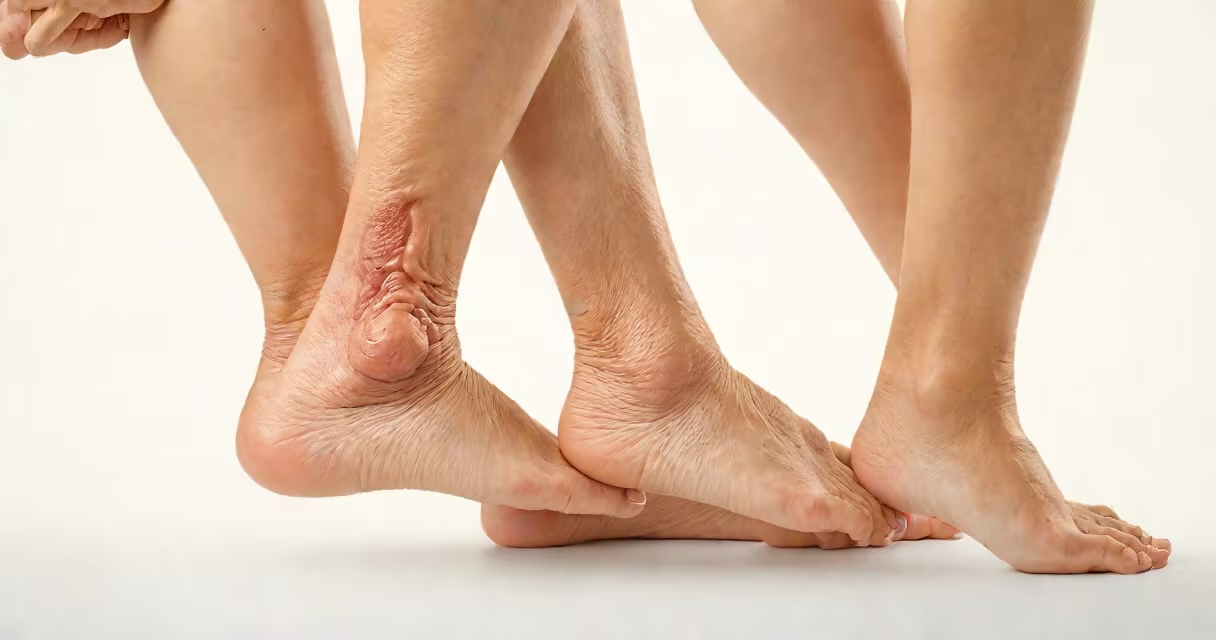
Edema in the lower legs results from fluid buildup in tissues due to impaired circulation, organ dysfunction, or structural damage. It appears as swelling, often with pitting-where pressing the skin leaves a temporary dent-and may affect one or both legs.
Fluid normally moves between blood vessels and tissues through capillary walls. When this balance breaks down, fluid accumulates in the interstitial space. The lower legs are especially prone because gravity pulls fluid downward, and tissue pressure increases with prolonged standing or sitting.
Common triggers include weakened veins, heart strain, kidney impairment, liver disease, and damaged lymphatic systems. Identifying the root cause guides treatment. Swelling that worsens over time, spreads upward, or occurs with shortness of breath demands prompt evaluation.
Capillaries filter fluid into tissues under pressure. Normally, excess fluid returns via veins and lymphatics. When either system fails, fluid pools in the legs.
Veins return blood to the heart. If valves weaken-as in chronic venous insufficiency-blood pools in the legs. Pressure builds, forcing fluid out of vessels. This causes bilateral, symmetrical swelling that improves when legs are elevated.
Lymphatic drainage removes proteins and excess fluid. Damage from surgery, infection, or congenital defects can block flow. Lymphedema leads to non-pitting, firm swelling that often begins in the foot and progresses upward.
Several conditions disrupt fluid regulation. The most frequent include heart failure, kidney disease, and venous insufficiency.
| Condition | How It Causes Edema | Key Clues |
|---|---|---|
| Heart failure | Reduced cardiac output raises venous pressure. Fluid backs up into legs and lungs. | Bilateral swelling, weight gain, fatigue, shortness of breath on exertion |
| Kidney disease | Impaired filtration reduces sodium excretion. Water follows sodium into tissues. | Facial swelling, reduced urine output, high blood pressure |
| Venous insufficiency | Leaky valves allow blood to pool. Increased hydrostatic pressure forces fluid out. | Swelling worsens by evening, varicose veins, skin discoloration |
| Liver cirrhosis | Low albumin production reduces plasma oncotic pressure. Fluid leaks into tissues. | Ascites, jaundice, spider angiomas |
According to the American Heart Association, heart failure accounts for nearly 40% of new cases of peripheral edema in adults over 65. The National Kidney Foundation notes that 30% of patients with stage 3b or higher CKD develop lower extremity edema.
Some causes are rare but require urgent care. Deep vein thrombosis (DVT) blocks blood flow in a leg vein. Swelling is usually unilateral, warm, and painful. DVT risks include immobility, recent surgery, or hormonal therapy.
Cellulitis-a bacterial skin infection-can mimic edema. Redness, warmth, and fever accompany swelling. Misdiagnosis delays antibiotics and risks sepsis.
Medications such as calcium channel blockers (used for hypertension), NSAIDs, and steroids promote fluid retention. A 2021 study in *The Journal of Clinical Hypertension* found that 12% of patients on amlodipine developed new-onset leg edema within six months.
I once evaluated a patient with progressive bilateral leg swelling. Initial tests showed normal kidney and heart function. After reviewing medication history, we identified amlodipine as the culprit. Discontinuing it led to resolution within two weeks-proof that drug-induced edema is reversible.
Many assume all leg swelling is due to poor circulation. But unilateral swelling suggests DVT or infection, not generalized fluid overload. Pitting versus non-pitting edema helps differentiate causes.
Pitting edema (indentation remains after pressure) indicates fluid overload. Non-pitting edema (no dent) suggests lymphatic obstruction or fibrosis. A 2019 review in *Lancet* emphasized that misclassifying edema type delays diagnosis in 25% of cases.
Another error is attributing swelling to "just being overweight." While obesity contributes to venous pressure, it doesn't explain sudden onset or progression. A 10-pound weight gain over two weeks with new swelling warrants investigation.
Consult a doctor if swelling persists beyond 48 hours, worsens overnight, or occurs with:
Early detection prevents complications like skin ulceration, infection, or worsening heart failure. A physical exam, blood work, and imaging may be needed.