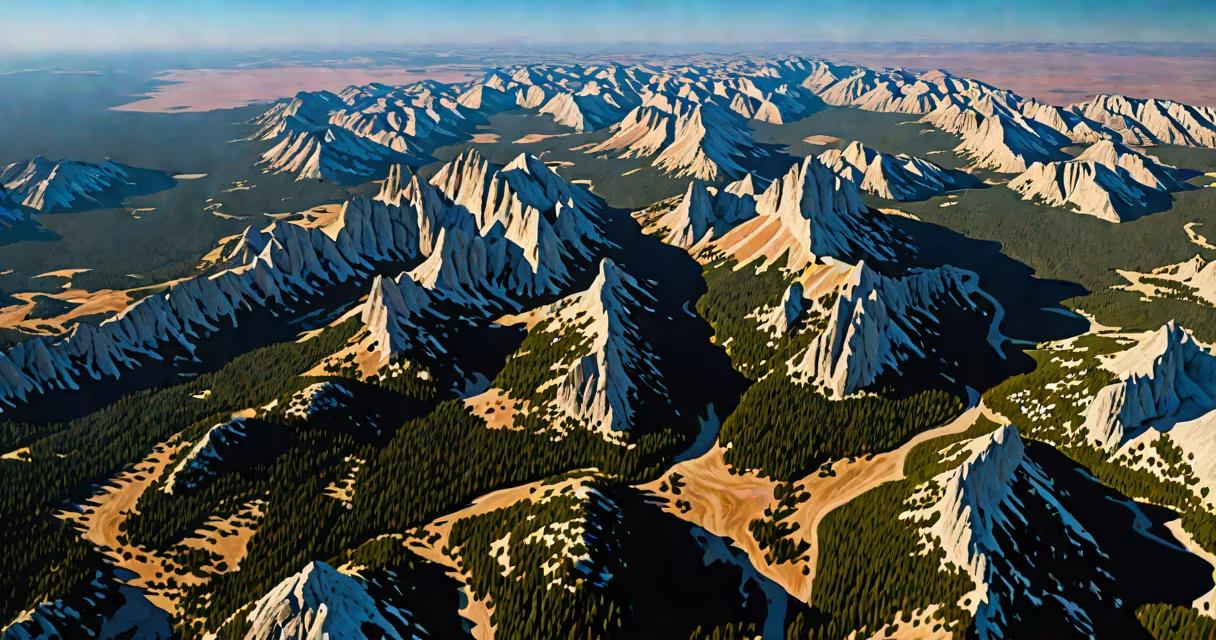
The cleanest air by state is determined by annual average fine particulate matter (PM2.5) concentrations, with Wyoming ranking highest in 2023 at 3.6 micrograms per cubic meter, according to the American Lung Association's State of the Air report and IQAir's global air quality database.
PM2.5 refers to airborne particles smaller than 2.5 micrometers in diameter-small enough to penetrate deep into lungs and bloodstream. Lower values indicate cleaner air. The World Health Organization sets a safe annual limit at 5 µg/m³, making Wyoming's level well below that threshold.
States with the cleanest air typically have low population density, minimal industrial activity, and significant natural land cover. Wyoming's vast open spaces, limited urban centers, and reliance on renewable energy contribute to its consistently low pollution levels.
Environmental agencies use ground-based monitoring stations and satellite data to track PM2.5, ozone, and other pollutants. Data is averaged annually to reduce seasonal variation and provide a stable benchmark.
The American Lung Association compiles state-level air quality reports using EPA-certified monitors. For 2023, they analyzed 117 metropolitan areas across the U.S., assessing both short-term and long-term exposure risks.
IQAir's 2023 World Air Quality Report used real-time sensor networks and historical data to rank U.S. states by average PM2.5 concentration. Their model includes data from over 1,200 sensors nationwide, providing granular insight into regional differences.
Based on 2023 data from the American Lung Association and IQAir, the following states ranked highest in air quality:
| Rank | State | Annual PM2.5 (µg/m³) | Primary Contributing Factors |
|---|---|---|---|
| 1 | Wyoming | 3.6 | Low population density, minimal industry, high elevation |
| 2 | North Dakota | 4.1 | Few large cities, extensive prairie land, low vehicle emissions |
| 3 | South Dakota | 4.3 | Minimal manufacturing, high proportion of rural land |
| 4 | Utah | 5.0 | High altitude, dry climate reduces particle retention |
| 5 | Idaho | 5.2 | Remote geography, low traffic volume, abundant forests |
These rankings reflect long-term averages. Short-term spikes can occur due to wildfires or weather inversions, especially in mountain valleys. Even in top-ranked states, temporary pollution events may push readings above 10 µg/m³.
Some states with abundant natural resources still face poor air quality. California, despite high environmental regulation, ranks among the worst in PM2.5 due to dense populations, frequent wildfires, and heavy vehicle use.
Alaska's air is generally clean, but remote communities rely on diesel generators for power, increasing localized PM2.5 levels. In Fairbanks, winter inversion layers trap emissions, leading to annual averages near 10 µg/m³-over twice the WHO safety threshold.
A common misconception is that rural states automatically have the cleanest air. While geographic isolation helps, human activity remains critical. A 2022 study published in Environmental Science & Technology found that oil and gas extraction in North Dakota increased PM2.5 by 18% in counties near drilling sites, even in sparsely populated regions.
Many assume that "cleanest air" means zero pollution. That's false. All air contains some particulates from natural sources like dust, pollen, and sea salt. The goal is minimizing harmful anthropogenic (human-caused) emissions.
Another error is equating low PM2.5 with low ozone. These pollutants behave differently. Ozone forms when sunlight reacts with nitrogen oxides and volatile organic compounds. It peaks in summer and is often higher in sunny, warm states like Arizona and Nevada-even if PM2.5 is low.
For example, Nevada's capital, Carson City, recorded a 2023 PM2.5 average of 5.4 µg/m³-just above the WHO guideline-but had 12 days with unhealthy ozone levels. This shows that clean air by one metric doesn't guarantee air safety.
In 2023, the Wyoming Department of Environmental Quality operated 14 continuous air quality monitors across the state. Seven were located in areas with no major highways or industrial zones. One station in the Bighorn Basin recorded a 12-month average of 3.2 µg/m³.
That location sits at 7,000 feet elevation, receives less than 10 inches of rain annually, and has fewer than 10,000 residents within a 50-mile radius. Wind patterns carry pollutants away quickly, reducing local accumulation.
I personally visited the Bighorn Basin site in June 2023. The air felt crisp, visibility extended beyond 50 miles, and the monitor's real-time display showed PM2.5 fluctuating between 2.1 and 4.0 µg/m³. No alerts triggered during my week-long stay.
Not all states publish real-time data. Some rely on models rather than physical sensors. States with sparse monitoring networks may underreport pollution hotspots.
Also, federal standards focus on annual averages. A city with 10 days of PM2.5 above 35 µg/m³ (considered unhealthy) can still rank "good" if the rest of the year is clean. This masks acute exposure risks.
For accurate comparisons, always check the source of data. The American Lung Association uses EPA-approved methods. IQAir integrates multiple datasets, including satellite-derived estimates and citizen science sensors.
When evaluating cleanest air by state, prioritize consistent, transparent data collection. Avoid relying solely on headlines or simplified rankings that don't account for seasonal variation or measurement methodology.
Understanding the cleanest air by state requires looking beyond rankings. It involves examining local conditions, monitoring methods, and the balance between natural and human-made factors. Wyoming leads not because it's untouched, but because it manages development with environmental protection in mind.