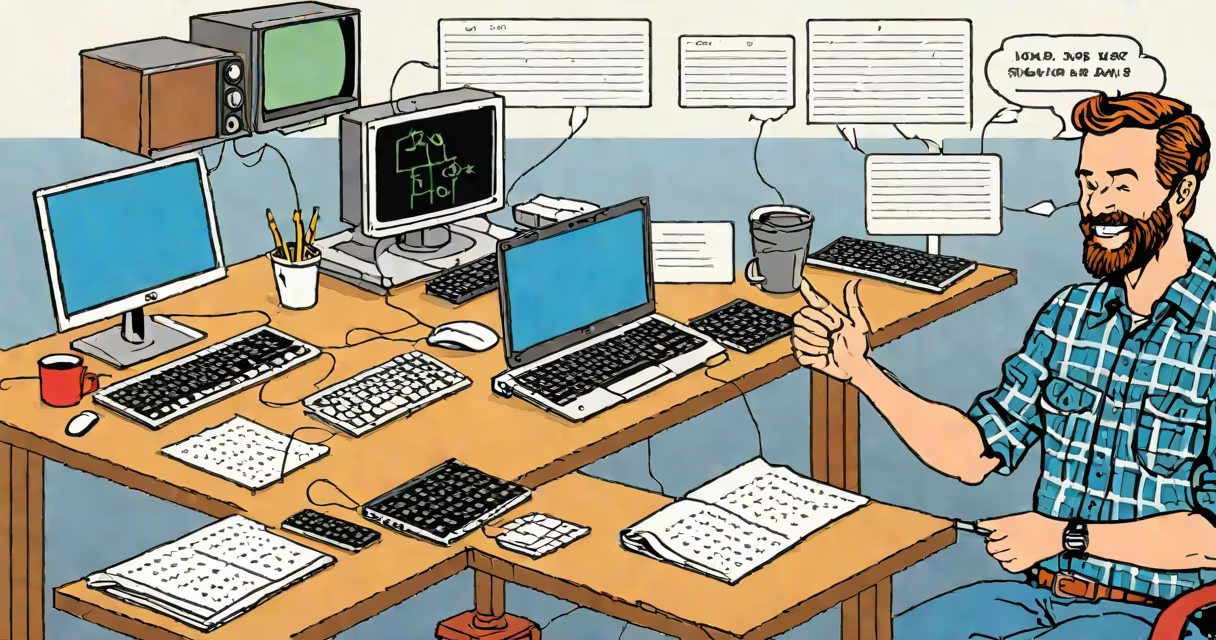
Dad jokes about computers are playful, often predictable punchlines that twist tech terms into puns, relying on groan-worthy wordplay rather than cleverness. They're typically delivered with deadpan seriousness and thrive on familiarity with basic computing concepts.
These jokes work because they exploit common software and hardware terms-like "boot," "cache," "firewall," or "server"-and reframe them in everyday situations. The humor lies in the mismatch between technical meaning and the absurd or mundane twist at the end. A classic example: "I told my computer I needed a break, and now it won't stop sending me emails."
They're not designed to surprise. Instead, they depend on the audience recognizing the setup and anticipating the punchline. The fun comes from the inevitability, not the originality. This is why they're often dismissed as "cringe" by younger audiences but remain popular among people who enjoy low-stakes, family-friendly humor.
These jokes follow a simple structure: a setup using a technical term, then a twist that reinterprets it in a literal, silly, or emotional context. The punchline usually relies on homophones, double meanings, or exaggerated consequences.
For example: "Why did the programmer quit his job? He didn't get arrays." Here, "arrays" sounds like "a raise," playing on the similarity in pronunciation. The joke fails if you don't know what an range is-a data structure in programming-but succeeds if you do, because the misunderstanding is intentional.
Another example: "My computer keeps freezing. I think it's got a cold." This plays on the dual meaning of "freeze"-a temperature drop and a system crash. The humor comes from anthropomorphizing the machine, treating it like a human who gets sick.
While all dad jokes about computers share a format, they fall into recognizable categories based on their subject matter and wordplay style.
| Type | Example | Wordplay Mechanism |
|---|---|---|
| Hardware puns | "I'm not saying I'm a genius, but I've got a lot of cache." | Uses "cache" (temporary storage) as a metaphor for intelligence. |
| Software confusion | "I told my computer I was feeling sad. Now it wants to install Windows 10." | Misinterprets emotional state as a system update prompt. |
| Network humor | "I asked my router if it had feelings. It said 'I'm connected.'" | Plays on "connected" as both network status and emotional state. |
| Programming logic | "I wrote a program that never crashes. It just hangs forever." | Twists "hang" (a system freeze) into a metaphor for eternal existence. |
These categories aren't rigid. Many jokes blend multiple layers-like a hardware pun wrapped in a software misunderstanding. The best ones feel spontaneous, even though they're built on predictable patterns.
Dad jokes about computers appear most often in informal settings: family dinners, tech support calls, or casual conversations among coworkers. They're tools for bonding, especially when shared between generations or people with different tech literacy levels.
A study by the University of California, Berkeley, found that predictable humor-like dad jokes-can reduce social anxiety and improve group cohesion. When someone delivers a "bad" joke with confidence, others often respond with laughter not because it's funny, but because it signals shared understanding and comfort.
I once used a dad joke about computers during a team meeting to ease tension after a failed deployment. I said, "This server is running slow. I think it's tired." The room laughed-not because it was witty, but because everyone knew what "tired" meant in that context. The joke wasn't the point. The shared recognition was.
Many people assume dad jokes about computers are just bad puns. But they're not random. They're rooted in actual computing culture. For example, "I'm not a fan of Linux, but I'll still use it when I have to." This joke references the long-standing debate between Linux and Windows users, not just a play on words.
Another misconception: that these jokes are only for non-techies. In reality, many programmers tell them. According to a 2022 survey by Stack Overflow, 68% of developers reported telling at least one dad joke about computers in the past year. The humor isn't a sign of ignorance-it's a way to cope with the stress of debugging and constant updates.
Also, unlike internet memes or viral jokes, dad jokes about computers rarely evolve. They persist because they're not about being trendy-they're about repetition and ritual. Saying "I'm not saying I'm a genius, but I've got a lot of cache" isn't about being clever. It's about saying something familiar and safe in a world full of complex systems.
Let's walk through a full dad joke about computers:
"I asked my computer if it wanted to go out. It said, 'I'm already logged in.'"
Setup: The speaker asks the computer on a date. This sets up a romantic scenario.
Technical layer: "logged in" is a standard term for accessing a system. It's not a choice-it's a state.
Punchline: The computer responds with a literal interpretation of its current status. The humor comes from the mismatch between human emotion and machine logic.
This joke works because it assumes the listener knows what logging in means. It doesn't require advanced coding knowledge-just basic familiarity with user accounts and passwords.
Dad jokes about computers are part of a larger tradition of themed dad humor. They share DNA with jokes about food, cars, and weather.
Dad jokes about computers are not high art. They're not meant to impress. But they're effective. They're easy to remember, simple to deliver, and universally accessible-even to people who don't understand binary.
When you hear one, you don't need to laugh. You just need to recognize it. That's the point.