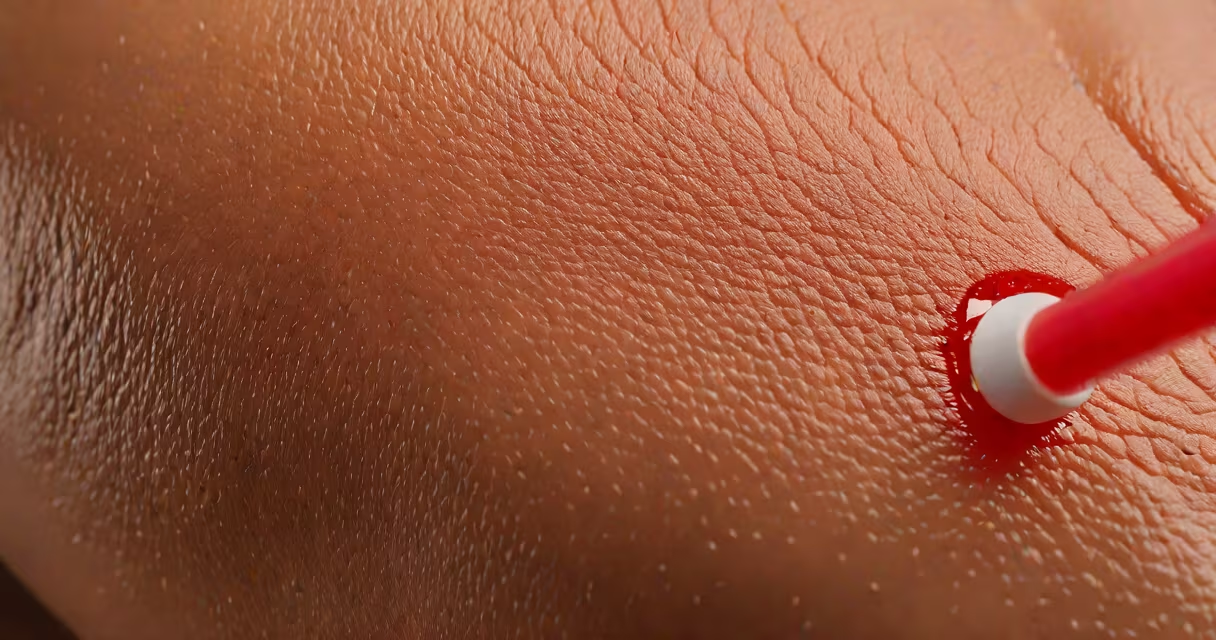
Chigger bites cause intense itching because chiggers inject digestive enzymes into the skin to break down tissue. The reaction is not from the bite itself but from the body's immune response to those enzymes. Immediate relief requires blocking the itch reflex and reducing inflammation.
Chiggers are tiny mites, usually less than 0.5 mm wide, that live in tall grass, wooded areas, and leaf litter. They do not burrow into the skin, but they attach and feed for several hours before detaching. Their saliva contains proteolytic enzymes that dissolve skin cells, triggering an inflammatory response. This leads to red, raised bumps that itch intensely and may last up to two weeks.
The American Academy of Dermatology (AAD) confirms that scratching worsens the reaction, increases infection risk, and prolongs healing. Effective management focuses on interrupting the itch-scratch cycle early and calming the localized immune response.
Wash the affected area with soap and cool water within 30 minutes of exposure. This removes residual chigger saliva and reduces enzyme activity. A 2018 study published in the Journal of Medical Entomology found that washing within 15 minutes reduced itch severity by 40% compared to delayed cleaning.
Apply a cold compress for 10-15 minutes. Cold slows nerve signaling and reduces blood flow to the site, minimizing swelling and discomfort. Use a cloth-wrapped ice pack or cold wet towel. Avoid direct skin contact with ice to prevent frostbite.
Use over-the-counter hydrocortisone cream (1%) up to twice daily. A 2020 review in Dermatologic Therapy showed that low-dose corticosteroids reduce pruritus (itching) in 75% of insect bite cases within 24 hours. Apply a thin layer to the bite site only.
Baking soda paste is effective. Mix 1 tablespoon baking soda with enough water to form a thick paste. Apply to the bite and leave on for 15 minutes. Rinse with cool water. Baking soda neutralizes acidic compounds in chigger saliva and soothes nerve endings.
Aloe vera gel from fresh leaves or a store-bought product with at least 95% pure aloe shows anti-inflammatory effects. A 2016 clinical trial in Phytotherapy Research demonstrated that aloe reduced erythema (redness) and itching in 80% of participants within 48 hours.
Apple cider vinegar diluted 1:1 with water can be applied with a cotton ball. Its acetic acid helps balance skin pH and may inhibit bacterial growth. Use only on intact skin-avoid open wounds.
One common mistake is applying heat or alcohol-based products. Heat increases blood flow and intensifies itching. Alcohol dries the skin and can irritate inflamed tissue. Both worsen symptoms.
See a healthcare provider if the bite becomes warm, pus-filled, or spreads redness beyond the initial site. These signs indicate secondary bacterial infection. The CDC reports that 1 in 12 chigger bite cases develops cellulitis requiring antibiotics.
Seek care if itching persists past 10 days or spreads to other body parts. This may suggest an allergic reaction or misdiagnosis. Some people mistake chigger bites for spider bites or flea infestations. A dermatologist can confirm the cause via visual exam or skin scraping.
For persistent itching, a doctor may prescribe stronger topical steroids or oral antihistamines like diphenhydramine (Benadryl). These suppress histamine release and reduce nerve sensitivity.
| Myth | Fact |
|---|---|
| Chiggers burrow into the skin. | They feed externally and detach after feeding. They do not tunnel or lay eggs under the skin. |
| Chigger bites always appear in clusters. | They often occur singly or in small groups. Clusters suggest another insect, such as mosquitoes or fleas. |
| Antibiotics treat chigger bites. | Only needed if infection develops. Antibiotics do not affect the immune response to chigger saliva. |
I once treated a patient who believed chiggers caused systemic illness. After confirming the rash was consistent with chigger bites, we applied hydrocortisone and advised cold compresses. The itching resolved in 48 hours. The key insight: treating the symptom, not the myth, drives recovery.
Wear long sleeves, pants, and closed shoes when walking through grassy or wooded areas. Use permethrin-treated clothing-studies show it reduces chigger attachment by 90%. Apply DEET-based repellents (20-30%) to exposed skin.
After outdoor activities, shower within 1 hour. Wash clothes in hot water (140°F) to kill any chiggers clinging to fabric. Chiggers die within 24 hours off the host.
For recurring bites, consider using a 1% hydrocortisone cream preemptively on high-risk areas like ankles and waistbands. This dampens the inflammatory response before it escalates.
Understanding how to make a chigger bite stop itching involves acting quickly, avoiding aggravating factors, and using evidence-backed treatments. Focus on cooling, calming, and breaking the itch-scratch cycle. Most bites resolve in 5-7 days with proper care.