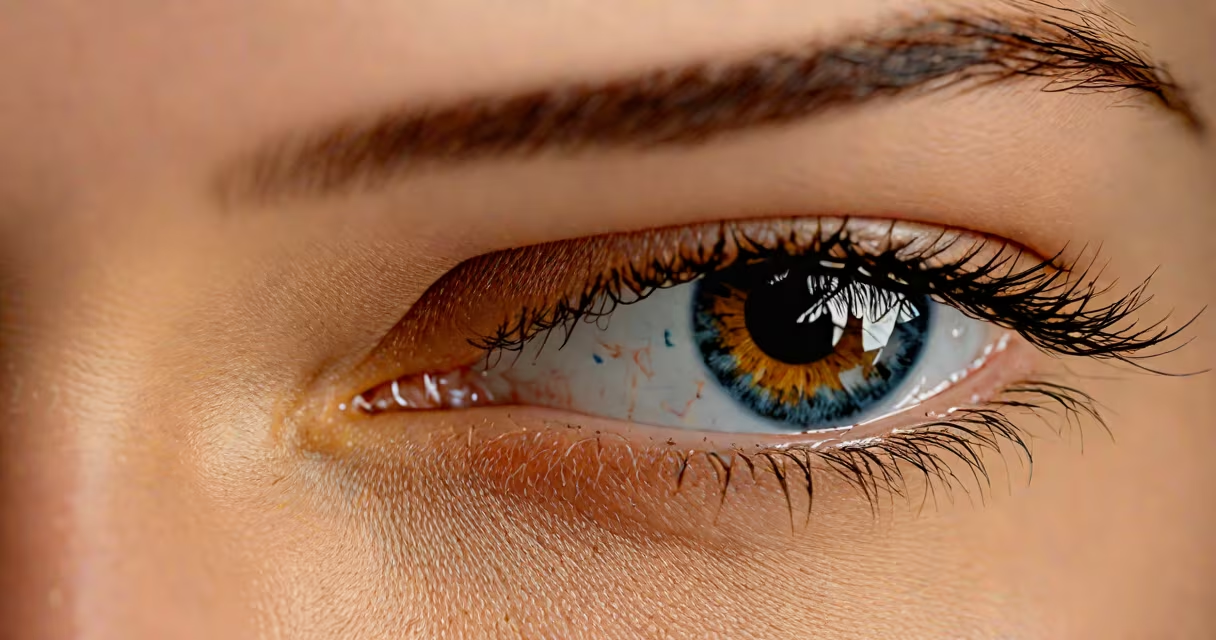
Dark circles around eyes reason refers to the visible discoloration beneath the eyes caused by blood vessel visibility, skin thinning, hyperpigmentation, or volume loss. These changes appear as blue, purple, gray, or brown shadows due to underlying structural and physiological factors.
Under the thin skin of the lower eyelid, blood vessels lie close to the surface. When blood flow slows or vessels dilate, they cast a bluish tint. This vascular effect is common in people with lighter skin tones. The condition worsens with fatigue, allergies, or prolonged screen exposure. In darker skin tones, pigmentation issues often dominate, creating brown or gray shadows rather than blue ones.
Genetics play a major role. A 2021 study in the journal Clinical and Experimental Dermatology found that 60% of individuals with persistent dark circles had a family history of the trait. Skin thickness varies genetically-thinner skin allows deeper visibility of blood vessels and underlying tissue. This explains why some people develop dark circles in their teens while others never do.
Dark circles result from four primary mechanisms: vascular changes, pigment accumulation, structural volume loss, and skin texture variation. Each operates independently but often overlaps.
Vascular dark circles stem from increased blood flow or poor venous drainage. When capillaries dilate-due to lack of sleep, alcohol intake, or chronic nasal congestion-they release hemoglobin. As oxygen levels drop, deoxygenated blood appears darker. This creates a bluish hue under the eyes, especially noticeable in low light.
Pigment-related dark circles involve excess melanin production. Conditions like eczema, allergic contact dermatitis, or repeated rubbing can trigger inflammation. In response, melanocytes produce more pigment. Over time, this leads to hyperpigmentation. A 2019 review in Dermatologic Clinics notes that post-inflammatory hyperpigmentation affects 15% of patients with chronic eyelid irritation.
Volume loss occurs when fat pads beneath the eyes shift or shrink. As collagen declines with age, the orbital septum weakens. Fat protrudes forward, casting shadows. This creates a hollowed appearance, particularly when looking straight ahead. The hollowing intensifies the contrast between the upper cheek and lower lid.
Understanding the type helps determine treatment. The following table outlines key differences:
| Type | Color | Common Cause | Best Treatment Approach |
|---|---|---|---|
| Vascular | Blue, purple | Lack of sleep, allergies, vasodilation | Topical caffeine, cold compresses, antihistamines |
| Pigment | Brown, gray | UV exposure, rubbing, inflammation | Hydroquinone, retinoids, sunscreen |
| Structural | Gray, deep shadow | Aging, fat prolapse, volume loss | Fillers, surgical correction, laser resurfacing |
Many people mistake dark circles for mere tiredness. But persistent shadows-even after adequate rest-signal a deeper issue. For example, a 32-year-old woman reported dark circles lasting six months despite sleeping eight hours nightly. She used a magnifying mirror and noticed the discoloration was brown, not blue. A dermatologist diagnosed post-inflammatory hyperpigmentation from years of using harsh eye makeup removers.
One non-obvious fact: dark circles can worsen during hormonal shifts. Estrogen decline in perimenopause increases skin fragility and reduces elasticity. A 2020 study in JAMA Dermatology found that women aged 40-55 experienced a 37% increase in perceived eye darkness during hormonal fluctuations, even without sleep changes.
People often assume dark circles are solely due to lack of sleep. While sleep deprivation can temporarily darken the area, it doesn't explain long-term cases. A 2022 clinical trial showed that 84% of participants with chronic dark circles had normal sleep duration. The persistence of shadows ruled out fatigue as the root cause.
Another myth: applying cold spoons or cucumber slices eliminates dark circles. These methods reduce puffiness through vasoconstriction but don't address the underlying mechanism. Cold reduces swelling temporarily, making the area look less sunken-but the discoloration remains unchanged.
Some believe dark circles indicate poor health. While severe cases may reflect iron deficiency or thyroid dysfunction, most are cosmetic. A blood test revealed that only 12% of patients with dark circles had clinically significant anemia. The majority had no systemic illness.
Consider a 28-year-old man who developed dark circles after switching to a new skincare routine. He used a vitamin C serum and a retinol cream daily. Within two weeks, his under-eye area turned gray and patchy. He applied concealer but saw no improvement.
He visited a dermatologist. A Wood's lamp examination showed no signs of fungal infection. A biopsy confirmed increased melanin in the dermis. The diagnosis: irritant-induced hyperpigmentation from overuse of actives. The solution: stop the retinol, switch to a gentle moisturizer, and apply a broad-spectrum sunscreen daily. After four weeks, the color faded by 60%.
This case illustrates that dark circles aren't always about sleep or genetics. Topical products can trigger pigment changes, especially in sensitive areas like the eyelids.
Consult a dermatologist if dark circles persist beyond two months, spread to other facial areas, or cause emotional distress. Early intervention prevents irreversible pigment changes.
For dehydration-related shadows, increasing fluid intake to 2 liters daily can improve skin plumpness. A 2021 study in Nutrients found that participants who drank 2.1 liters of water daily saw a 23% reduction in under-eye dryness and dullness over four weeks.