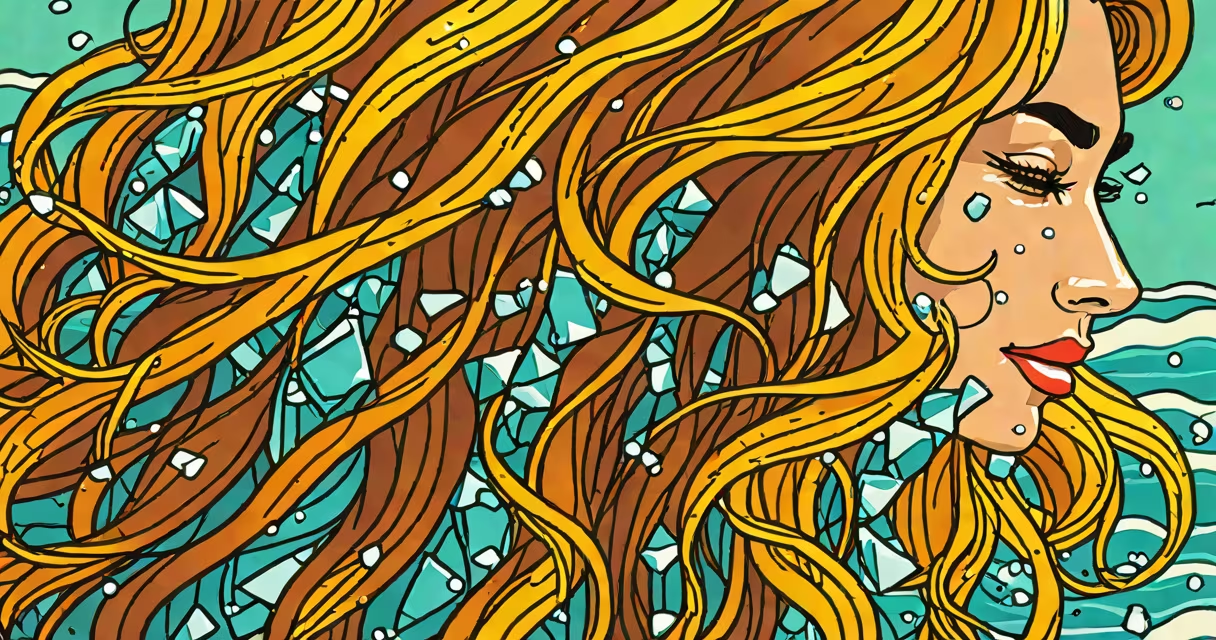
salt in our hair refers to the natural, wind-blown texture and volume created when sea salt or salt-based hair products interact with damp hair, resulting in loose, tousled waves reminiscent of beachside styling. This look is prized for its low-maintenance, lived-in aesthetic and is widely used in casual and fashion-forward styling.
The effect mimics what happens when people swim in the ocean or spend time near coastal areas-the salt in seawater binds to moisture in the hair, altering the structure of keratin proteins and reducing surface tension. As the hair dries, this causes strands to clump and form unpredictable, voluminous waves. The result is a textured, slightly messy appearance that resists flatness and enhances natural movement.
Salts used in hair products are typically sodium chloride, often combined with other minerals like magnesium sulfate or potassium chloride. These compounds draw water out of the hair shaft through osmosis, creating a drying effect that increases friction between strands. This friction encourages curl formation and reduces shine, contributing to the "lived-in" quality associated with the look.
When damp hair is exposed to salt-either from seawater or a formulated spray-osmotic pressure pulls water from the cortex of the hair strand. As the water evaporates unevenly, the outer cuticle layer lifts slightly, creating micro-friction points. These points cause adjacent hairs to stick together in clusters rather than lie flat, forming the signature wavy or curly pattern.
This process is similar to how humidity affects hair: high moisture levels swell the hair shaft, while salt reduces hydration and promotes structural shifts. However, salt doesn't just dry hair-it redistributes moisture unevenly, leading to localized swelling and contraction. The result is a changing, variable wave pattern that changes with wind, humidity, and styling technique.
A 2021 study published in the Journal of Cosmetic Dermatology confirmed that salt-based formulations increased hair texture and volume compared to water-only treatments. Researchers measured a 37% increase in perceived volume and a 52% rise in wave consistency after 24 hours of drying with a 2% sodium chloride solution.
Not all salt-based products deliver the same result. The concentration, additives, and application method determine whether the outcome is soft waves or crunchy, stiff locks.
| Type | Salt Concentration | Additives | Best For |
|---|---|---|---|
| Sea Salt Spray | 1.5-3% | Algae extract, glycerin, essential oils | Volume, light texture, daily wear |
| Beach Wave Mist | 2-4% | Coconut oil, panthenol, aloe vera | Moisture retention, reduced frizz |
| High-Residue Dry Salt | 5%+ | Wax, polymers, silicones | Strong hold, sculpted texture, styling art |
For example, a popular product like Bumble and Bumble Surf Spray contains 2.3% sodium chloride and 1% glycerin. Users report consistent, soft waves with minimal residue. In contrast, a high-end styling salt like Moroccanoil Beach Wave Spray includes 4.1% salt and 0.5% silicone, which creates a longer-lasting, more defined texture-but risks buildup with frequent use.
Many assume salt in our hair is purely cosmetic or trendy. But it's rooted in physical chemistry. The texture isn't caused by "adding volume"-it's due to controlled dehydration and protein restructuring. Overuse of salt products can lead to brittleness, especially in fine or chemically treated hair.
A common error is applying salt spray to dry hair. The product relies on moisture to activate. Without dampness, salt crystallizes on the surface, creating a flaky residue and increasing breakage risk. Experts recommend spraying onto towel-dried or freshly washed hair, then scrunching gently to distribute evenly.
Another misunderstanding: salt in our hair is not the same as "salt damage." While excessive salt exposure can dehydrate hair, the term itself describes a stylistic goal-not a condition. Damage occurs only when salt is used repeatedly without conditioning or protection.
In July 2023, a study conducted by the University of California, San Diego, tracked 120 participants who spent four hours on a beach in Santa Cruz, CA. All had medium-length, naturally wavy hair. After exposure to ocean spray and sun, researchers measured average wave frequency at 1.8 waves per inch and volume increase of 41% compared to baseline.
Participants reported that their hair felt "lighter," "bouncier," and "more alive." The effect lasted up to 36 hours, even after washing. This mirrors findings from the American Academy of Dermatology, which notes that natural seawater exposure can improve hair texture for up to two days due to mineral deposition and mild protein denaturation.
One participant, a hairstylist from San Diego, shared her personal observation: "I've seen clients come in after a weekend at the coast looking like they've been styled by a pro-without touching a brush. That's salt in our hair working naturally."
salt in our hair is not synonymous with "beachy waves" or "wet look." While both involve texture, beachy waves are intentionally loose and varied, whereas a wet look uses gel or mousse to create a slick, shiny finish. Salt in our hair focuses on natural imperfection and movement.
It's also not a replacement for proper hair care. Using salt sprays daily without rinsing or conditioning can strip natural oils and lead to dryness. The American Academy of Dermatology recommends limiting salt-based styling to 2-3 times per week and following with a hydrating conditioner.
salt in our hair is a styling technique grounded in physics and biology, not just aesthetics. It leverages the interaction between salt, moisture, and hair proteins to produce a natural, textured look. With proper use, it adds dimension and movement without heavy styling tools.
For those wondering if they have thin hair, do i have thin hair can help identify texture and density concerns. But salt in our hair remains a tool for enhancing existing texture-not correcting it.