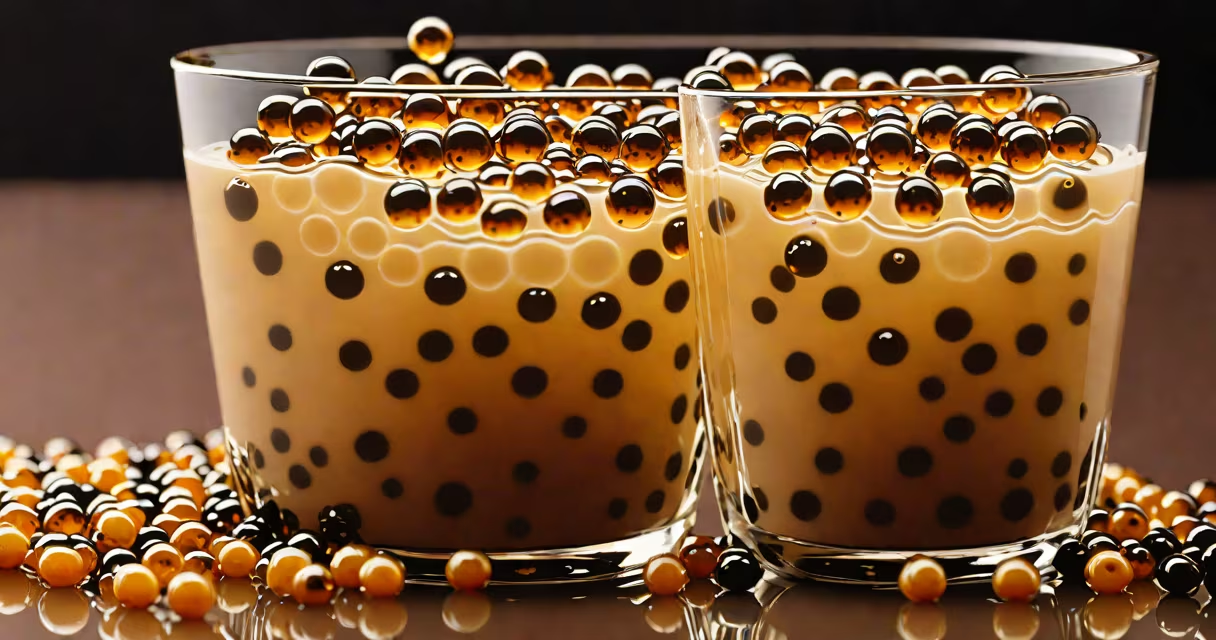
Boba tea pearls are small, chewy spheres made primarily from tapioca starch derived from cassava root, mixed with water and often sweetened with sugar or brown sugar. They are boiled until translucent and firm, then cooled before being added to tea drinks.
Tapioca pearls originate from Southeast Asia and have been part of traditional desserts for decades. Their texture-springy yet soft-makes them ideal for sipping through a wide straw. The name "boba" comes from the Chinese word for "bubble," referring to their round, hollow appearance when viewed under light.
While the core ingredient is tapioca starch, commercial versions may include additional components such as food-grade coloring (like black or brown), corn syrup, or glucose for consistency and shelf life. Some brands use modified starches or additives to prevent sticking during packaging.
The process begins with tapioca starch, which is a fine powder extracted from the root of the cassava plant. This starch is mixed with hot water to form a dough. The mixture is kneaded until elastic, then rolled into small balls using a rolling pin or automated machine.
These raw pearls are then boiled in water for 15 to 20 minutes until they turn translucent and float to the surface. After boiling, they are cooled in cold water to stop cooking and prevent clumping. Finally, they are soaked in a sugar syrup for 10 to 30 minutes to add sweetness and improve texture.
A key detail often missed: the pearls must be cooked long enough to achieve a firm center. Undercooked pearls remain too soft and collapse when bitten. Overcooking leads to mushiness. The ideal texture balances chewiness with resilience.
Not all boba pearls are the same. Variations exist based on size, color, and intended use. Here's a breakdown:
| Type | Starch Base | Sweetener | Color | Use Case |
|---|---|---|---|---|
| Standard White | 100% tapioca starch | None (natural) | Translucent | Classic milk tea, fruit teas |
| Black (Brown Sugar) | 100% tapioca starch | Brown sugar syrup | Dark brown | Traditional Taiwanese boba, rich flavor |
| Gluten-Free | 100% tapioca starch | Maple syrup or agave | Light amber | Dietary restrictions, vegan options |
| Flavored (e.g., matcha, chocolate) | Modified tapioca starch | Added flavoring and sugar | Green, dark brown | Specialty drinks, seasonal menus |
One non-obvious fact: many commercially available boba pearls labeled "natural" still contain preservatives like potassium sorbate to extend shelf life. These are safe in regulated amounts but not always listed on packaging.
Another common misconception is that boba pearls are made from seaweed or gelatin. They are not. Seaweed-based alternatives exist but are rare and typically marketed as "healthier" or "low-glycemic." True boba remains starch-based.
Confusion arises because some brands label their products as "tapioca pearls" while others use "boba" interchangeably. But "boba" is a cultural term, not a technical one. All boba tea pearls are tapioca pearls-but not all tapioca pearls are used in boba drinks.
For example, in Indonesia, tapioca pearls are used in *klepon*, a sweet dessert filled with palm sugar. These are smaller, softer, and eaten with chopsticks-not sipped through a straw. The difference lies in preparation and purpose.
Also, some homemade recipes substitute arrowroot or potato starch for tapioca. While these can mimic the texture, they don't produce the same elasticity. Tapioca starch uniquely forms a gel-like matrix when heated, giving boba its signature bounce.
I once tried making boba at home using a recipe from the Serious Eats website. I used 1 cup of tapioca starch, ¾ cup of boiling water, and 2 tablespoons of brown sugar. After forming the dough and rolling it into ¼-inch balls, I boiled them for 18 minutes.
When done, the pearls floated and were translucent. I cooled them in ice water, then soaked them in a 1:1 mix of water and brown sugar for 20 minutes. The result was chewy, sweet, and held shape well in my milk tea.
But I noticed a flaw: without proper cooling, the pearls stuck together. I had to separate them individually with a spoon. That's why commercial producers use anti-stick agents like cornstarch dusting during packaging.
The U.S. Food and Drug Administration (FDA) classifies tapioca starch as Generally Recognized as Safe (GRAS) for human consumption. However, some people report digestive discomfort when eating large quantities due to high resistant starch content.
According to the FDA's Food Additive Status List, common additives in packaged boba-such as sodium benzoate and citric acid-are approved for use in food products at specified limits. Always check labels if you're sensitive to preservatives.
The American Heart Association warns against excessive sugar intake. A single serving of sweetened boba (about 100 grams) can contain up to 25 grams of sugar-nearly half the daily recommended limit for women.
Many assume boba pearls are made from fish or shellfish. This is false. They are entirely plant-based. The confusion may stem from the name "boba," which sounds similar to "bouillabaisse" or other French seafood dishes, but the two share no connection.
Another myth is that boba pearls are unhealthy because they're "empty calories." While they do provide energy from carbohydrates, they lack protein and fiber. Still, they're not inherently toxic. When consumed in moderation, they pose no significant health risk.
Finally, some believe that boba pearls are only for sugary drinks. But they're also used in savory applications-like in Thai-style curries or Indonesian *soto* soups-as a textural contrast to broth.
Understanding what boba tea pearls are made of helps clarify their role in food culture. They are not a health food, nor are they artificial. They are a processed but natural product rooted in Asian culinary tradition.