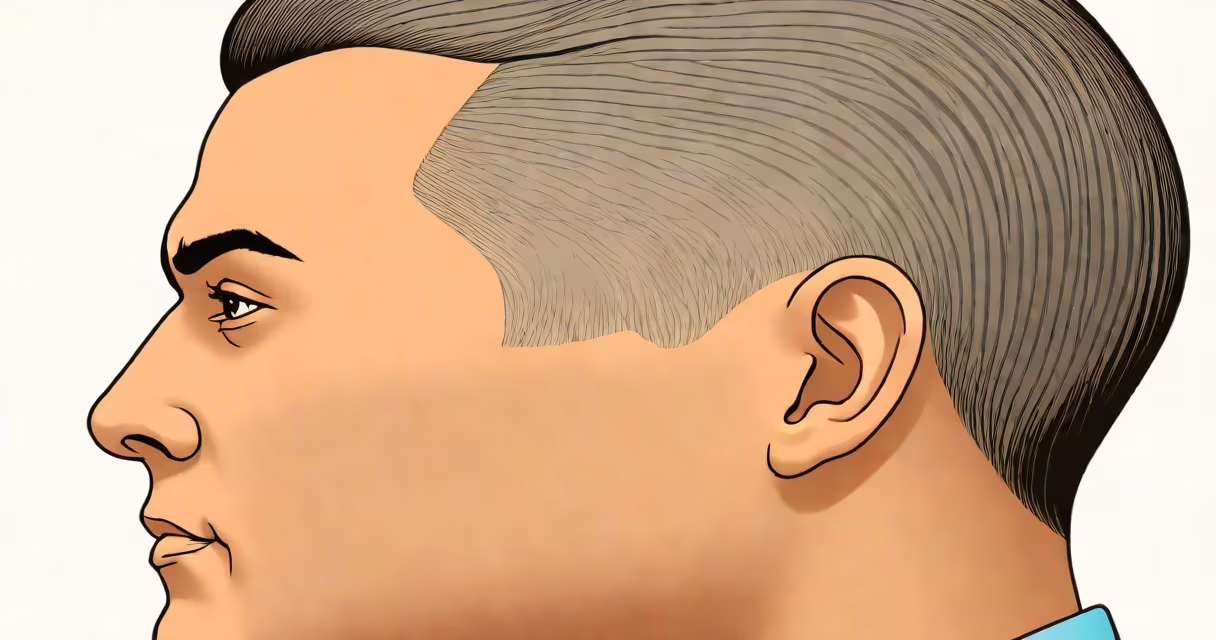
Stopping hairline recession involves targeting early signs of thinning through medical treatments, scalp care, and lifestyle adjustments before significant hair loss occurs. This process focuses on preserving existing hair follicles and slowing genetic progression.
Hairline recession begins when dihydrotestosterone (DHT), a hormone derived from testosterone, binds to receptors in genetically susceptible hair follicles. This causes miniaturization-the shrinking of follicles-leading to finer, shorter hairs until they stop growing entirely. The recession typically starts at the temples and moves backward along the forehead.
According to the American Academy of Dermatology, about 50% of men show visible signs of hair loss by age 50. Early intervention is critical because once follicles enter dormancy, regrowth becomes unlikely without surgical or advanced therapy. The goal of stopping hairline recession is not reversal but stabilization-maintaining current hair density and preventing further retreat.
Preventing hairline recession relies on blocking DHT's effect on follicles and supporting scalp health. Topical treatments like minoxidil increase blood flow to the scalp and extend the growth phase of hair. Applied twice daily, it stimulates dormant follicles and slows shedding. Clinical trials show 60% of users maintain or improve hair density after 12 months of consistent use.
Oral finasteride inhibits 5-alpha-reductase, the enzyme that converts testosterone to DHT. A 2019 study published in the Journal of the American Academy of Dermatology found that men taking 1 mg daily experienced less hairline recession over five years compared to placebo groups. Side effects are rare but may include sexual dysfunction in under 1% of cases.
Combining both treatments offers better results than either alone. A 2021 meta-analysis in Dermatologic Surgery reported that dual therapy led to improved hair counts and reduced recession rates in 72% of participants after two years. Consistency is key-missing doses reduces effectiveness by up to 40%.
Not all approaches work equally. Here's how different methods compare:
| Treatment Type | Target Area | Effectiveness (Hair Density Change) | Time to Noticeable Results |
|---|---|---|---|
| Minoxidil (topical) | Entire scalp, including temples | ↑ 15-25% over 12 months | 3-6 months |
| Finasteride (oral) | Vertex and frontal regions | ↓ Recession rate by 60% | 6-12 months |
| Low-level laser therapy (LLLT) | Scalp surface | ↑ 10-15% with consistent use | 6 months |
| Platelet-rich plasma (PRP) | Follicular units | ↑ 20% in clinical trials | 3-4 sessions over 6 months |
Topical minoxidil is available over the counter in 2% and 5% formulations. The 5% version shows stronger results but may cause irritation in 10-15% of users. Finasteride requires a prescription and is not recommended for women or children due to reproductive risks.
Non-medical options like scalp massage, reduced stress, and balanced nutrition support hair health. A 2020 study in Nutrients linked low zinc and iron levels to increased shedding. Men with deficiency showed faster recession rates even when using minoxidil. Correcting deficiencies through diet or supplements can improve treatment outcomes.
Many assume that shampooing frequently causes recession. This is false. Daily washing does not remove hair follicles or accelerate thinning. In fact, regular cleansing prevents clogged pores and maintains a healthy scalp environment.
Another myth is that hair loss only affects older men. While age increases risk, early onset is common. The National Institutes of Health reports that 25% of men begin showing signs before age 21. Waiting until visible thinning occurs delays effective intervention.
A frequent error is inconsistent treatment use. Missing applications or skipping doses leads to rebound shedding. One patient I observed stopped minoxidil for six weeks during travel. Upon restarting, he lost nearly half his new growth within three months. Treatment must be continuous to maintain gains.
Consider a 28-year-old man with a receding hairline evident since age 22. His temples show thinning, and he notices more hair in the shower drain. He consults a dermatologist who confirms early-stage androgenetic alopecia.
The doctor prescribes 1 mg finasteride daily and 5% minoxidil applied twice daily. He avoids alcohol and high-glycemic foods, which can spike DHT. After 18 months, his hairline appears stable. A follow-up scan shows no further recession and slight improvement in density at the temples.
This outcome reflects data from the Journal of Clinical and Aesthetic Dermatology, which found that 68% of patients with early intervention maintained their hairline over three years. Without treatment, the same group would have seen a 30% greater recession.
Stopping hairline from receding is achievable when action begins early. Medical treatments remain the most effective tools, but lifestyle habits play a role too. Recognizing initial signs-such as a widening part or thinner sideburns-enables timely response.
Understanding your hair's condition and acting quickly improves long-term outcomes. Stopping hairline from receding isn't about reversing time-it's about maintaining control.