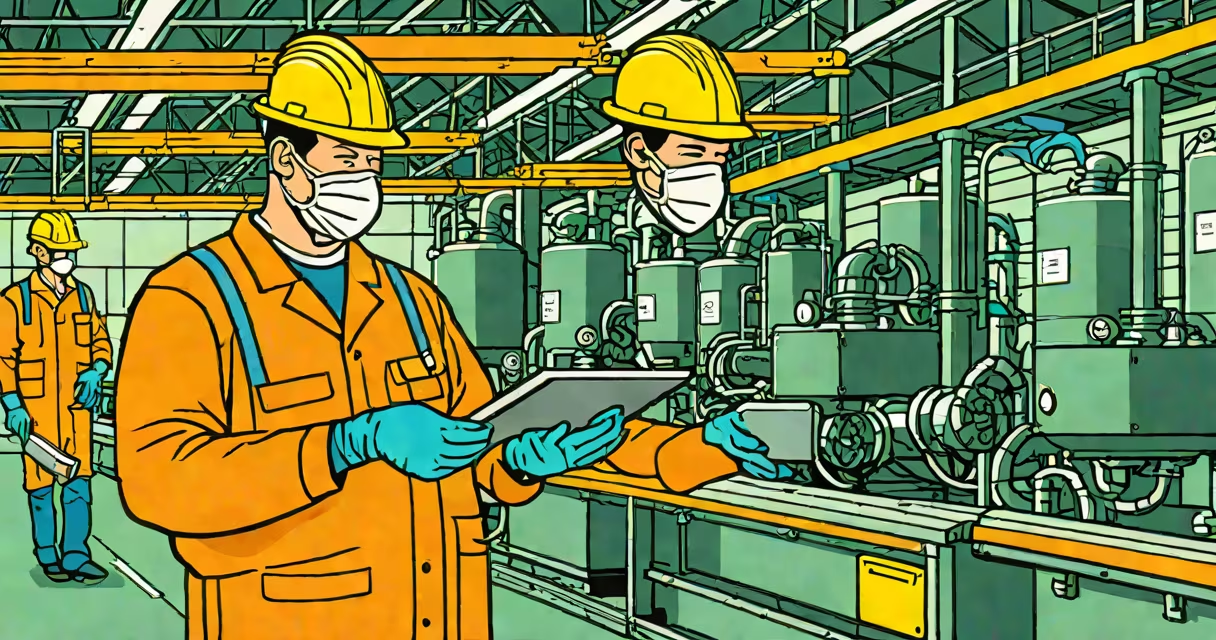
Industrial hygiene is the science of identifying, measuring, and controlling workplace environmental hazards that can harm workers' health. It focuses on preventing illness caused by exposure to chemicals, noise, radiation, ergonomic stress, and biological agents through systematic assessment and engineering controls.
Industrial hygienists assess risks in real-world settings such as chemical plants, hospitals, and construction zones. They measure airborne contaminants like benzene or silica dust, evaluate noise levels near machinery, and test for hazardous fumes. Their goal is to ensure exposures stay below legally enforceable limits set by agencies like OSHA and NIOSH.
The field emerged in the early 20th century as industries expanded and workers began suffering from chronic lung diseases and poisoning. Today, it's a core component of occupational health programs across the U.S., required under federal law for high-risk workplaces.
Industrial hygienists follow a structured process: recognize hazards, measure exposure, evaluate risk, and implement controls. This cycle repeats regularly to adapt to changing conditions.
Recognition begins with site walkthroughs, reviewing safety data sheets (SDS), and consulting with workers. For example, a hygienist entering a paint manufacturing facility might notice visible mist in the air and hear elevated noise from mixing tanks. These observations trigger further testing.
Measurement uses calibrated equipment. A personal sampling pump collects air particles over eight hours to determine average exposure. Sound level meters record decibel levels at different points. Data is compared against threshold limit values (TLVs) published by the American Conference of Governmental Industrial Hygienists (ACGIH).
Industrial hygiene addresses five primary hazard categories: chemical, physical, biological, ergonomic, and psychosocial. Each requires distinct detection and mitigation strategies.
| Hazard Type | Examples | Control Method |
|---|---|---|
| Chemical | Benzene, asbestos, solvents | Enclosure, ventilation, PPE |
| Physical | Noise, vibration, heat stress | Sound barriers, cooling systems, work rotation |
| Biological | Bloodborne pathogens, mold spores | Isolation, disinfection, HEPA filtration |
| Ergonomic | Repetitive motion, poor posture | Adjustable workstations, job rotation |
| Psychosocial | Workplace violence, burnout | Training, mental health support, scheduling |
Controls follow the hierarchy of controls: elimination, substitution, engineering controls, administrative controls, and finally, personal protective equipment (PPE). Engineering solutions like local exhaust ventilation reduce exposure at the source. PPE is last resort because it relies on individual compliance.
A real-world example: at a semiconductor factory, workers were reporting eye irritation and headaches. Air sampling revealed high levels of trichloroethylene (TCE), a solvent used in cleaning wafers. The hygienist recommended replacing TCE with a less toxic alternative and installing fume hoods. After implementation, symptoms dropped by 90% within six weeks.
Industries with high exposure risks rely on industrial hygiene. Manufacturing, mining, healthcare, and laboratories require regular assessments. The U.S. Occupational Safety and Health Administration (OSHA) mandates certain evaluations under the General Duty Clause and specific standards like 29 CFR 1910.1000 for carcinogens.
Even offices benefit. A study by the National Institute for Occupational Safety and Health (NIOSH) found that office workers exposed to poor indoor air quality reported higher rates of fatigue and reduced concentration. Simple fixes-like adjusting HVAC filters-improved cognitive performance by 15% in a controlled trial.
Non-compliance carries real consequences. In 2021, a California meatpacking plant was fined $1.2 million after OSHA found unsafe levels of ammonia and inadequate ventilation. Workers had developed respiratory issues over months. The case underscored that industrial hygiene isn't optional-it's legally binding.
Many confuse industrial hygiene with general safety. While both prevent injuries, industrial hygiene specifically targets long-term health effects. A fall prevention program is safety; reducing exposure to diesel particulate matter is industrial hygiene.
Another misconception: industrial hygiene applies only to heavy industry. In reality, it's used in schools, call centers, and even restaurants. A restaurant kitchen with poor exhaust system can expose cooks to high levels of cooking oil fumes, leading to chronic bronchitis. NIOSH documented such cases in urban food service workers.
One key distinction often missed: industrial hygiene is proactive, not reactive. It doesn't wait for illness to occur. A hygienist might test air quality during a new production run before employees start shifts. This prevents harm before it begins.
I once observed a team install temporary ventilation units in a warehouse during a renovation. Dust levels spiked above OSHA limits. We adjusted fan placement and added water sprays to suppress particles. Within 48 hours, readings returned to safe levels. That small intervention prevented potential silicosis cases among workers.
Two major organizations guide practice: OSHA and ACGIH. OSHA sets enforceable limits, while ACGIH publishes scientific recommendations based on current research.
For example, OSHA's permissible exposure limit (PEL) for lead in air is 50 micrograms per cubic meter (µg/m³) averaged over eight hours. ACGIH's TLV is lower-30 µg/m³-reflecting updated understanding of neurological damage at low levels. Employers must comply with the stricter standard.
NIOSH provides validation tools and research. Its 2020 report on nanomaterials highlighted gaps in existing monitoring methods, prompting new protocols for assessing carbon nanotubes in lab environments.
definition industrial hygiene is the disciplined practice of protecting worker health by anticipating, recognizing, evaluating, and controlling environmental hazards. It combines science, engineering, and regulatory compliance to prevent disease, not just injury. When applied correctly, it reduces absenteeism, lowers healthcare costs, and ensures legal compliance. For any organization handling potentially harmful materials or processes, it's not an option-it's a necessity.