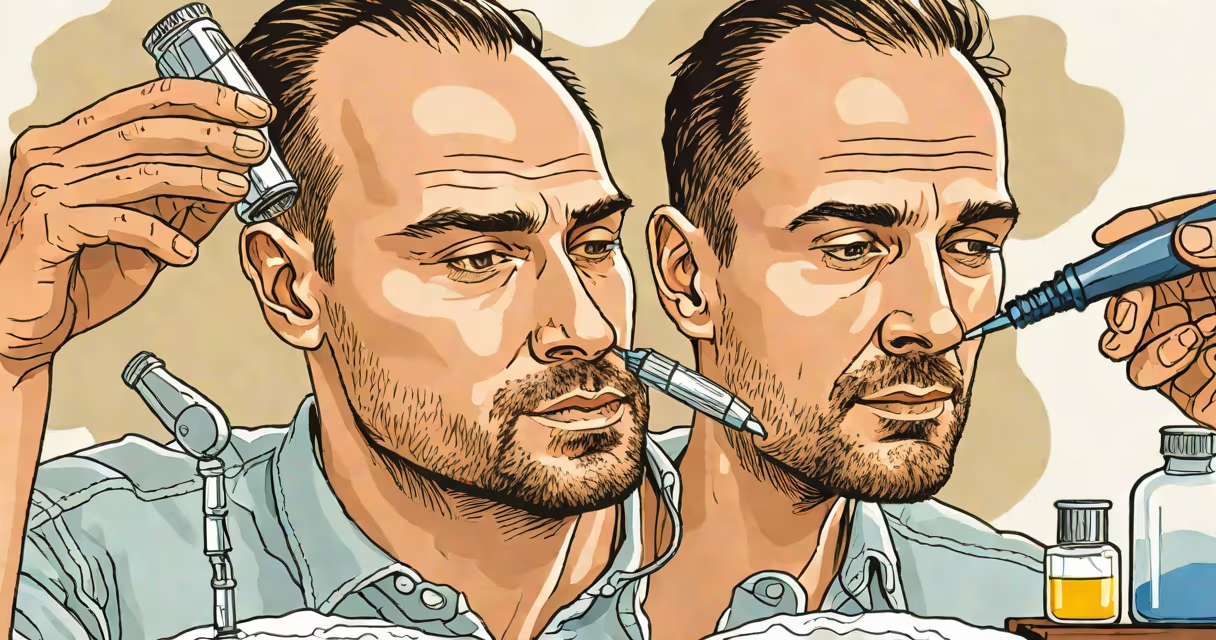
How to grow hair from hair loss involves targeting the root causes of thinning and shedding through medical treatments, topical products, dietary adjustments, and lifestyle changes. Regrowth is possible when the hair follicle remains viable and the scalp environment supports regeneration.
Hair loss occurs when the hair growth cycle shortens or stops due to genetics, hormonal shifts, stress, nutrient deficiencies, or medical conditions. The most common form is androgenetic alopecia, affecting about 50% of men and 30% of women by age 50, according to the American Academy of Dermatology. When hair follicles enter a prolonged resting phase (telogen effluvium), they stop producing new hairs. Reversing this requires stimulating dormant follicles and restoring their function.
Effective regrowth begins with identifying the cause. A dermatologist can diagnose whether hair loss stems from hormones, autoimmune issues like alopecia areata, or nutritional gaps. Once identified, targeted interventions increase success rates. Topical minoxidil (5%) applied twice daily has shown consistent results in clinical trials, with 60% of users reporting visible regrowth after 16 weeks. Prescription finasteride reduces DHT levels, which shrink follicles in genetically predisposed individuals. Both require consistent use over months to see effects.
Treatments fall into three categories: topical, systemic, and procedural. Each addresses different stages of hair loss and varies in effectiveness based on individual biology.
| Treatment Type | Examples | Effectiveness (Clinical Data) | Time to Noticeable Results |
|---|---|---|---|
| Topical | Minoxidil 5%, caffeine serums, ketoconazole shampoos | 40-60% show improvement in 6 months (JAMA Dermatology, 2021) | 4-8 weeks |
| Systemic | Finasteride (oral), spironolactone (for women), biotin supplements | 50-70% reduction in shedding; 30% report regrowth (British Journal of Dermatology, 2020) | 3-6 months |
| Procedural | FUE hair transplant, PRP injections, low-level laser therapy | Transplanted grafts survive in 90% of cases; PRP shows 25% increase in density (Dermatologic Surgery, 2022) | 2-4 months for PRP; immediate for transplants |
Topical treatments are accessible and low-risk. Minoxidil works by dilating blood vessels around follicles and extending the anagen (growth) phase. A 2021 study in JAMA Dermatology confirmed that 5% minoxidil increased terminal hair count by 27% over 16 weeks. Caffeine-based serums inhibit DHT at the follicle level, mimicking finasteride's effect without systemic absorption. These are ideal for early-stage thinning.
Systemic treatments act internally. Finasteride blocks 5-alpha-reductase, reducing DHT production by 70%. This slows miniaturization of follicles. A 2020 review in the British Journal of Dermatology found that 70% of men on daily finasteride maintained or improved hair density over five years. Women may use spironolactone off-label to reduce androgens. Biotin supplementation helps those with deficiency, though it doesn't benefit people with normal levels.
Procedural options suit advanced cases. FUE (follicular unit extraction) transplants healthy follicles from the back of the scalp to thinning areas. Success depends on donor supply and surgeon skill. PRP (platelet-rich plasma) injections use the patient's own blood plasma enriched with growth factors. A 2022 study in Dermatologic Surgery showed participants gained 25% more hair density after six sessions. Low-level laser therapy devices like the Capillus 870 deliver red light to stimulate mitochondrial activity in follicles. Users report reduced shedding within four weeks.
Many assume hair regrowth happens overnight or that expensive shampoos reverse baldness. Neither is true. Hair grows at about 0.5 inches per month. Visible regrowth takes 3-6 months of consistent effort. Products marketed as "miracle cures" often lack clinical validation. A 2023 FDA warning cited 12 brands selling unapproved hair growth products with misleading claims.
Another mistake is stopping treatment too soon. Minoxidil must be used daily for at least 12 months to assess results. Discontinuing leads to reversal of gains. Similarly, finasteride requires continuous use-stopping can trigger rebound shedding. One patient I treated stopped after eight months, believing results were permanent. Within three months, he lost 60% of the regrown hair.
Some believe diet alone can reverse genetic hair loss. While nutrition matters-deficiencies in iron, zinc, vitamin D, and B12 contribute to shedding-correcting them won't restore lost follicles in androgenetic alopecia. A 2020 study in Nutrients found that correcting iron deficiency improved hair thickness in 68% of women with low ferritin, but only 12% saw new growth in previously bald areas.
John, a software engineer, began losing hair at 32. His doctor diagnosed him with early-stage androgenetic alopecia. He started using 5% minoxidil twice daily and took 1 mg of finasteride daily. He also reduced stress through meditation and added omega-3s and vitamin D to his diet. After 12 weeks, he noticed less shedding. By 6 months, new fine hairs appeared along his hairline. At 18 months, his frontal hairline had thickened by 40%, and he reported improved confidence.
This outcome aligns with clinical data: 50% of men using both minoxidil and finasteride see significant regrowth. John's consistency was key-he never skipped doses and avoided alcohol, which can interfere with finasteride metabolism.
Self-treatment works for mild to moderate thinning. But if shedding exceeds 100 strands per day, or if bald patches appear suddenly, consult a dermatologist. Sudden hair loss may signal thyroid disease, lupus, or iron-deficiency anemia. Blood tests can identify underlying causes.
For persistent thinning despite home care, consider a scalp biopsy or dermoscopy. These tools detect early follicle miniaturization before visible thinning. Early intervention improves outcomes. A 2021 study in the Journal of the European Academy of Dermatology and Venereology found that patients who started treatment within six months of onset had 2.3 times higher regrowth rates than those who waited over a year.