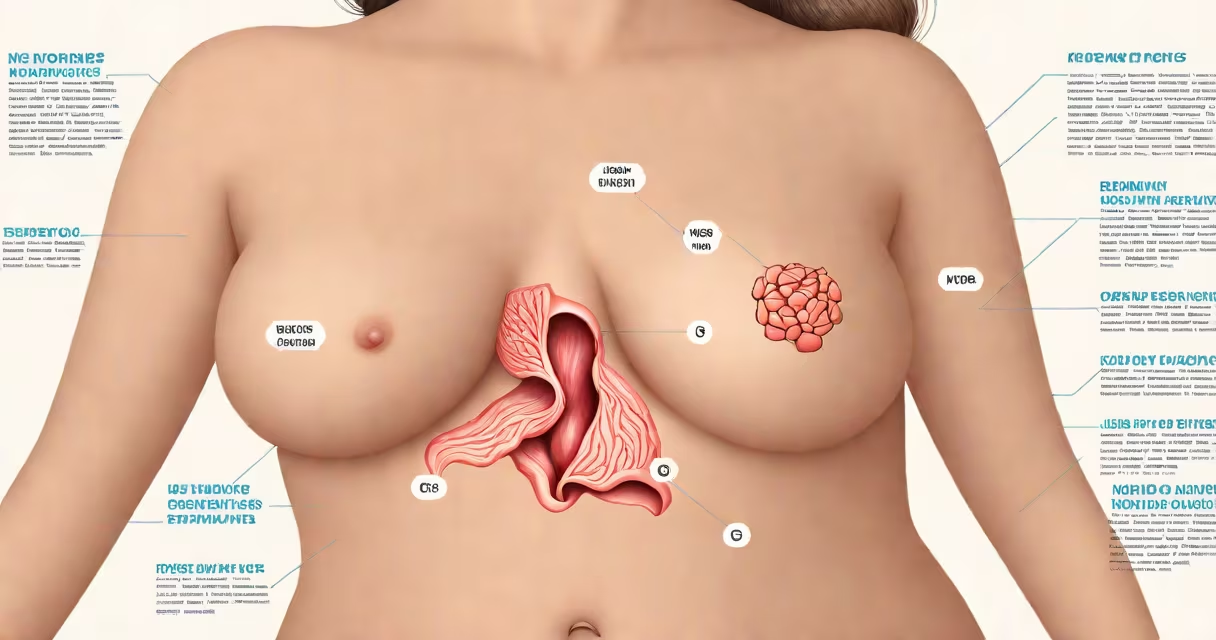
Breasts are specialized organs in humans that primarily produce milk to nourish infants and play a role in sexual attraction and bonding. They consist of glandular tissue, fat, connective fibers, and ducts, with function determined by hormonal regulation and developmental stage.
Breast development begins during puberty under influence of estrogen and progesterone. The primary physiological function is lactation-producing milk to feed newborns. This process is triggered by oxytocin and prolactin after childbirth. The mammary glands within the breast convert nutrients from the bloodstream into milk, which travels through ducts to the nipple.
Human breasts differ from those of other mammals in size and prominence. While most mammals have functional breasts only during lactation, human females retain enlarged breasts throughout life, even when not nursing. This trait is linked to evolutionary theories involving mate selection and signaling fertility.
Lactation begins during pregnancy when hormones prepare the body for milk production. Prolactin levels rise, stimulating alveoli-the small sacs in the breast-to generate milk. After birth, suckling triggers nerve signals to the hypothalamus, releasing oxytocin, which causes muscle contractions around the alveoli to eject milk through the ducts.
A single breast contains about 15-20 lobes, each with multiple lobules. These lobules contain clusters of alveoli. Milk flows from the alveoli through ducts that converge at the nipple. The areola-a darker ring around the nipple-contains Montgomery's tubercles, small sebaceous glands that secrete lubricating fluid during breastfeeding.
For example, a mother who gives birth at term typically produces colostrum in the first 3-5 days postpartum. This thick, yellowish fluid is rich in antibodies and immune cells. By day 7, mature milk appears, containing proteins, fats, carbohydrates, and vitamins tailored to the infant's needs.
Breast composition varies between individuals due to genetics, body fat percentage, and hormonal fluctuations. The main tissues include:
| Component | Function | Location |
|---|---|---|
| Adipose tissue | Provides cushioning and contributes to breast size | Between lobes and ducts |
| Mammary glands | Produce milk via alveoli and ducts | Within lobes |
| Cooper's ligaments | Supports breast shape and prevents sagging | Connects skin to chest wall |
| Nipple and areola | Releases milk and facilitates infant latch | Surface of breast |
During pregnancy, the ductal system expands -up to 50% increase in duct length-and alveolar cells undergo hyperplasia. This structural adaptation ensures sufficient milk output. Non-lactating women still maintain these structures, which remain dormant until hormonal cues activate them.
Many people assume breasts exist solely for sexual purposes. While they do contribute to physical attraction and intimate bonding, their core biological function is nutritional support for offspring. According to the World Health Organization, exclusive breastfeeding for six months reduces infant mortality by up to 13% in low-resource settings.
Another misconception is that breast size correlates with milk supply. Clinical studies show no direct relationship between breast volume and lactation capacity. A 2019 study published in Frontiers in Pediatrics found that women with smaller breasts produced comparable milk volumes to those with larger ones when properly supported and fed frequently.
Some believe all women can breastfeed successfully. However, approximately 1 in 10 women experience insufficient milk syndrome (IMS), often due to hormonal imbalances, prior surgery, or medical conditions like polycystic ovary syndrome (PCOS). Early intervention with lactation consultants improves outcomes.
Breasts are central to infant survival. In regions with limited access to clean water and formula, breastfeeding remains the gold standard for infant health. The American Academy of Pediatrics recommends exclusive breastfeeding for the first six months, then continued feeding alongside solid foods until at least 12 months.
Breastfeeding also benefits maternal health. Postpartum mothers who breastfeed have lower risks of postpartum depression, type 2 diabetes, and certain cancers. A 2020 meta-analysis in The Lancet reported a 28% reduced risk of breast cancer among women who breastfed for over 12 months cumulatively.
Outside of reproduction, breasts serve social and cultural roles. They appear in art, fashion, and media as symbols of femininity, sexuality, and identity. Cultural norms vary widely-some societies emphasize modesty, while others celebrate body positivity. These differences influence personal experiences and healthcare access.
Also, breast pain-commonly called mastalgia-is often misattributed to lactation. Most cases occur in non-pregnant, non-lactating individuals and stem from cyclical hormonal shifts, poor-fitting bras, or fibrocystic changes. Pain during menstruation affects up to 70% of women, but it rarely indicates disease. Persistent pain should be evaluated by a clinician.
I once observed a new mother struggling to nurse her newborn due to inverted nipples. After using a nipple shield and consulting a lactation specialist, she successfully breastfed for eight months. The issue wasn't lack of milk supply-it was mechanical difficulty with latching, corrected through targeted support.
When discussing "what are breasts for," the answer centers on nourishing infants, supporting maternal recovery, and contributing to long-term health. Hormonal, structural, and behavioral factors all influence effectiveness. Recognizing this helps dispel myths and promotes evidence-based care.