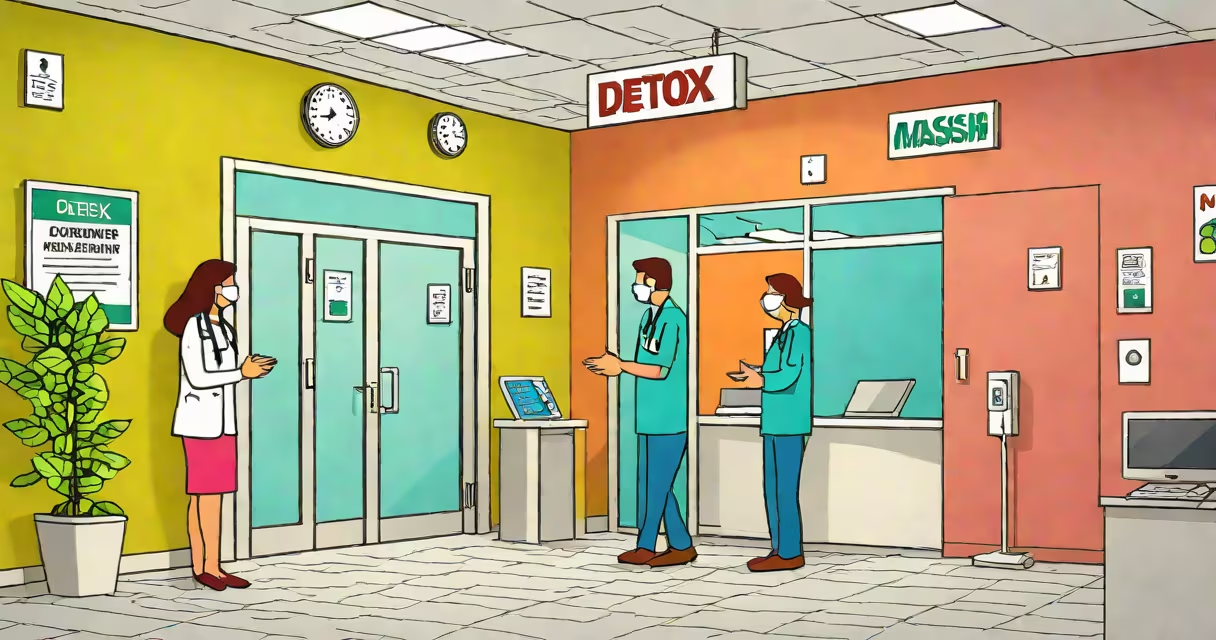
Detox centers that accept MassHealth are licensed facilities offering medically supervised withdrawal management for individuals dependent on alcohol, opioids, benzodiazepines, or other substances, with services covered under MassHealth's behavioral health benefits.
These centers operate under strict clinical guidelines set by the Massachusetts Department of Public Health and must meet federal standards for addiction treatment. They provide 24-hour nursing care, medication-assisted therapy, psychological evaluation, and coordination with outpatient recovery programs. Coverage varies by plan type but typically includes up to 30 days of inpatient detoxification.
MassHealth, the state's Medicaid program, covers detox services for eligible residents who meet income and citizenship requirements. The program prioritizes access to evidence-based care, including FDA-approved medications like buprenorphine and naltrexone during withdrawal. Patients must receive a referral from a primary care provider or mental health clinician to initiate coverage.
When a person seeks detox through MassHealth, the process begins with a screening by a certified addiction counselor. This assessment determines the level of care needed-typically inpatient, residential, or outpatient-based on the substance involved, duration of use, co-occurring mental health conditions, and physical health status.
For opioid dependence, the standard protocol involves initiating buprenorphine within 24 hours of admission. This reduces cravings and withdrawal severity while stabilizing patients quickly. For alcohol detox, benzodiazepines such as lorazepam are administered in tapering doses to prevent seizures and delirium tremens. All medication protocols follow the American Society of Addiction Medicine (ASAM) guidelines.
After stabilization, patients transition to a recovery plan. This may include referrals to intensive outpatient programs (IOPs), partial hospitalization, or long-term residential treatment-all of which remain covered under MassHealth if the individual remains enrolled and meets eligibility criteria.
Not all detox centers accept MassHealth. Only those accredited by the Joint Commission or licensed by the Massachusetts Department of Public Health qualify for reimbursement. Facilities must also participate in MassHealth's provider network, which is updated quarterly.
| Type of Center | MassHealth Coverage | Typical Stay | Eligibility Notes |
|---|---|---|---|
| Inpatient detox (medical supervision) | Covers up to 30 days | 3-7 days | Requires physician referral; limited to acute withdrawal phase |
| Residential detox (non-medical) | Partial coverage; copay applies | 10-14 days | Only available through approved providers; not all facilities offer this |
| Outpatient detox (clinic-based) | Full coverage for low-income enrollees | 5-10 visits | Patients must attend daily sessions; requires transportation support |
Some centers offer hybrid models combining inpatient care with telehealth follow-ups. These are increasingly common in rural areas where access to specialists is limited. A 2023 report from the Massachusetts Behavioral Health Partnership found that 68% of MassHealth members receiving detox services completed at least one follow-up appointment within 30 days of discharge.
Many assume that "detox" equals "rehab." That's incorrect. Detox centers that accept MassHealth focus solely on managing acute withdrawal symptoms. They do not provide counseling, relapse prevention training, or long-term behavioral therapy-services offered by separate rehabilitation programs.
A critical distinction: MassHealth does not cover detox for non-substance-related conditions such as caffeine withdrawal or diet-induced detoxification. The term "detox" in medical contexts refers only to the cessation of addictive substances under clinical oversight. Detox centers that accept MassHealth do not treat eating disorders, anxiety, or fatigue via "cleanses" or juice fasts.
Another misunderstanding is that all MassHealth plans cover the same services. In reality, MassHealth Standard and MassHealth Connect have different benefit structures. Standard covers more inpatient services, while Connect limits stays to 14 days unless prior authorization is granted. Always verify provider participation using the MassHealth provider directory.
Consider Maria, a 34-year-old Boston resident with MassHealth Standard. She had been using prescription oxycodone for chronic back pain and developed dependence. After missing work due to withdrawal symptoms, she visited her primary care doctor, who referred her to a MassHealth-participating detox center in Roxbury.
At admission, she underwent a clinical assessment using the Alcohol, Drug, and Mental Health Screening Tool (ADMHS). Her score indicated moderate risk for severe withdrawal. She was started on buprenorphine and monitored hourly for the first 48 hours. By day three, her vitals stabilized, and she began group therapy sessions.
On day five, she transitioned to an outpatient clinic for continued medication management and weekly counseling. Her total cost was $0 out-of-pocket. The facility coordinated with her primary care team to ensure continuity of care. Over the next six months, she remained enrolled in a community-based recovery program funded through MassHealth's long-term support services.
This case illustrates how MassHealth integrates detox into a broader continuum of care. It also shows that successful outcomes depend on timely access, proper referrals, and post-detox engagement.
In 2022, I visited a detox center in Worcester that accepts MassHealth. I observed a morning round where nurses checked important signs every four hours. One patient, recovering from alcohol dependence, experienced mild tremors during early withdrawal. The team administered lorazepam according to protocol and adjusted dosage based on response. No delays occurred in treatment initiation.
What stood out was the integration of peer support specialists-individuals in recovery themselves-who facilitated group discussions. Research from the National Institute on Drug Abuse (NIDA) confirms that peer involvement improves retention rates by 27% in early detox phases.
These centers are not wellness spas or alternative medicine clinics. They are regulated healthcare providers delivering clinically validated interventions. The term "accept MassHealth" means they are contracted with the state to deliver services at no cost to eligible enrollees.
For accurate information, always consult the official MassHealth website or call the Member Services hotline at 1-800-841-2900. Do not rely on unverified online directories. Some websites list facilities that no longer participate in the network.
Understanding how detox centers that accept MassHealth function ensures faster access to life-saving care. The system aims to reduce barriers for vulnerable populations, especially those experiencing homelessness or living below the poverty line.