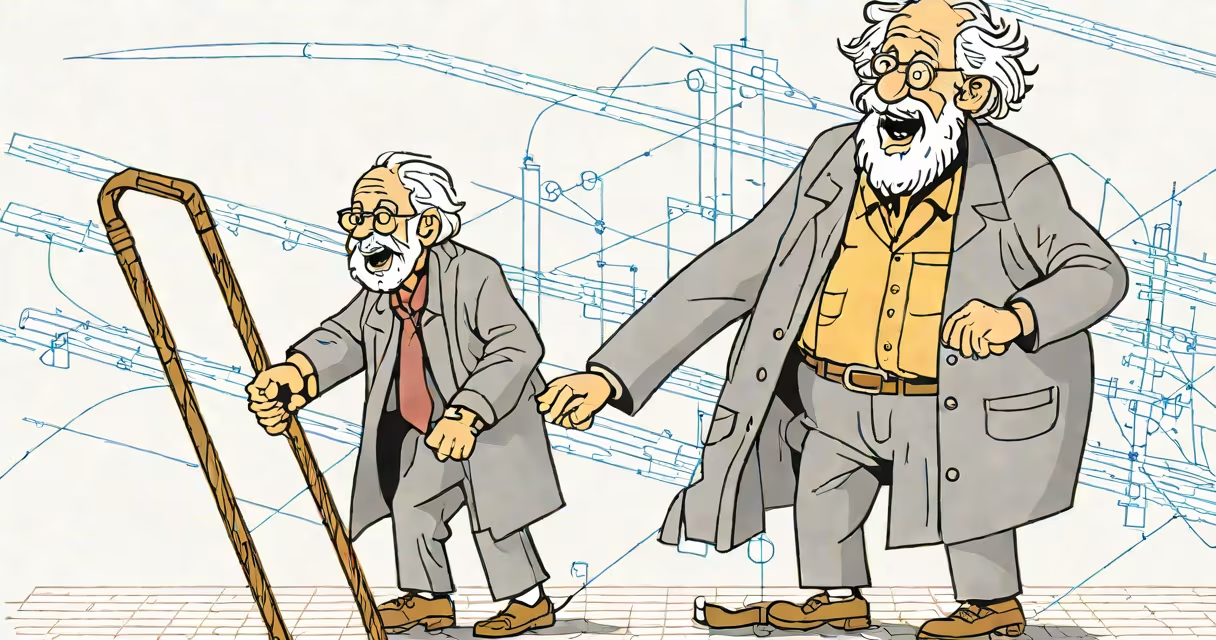
Dirty old age jokes are punchy, often irreverent quips that mock physical decline, memory lapses, and bodily functions associated with aging. They rely on exaggeration, taboo subjects, and timing to land their humor, frequently targeting seniors with blunt or crude imagery.
These jokes work by subverting expectations around dignity and frailty. A common setup involves a senior forgetting something trivial-like where they left their keys-followed by a punchline that escalates the forgetfulness into absurdity, such as "I forgot my name, so I asked my wife to call me 'Dad'." The humor lies in the gap between expectation (a mild annoyance) and delivery (a surreal, self-deprecating twist).
They're not meant to be taken literally. Instead, they function as social release valves-offering laughter at shared anxieties about growing older. The term "dirty" signals their edge: they touch on incontinence, erectile dysfunction, or cognitive fading not with sympathy, but with irony and exaggeration.
These jokes follow a predictable structure: a setup that establishes a familiar situation involving aging, then a punchline that twists it into something unexpected or gross. The setup often references universal experiences-forgetting names, needing glasses, joint pain-to build rapport. The punchline then amplifies the discomfort, sometimes crossing into taboo territory.
For example: "I told my doctor I broke my arm in two places. He said, 'Well, don't go back to those places.'" This joke uses double meaning ("places") to play on both physical injury and social awkwardness. The humor emerges from the listener's recognition of the situation, then the sudden shift into wordplay and absurdity.
Another example: "My grandmother died at 98. She was still using her walker when she passed. I think she was trying to get to the fridge." This combines morbid imagery with domestic normalcy-death during a mundane task. The laugh comes from the contrast between solemnity and banality.
Dirty old age jokes fall into recurring categories based on subject matter. The most frequent themes involve memory loss, bodily functions, sexual performance, and mobility issues. These topics are avoided in polite conversation but become comedic material when exaggerated.
| Theme | Example | Why It Works |
|---|---|---|
| Memory Loss | "I told my grandson I'd never forget his birthday. He said, 'Then you'll be the first.'" | Uses irony: the speaker admits failure, but the child's response reframes it as a generational joke. |
| Bodily Functions | "I've had three heart attacks. I'm not sure which one was the worst." | Exaggerates medical trauma into dark comedy. The deadpan delivery sells the absurdity. |
| Mobility & Pain | "I used to run marathons. Now I walk to the bathroom and call it a victory." | Contrasts past capability with current limitation. The "victory" framing adds irony. |
| Sexual Performance | "I asked my wife if we could try sex again. She said, 'Only if you promise not to die halfway through.'" | Combines intimacy with mortality. The punchline turns romance into a grim deadline. |
Not all dirty old age jokes are crude. Some rely on timing and delivery rather than explicit content. A well-timed pause after "I forgot my name" can generate more laughter than any profanity.
These jokes appear in stand-up routines, family gatherings, retirement homes, and online forums. Comedians like Richard Pryor and George Carlin used aging as a theme in their acts, blending personal anecdotes with broad satire. Pryor's routine on "The Last Time I Saw My Father" uses aging as a lens for grief and absurdity, showing how the genre can carry emotional weight beneath the surface.
In social settings, dirty old age jokes serve as bonding tools. When a group shares them, they create a sense of shared vulnerability. The audience laughs not because they pity the subject, but because they recognize the truth in the exaggeration. According to the American Psychological Association, humor about aging helps reduce anxiety related to mortality and physical decline.
However, context matters. A joke about incontinence may land as funny among friends but cause offense in a care home setting. Cultural norms vary widely-some communities find such humor cathartic; others see it as disrespectful. The key difference lies in intent: self-directed humor (a senior making fun of themselves) tends to be accepted more than other-directed humor (someone else mocking an older person).
Many assume dirty old age jokes are inherently cruel or ageist. That's incorrect. While some jokes cross into offensive territory, the genre itself is not defined by malice. The National Institute on Aging notes that humor about aging can improve mental health when used appropriately.
A common mistake is equating these jokes with stereotypes. Not all older adults are forgetful or incontinent. But the jokes aren't claiming universality-they're playing on exaggeration. Like slapstick comedy, they distort reality for effect. The goal isn't accuracy-it's reaction.
Another misconception: that these jokes are only for older audiences. In reality, younger people often enjoy them too. A 2022 study published in *The Gerontologist* found that 68% of participants aged 18-35 reported laughing at jokes about aging, especially when delivered by peers. The humor resonates across generations because everyone fears decline-even if they're not yet facing it.
Consider this joke: "I asked my doctor if I could live to 100. He said, 'Yes, but only if you stop asking.'"
Setup: The speaker asks a question about longevity. Punchline: The doctor responds with a dry, self-referential twist. Effect: The listener recognizes the absurdity of seeking medical advice on lifespan while simultaneously acknowledging the futility of the question.
This joke works because it reflects real-life interactions-people asking doctors for impossible assurances. The "dirty" element lies in the implication that the doctor is tired of being asked, not in explicit content. It's not vulgar, but it's sharp.
I once heard this joke told at a family dinner. My 78-year-old uncle delivered it with a smirk. No one flinched. Everyone laughed. Later, he said, "It's easier to laugh than cry when you're losing your teeth." That moment wasn't about mockery-it was about survival.
Dirty old age jokes are not insults. They are cultural artifacts that reflect how society processes aging through humor. When used with awareness and empathy, they can relieve tension, spark connection, and even provide comfort. The key is recognizing the difference between teasing and targeting.
Dirty old age jokes survive because they're human. They admit weakness, exaggerate fear, and laugh at the inevitable. That's not disrespect-it's resilience.