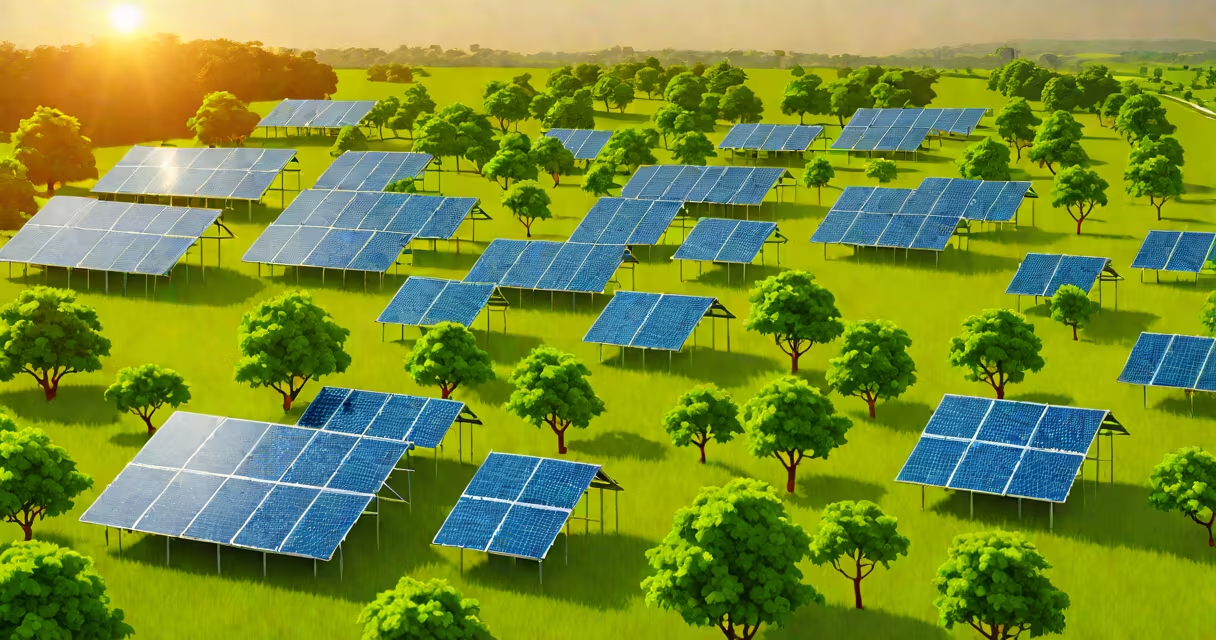
Sustainable development is a structure for meeting present human needs without depleting natural resources or harming ecosystems, ensuring future generations can also thrive. It integrates economic growth, environmental protection, and social inclusion into a single goal.
This concept emerged from the 1987 Brundtland Report, which defined it as "development that meets the needs of the present without compromising the ability of future generations to meet their own needs." The report was produced by the World Commission on Environment and Development, convened under the United Nations. This definition remains foundational in international policy, including the UN's 2030 Agenda for Sustainable Development.
At its core, sustainable development rejects short-term gains that degrade land, water, or air quality. Instead, it demands systems thinking-recognizing that decisions in one area affect others. For example, building a factory may boost local jobs but pollute rivers, harming fishing communities downstream. A truly sustainable project would assess all impacts before construction begins.
Sustainable development rests on three pillars: environmental integrity, economic viability, and social equity. These are often called the triple bottom line. No single pillar can succeed without the others.
Environmental integrity means preserving biodiversity, reducing emissions, and protecting clean water and soil. Economic viability helps projects generate lasting benefits, not just immediate profits. Social equity requires fair access to resources, healthcare, education, and decision-making power.
A city investing in electric buses illustrates all three. It reduces carbon emissions (environmental), creates maintenance and driver jobs (economic), and improves air quality for low-income neighborhoods near bus routes (social).
Different sectors apply sustainable development in distinct ways. Agriculture, energy, urban planning, and business all have unique challenges and solutions.
| Sector | Key Focus Area | Concrete Example |
|---|---|---|
| Agriculture | Soil health and water conservation | Rotating crops and using drip irrigation to reduce water waste and prevent erosion |
| Energy | Renewable transition and grid efficiency | Replacing coal plants with solar farms and battery storage systems |
| Urban Planning | Walkability and green space integration | Designing cities with bike lanes, public transit, and parks within 500 meters of homes |
| Business | Supply chain transparency and circular design | Manufacturers using recycled materials and offering product take-back programs |
These applications aren't isolated. A solar-powered farm in Kenya uses sustainable agriculture techniques and supplies energy to nearby villages, creating jobs and reducing reliance on diesel generators. This model aligns with both local needs and global targets.
Many assume sustainable development slows economic growth. That's incorrect. The Global Commission on the Economy and Climate found that climate-resilient infrastructure generates $26 trillion in economic benefits by 2030 compared to business-as-usual scenarios.
Another myth is that sustainability applies only to environmental issues. In reality, it includes social dimensions like gender equality and access to healthcare. The UN's Sustainable Development Goals (SDGs) list 17 goals, including ending poverty (Goal 1), achieving gender equality (Goal 5), and responsible consumption (Goal 12).
Some confuse sustainability with recycling alone. Recycling is part of it, but not sufficient. True sustainability involves reducing demand through better design-like making products modular so parts can be replaced instead of discarding the whole unit.
Costa Rica generates over 98% of its electricity from renewable sources-mostly hydropower, wind, geothermal, and solar. This achievement began in the 1990s when the country banned new oil exploration and invested heavily in green infrastructure.
The government also protected 25% of its land as national parks and wildlife reserves. This preserved forests that absorb carbon dioxide and support tourism, which now contributes 5% of GDP annually.
By 2023, Costa Rica had reduced its per capita carbon emissions by 60% since 1990 while maintaining steady GDP growth. This proves that ecological protection and economic development are not mutually exclusive.
In 2021, I visited a housing cooperative in Portland, Oregon, where residents live in net-zero homes powered entirely by rooftop solar and geothermal heating. Each home includes rainwater harvesting and composting toilets.
Residents reported lower utility bills and higher satisfaction with living conditions. The project reduced neighborhood carbon output by 40% over five years. What stood out wasn't just the technology-it was the shared governance model. Decisions about maintenance, repairs, and upgrades were made collectively.
This demonstrated that sustainable development isn't just about materials or energy. It's about community ownership and long-term commitment.
Climate change, biodiversity loss, and rising inequality threaten human well-being. The Intergovernmental Panel on Climate Change (IPCC) states that limiting warming to 1.5°C requires rapid, systemic changes across all sectors. Sustainable development provides the roadmap.
Nations that integrate sustainability into national planning see improved public health outcomes, stronger economies, and greater resilience to shocks like pandemics or extreme weather. Countries like Denmark and Sweden rank high in both sustainability performance and quality of life indices.
For individuals, adopting sustainable practices-reducing meat intake, using public transport, supporting ethical brands-adds up. A 2022 study by the University of Oxford found that shifting to a plant-based diet cuts food-related emissions by 50% per person.
Discussions around sustainable development continue to evolve. As climate risks grow, so does the urgency to act. The structure remains essential-not as a distant ideal, but as a practical guide for building equitable, resilient societies.