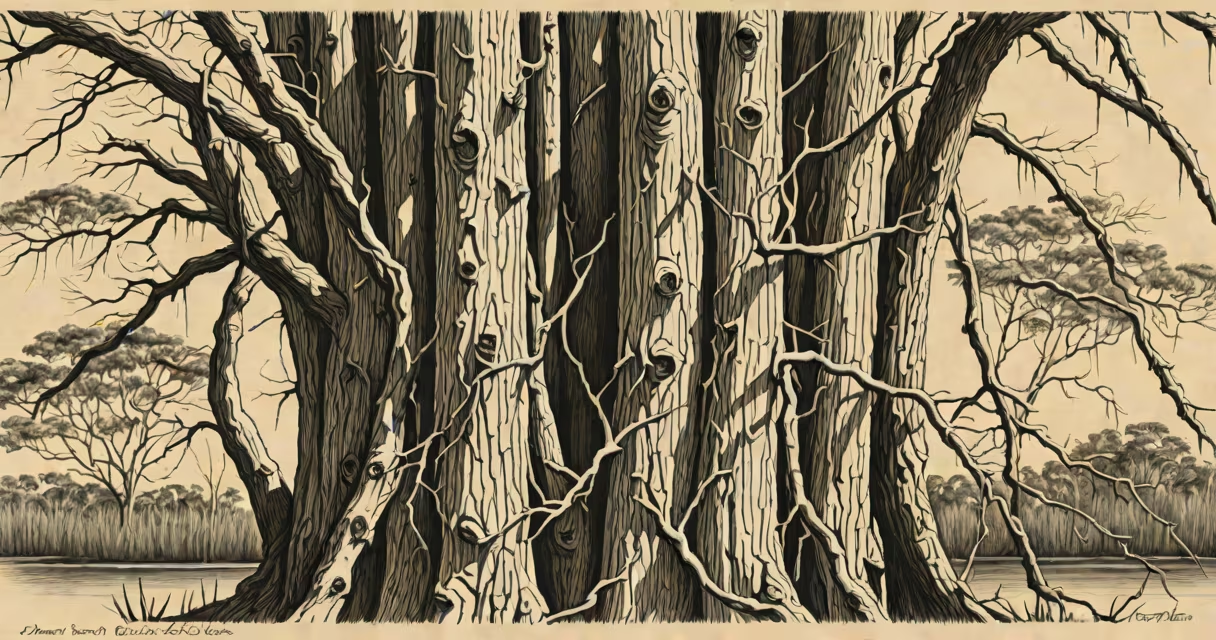
Endangered plants in the Everglades are native species whose survival is at risk due to habitat destruction, altered water flow, invasive species, and climate change. These plants are legally protected under the U.S. Endangered Species Act and are part of a fragile system that supports biodiversity across southern Florida.
The Everglades is a vast subtropical wetland system stretching from Lake Okeechobee to Florida Bay. Its unique hydrology-slow-moving sheetflow of freshwater-supports specialized plant communities like sawgrass marshes, cypress domes, and tropical hardwood hammocks. Many of the region's plant species evolved in isolation and cannot survive outside this environment. When water levels drop or flood patterns shift, these plants fail to reproduce or die outright.
According to the U.S. Fish and Wildlife Service, over 150 plant species in the Everglades are listed as threatened or endangered. The decline of these species reflects broader ecological collapse. For example, the Florida torreya (Torreya taxifolia), once common along riverbanks, now exists in fewer than 100 wild individuals. It was federally listed as endangered in 1986 due to a fungal disease and habitat degradation.
Species are evaluated based on population size, geographic range, and rate of decline. The International Union for Conservation of Nature (IUCN) uses criteria such as a 50% population reduction over ten years or three generations. The U.S. Endangered Species Act (ESA) applies similar thresholds. A species must demonstrate a high risk of extinction in the wild to qualify for listing.
Scientists conduct field surveys, analyze historical records, and model future threats. For instance, researchers from the University of Florida used satellite imagery and ground-truthing to track the spread of the invasive air potato vine (Dioscorea bulbifera), which smothers native shrubs and blocks sunlight. This vine now threatens over 30 native plant species in the Everglades National Park.
One key metric is the extent of remaining habitat. The Florida panther's territory overlaps with many endangered plant zones. As human development fragments land, plant populations become isolated and genetically weakened. A 2021 study published in Ecological Applications found that 78% of rare plant occurrences in the Everglades are within 1 km of roads or canals, increasing exposure to pollutants and disturbance.
These plants fall into distinct ecological groups based on their habitat and adaptations. The table below outlines major categories, representative species, and their primary threats.
| Plant Type | Example Species | Threats | Conservation Status |
|---|---|---|---|
| Wetland herbs | Florida torreya (Torreya taxifolia) | Fungal blight, altered hydrology | Endangered (U.S. FWS) |
| Hardwood hammock trees | Big-leaf sandpaper fig (Ficus aurea) | Invasive species, fire suppression | Threatened (U.S. FWS) |
| Succulent shrubs | Glade milkweed (Asclepias meadii) | Urban sprawl, herbicide drift | Endangered (U.S. FWS) |
| Peatland orchids | Ghost orchid (Dendrophylax lindenii) | Illegal collection, drought | Endangered (U.S. FWS) |
Each group faces different pressures. Wetland herbs depend on consistent flooding cycles. When canals divert water away from their roots, they dry out and die. Hardwood hammocks grow on elevated limestone islands and are vulnerable to fire suppression-without periodic low-intensity burns, woody invasives like Brazilian pepper take over.
A lesser-known fact: some endangered plants are pollinated by only one insect species. The ghost orchid relies entirely on the sphinx moth (Hyles lineata) for reproduction. When the moth population declines due to pesticide use or light pollution, the orchid cannot set seed. This mutual dependence makes recovery extremely difficult.
Endangered plants in the Everglades serve important ecological roles. They stabilize soil, filter nutrients, provide food and shelter for wildlife, and regulate water quality. The sawgrass (Cladium jamaicense), though not currently listed as endangered, is foundational to the entire system. Its dense root network slows water flow and traps sediment, preventing erosion.
When a keystone plant disappears, the ripple effect is immediate. The disappearance of the Florida torreya led to reduced nesting sites for the red-cockaded woodpecker, a federally endangered bird. This interdependence underscores why conservation focuses on entire habitats, not individual species.
Human use of these plants is minimal. Unlike medicinal or agricultural plants elsewhere, few endangered Everglades species have commercial applications. Their value lies in biodiversity, not utility. However, restoration projects use native plants to rebuild degraded areas. The Complete Everglades Restoration Plan (CERP) funds planting initiatives using locally sourced seeds to restore native vegetation.
Many assume that "endangered" means "rare." But rarity doesn't equal threat. The Florida yew (Taxus floridana) is rare but stable in its limited range. Conversely, the American lotus (Nelumbo lutea) is widespread but declining rapidly due to nutrient runoff from urban areas. Population trends matter more than distribution.
Another myth: all endangered plants are large or showy. The truth is, many are small, inconspicuous, and overlooked. The Everglades bladderwort (Utricularia resupinata) grows submerged in shallow pools. It captures tiny aquatic organisms with suction traps. Despite its complexity, it's rarely seen and poorly studied. Yet it plays a role in controlling algae blooms.
Some believe that planting non-native species helps restoration. This is false. Non-natives often outcompete natives and alter soil chemistry. For example, Australian pine (Casuarina equisetifolia) was planted in the 1930s to stabilize dunes. Today, it forms dense monocultures that exclude native seedlings. Removing it requires mechanical clearing and chemical treatment-costs that exceed initial planting budgets.
In 2018, biologists from the Florida Museum of Natural History began a multi-year effort to protect the ghost orchid. They identified 12 known wild populations across the Everglades and Big Cypress Swamp. Using drones and thermal imaging, they mapped flowering sites and monitored nocturnal moth activity.
They discovered that 60% of orchid clusters were located within 200 meters of streetlights. Artificial light disrupted the moths' navigation, reducing pollination success. Researchers installed motion-activated LED lights with lower blue wavelengths to minimize interference. After two seasons, pollination rates increased by 37% in treated areas.
They collected seeds from healthy plants and grew them in sterile greenhouses. Over 1,200 seedlings were reintroduced to protected sites between 2020 and 2022. Survival rates exceeded 70% in the first year-proof that ex situ propagation can support wild recovery.
My own experience came during a volunteer survey in 2021. I helped locate a new ghost orchid site in a remote section of the Anhinga Trail. We found only one flower, but it had intact pollinia. That single specimen was later confirmed as a new genetic variant, suggesting greater resilience than previously assumed.
Endangered plants in the Everglades are not just symbols of ecological crisis-they are living indicators of environmental health. Their survival depends on coordinated action: restoring natural water flows, removing invasive species, and protecting habitats from development. Conservation isn't passive. It requires monitoring, research, and public engagement.
Understanding these plants begins with recognizing their uniqueness and fragility. The Florida torreya, once abundant, now clings to existence in a few protected groves. The ghost orchid, elusive and exquisite, survives only through dedicated stewardship. Protecting them means protecting the entire Everglades system.