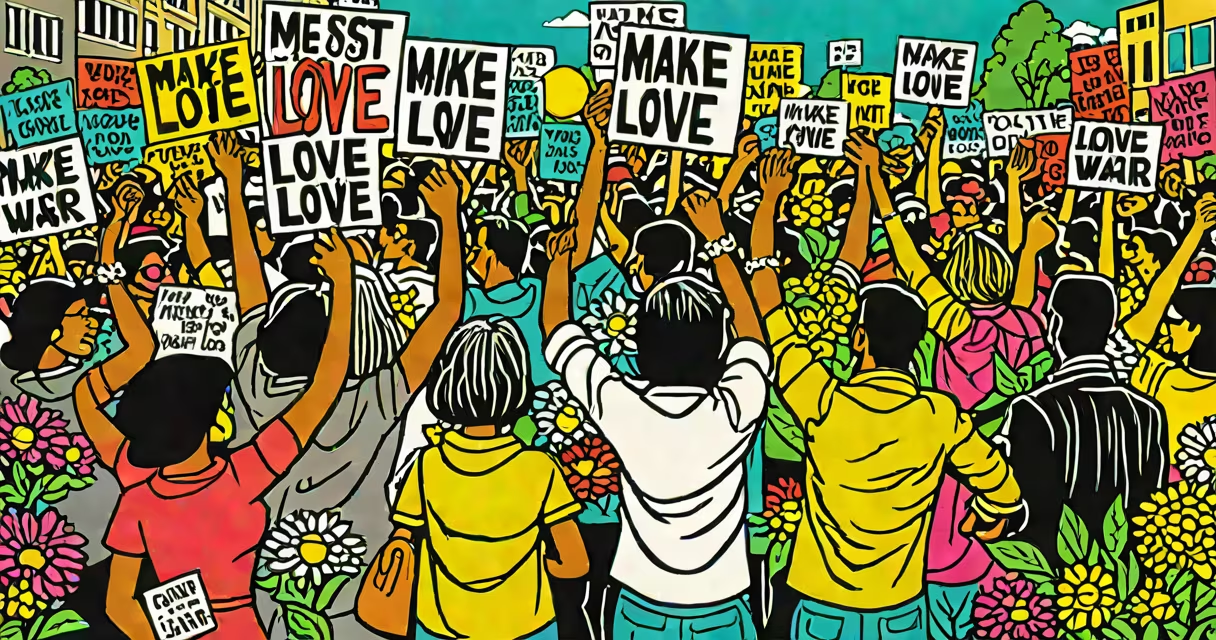
Fast forward counter culture refers to the collective youth-driven social movements of the 1960s and 1970s that rejected dominant societal structures, prioritized personal freedom, and promoted alternative values through music, art, and political dissent. These movements emerged in response to war, inequality, and rigid social roles, creating lasting changes in gender expression, environmental awareness, and civil rights.
The term combines two distinct ideas: "fast forward," suggesting a leap toward new possibilities, and "counter culture," meaning opposition to established norms. Together, they describe a generation that refused to wait for change-it demanded it, often through direct action and symbolic resistance. This was not a single ideology but a network of overlapping efforts across the U.S., Europe, and parts of Asia.
Key events included mass protests against the Vietnam War, the rise of psychedelic rock, the legalization of birth control, and the emergence of feminist and LGBTQ+ advocacy groups. The movement did not seek to replace institutions but to change them-replacing obedience with questioning, conformity with self-expression.
Fast forward counter culture operated through decentralized networks rather than formal organizations. It relied on shared symbols, common language, and spontaneous gatherings. Music was central-bands like The Rolling Stones, Janis Joplin, and Pink Floyd broadcast messages of anti-authoritarianism and emotional authenticity.
Protest tactics included sit-ins, marches, and public performances. In 1967, over 20,000 people gathered in San Francisco's Golden Gate Park for the Human Be-In, a festival promoting peace, love, and drug experimentation. The event helped popularize the slogan "Turn on, tune in, drop out," coined by Timothy Leary, a Harvard psychologist who advocated for LSD use as a tool for consciousness expansion.
These actions were not random. They followed a pattern: challenge authority, reject materialism, embrace community living, and explore altered states of mind. The goal was not to destroy society but to expose its flaws and offer alternatives. For example, communes like The Farm in Tennessee and Twin Oaks in Virginia experimented with shared ownership, non-hierarchical decision-making, and sustainable agriculture.
Fast forward counter culture drew from multiple roots: jazz and blues traditions, Eastern philosophy, feminist theory, and radical politics. It fused spiritual exploration with political critique. Meditation, yoga, and vegetarianism became tools for resisting capitalist consumerism.
Visual expression played a major role. Psychedelic posters by artists like Stanley Mouse and Rick Griffin used swirling colors and surreal imagery to convey inner experiences. These designs weren't decorative-they were invitations to see reality differently. A 1967 poster for a Grateful Dead concert features a skull wearing a flower crown, symbolizing death and rebirth, life and decay.
Language evolved too. Terms like "flower child," "acid test," and "drop out" entered everyday speech. Slang wasn't just fun-it was a way to build identity outside mainstream categories. People adopted nicknames, wore mismatched clothing, and spoke in metaphors. This linguistic shift helped create a sense of belonging among strangers.
| Type | Focus | Example |
|---|---|---|
| Political | Anti-war, civil rights | 1968 Democratic National Convention protests in Chicago |
| Artistic | Music, visual art, performance | Woodstock Festival (1969), Jimi Hendrix's rendition of "The Star-Spangled Banner" |
| Lifestyle | Communal living, alternative health | Twin Oaks Community, Virginia |
| Spiritual | Eastern religion, mysticism | Timothy Leary's experiments with psychedelics at Harvard |
Fast forward counter culture originated in urban centers with large student populations. Cities like Berkeley, California; New York City; London; and Berlin became hubs. The presence of universities gave access to books, speakers, and protest spaces. Students organized teach-ins, read banned literature, and formed collectives.
Geographic spread happened through media. Television coverage of police violence during civil rights marches, such as the 1965 Selma to Montgomery march, brought national attention. The 1968 assassination of Martin Luther King Jr. triggered riots in over 100 U.S. cities. These moments were broadcast live, turning private grief into public outcry.
International influence grew via travel and migration. American soldiers returning from Vietnam brought back anti-war sentiments. European youth adopted American protest styles but adapted them to local issues-such as France's May 1968 uprising, where students and workers shut down the country for weeks.
Fast forward counter culture is often reduced to a stereotype: long-haired hippies smoking pot and dancing naked. While some individuals fit this image, the movement was far more diverse and ideologically complex. Not all participants used drugs. Many were deeply committed to nonviolence and education.
A key misconception is that the movement failed. In reality, it succeeded in shifting cultural norms. The Environmental Protection Agency was created in 1970, partly due to growing public concern about pollution-a direct result of grassroots activism. The women's liberation movement gained momentum after the 1966 Miss America protest, where activists threw bras and girdles into a "Freedom Trash Can."
Another error is assuming all members opposed capitalism. Some embraced alternative economic models, like barter systems and cooperative housing, but others simply wanted reform-not revolution. The 1972 book *The Limits to Growth*, published by the Club of Rome, warned of ecological collapse under unchecked growth-this idea influenced both environmentalists and early tech thinkers.
Woodstock exemplifies fast forward counter culture in action. Held on a farm in Bethel, New York, the festival attracted over 400,000 attendees. Organizers promised peace, music, and community. No tickets were sold-attendance was based on trust and word-of-mouth.
Performances included Jimi Hendrix, Joan Baez, and The Who. The stage was set in a muddy field. Attendees shared food, water, and shelter. Police were absent. There were no deaths reported during the event, despite overcrowding and rain.
Afterward, the film *Woodstock* (1970) became a cultural artifact. It captured the idealism of the time: young people from different backgrounds coming together without violence. The festival's legacy includes the enduring belief that large-scale gatherings can be peaceful and major. It also showed how media could amplify grassroots movements-Woodstock was broadcast globally, making the U.S. counterculture visible worldwide.
I attended a reenactment of the 1969 festival in 2019. The crowd sang "San Francisco" by Jefferson Airplane. No one argued. No one pushed. People sat on blankets, eyes closed, swaying. That moment reminded me that fast forward counter culture wasn't just about rejecting the past-it was about imagining a better future, one that still matters today.
Today, elements of fast forward counter culture persist in climate strikes, Black Lives Matter protests, and digital communities advocating for privacy and autonomy. The core idea remains unchanged: challenge the status quo not through force, but through presence, creativity, and collective will.
Understanding fast forward counter culture helps explain modern social movements. It shows how youth, when given space and tools, can reshape society. The movement didn't end-it evolved. Its spirit lives in every person who chooses to act differently, speak up, or refuse to conform.