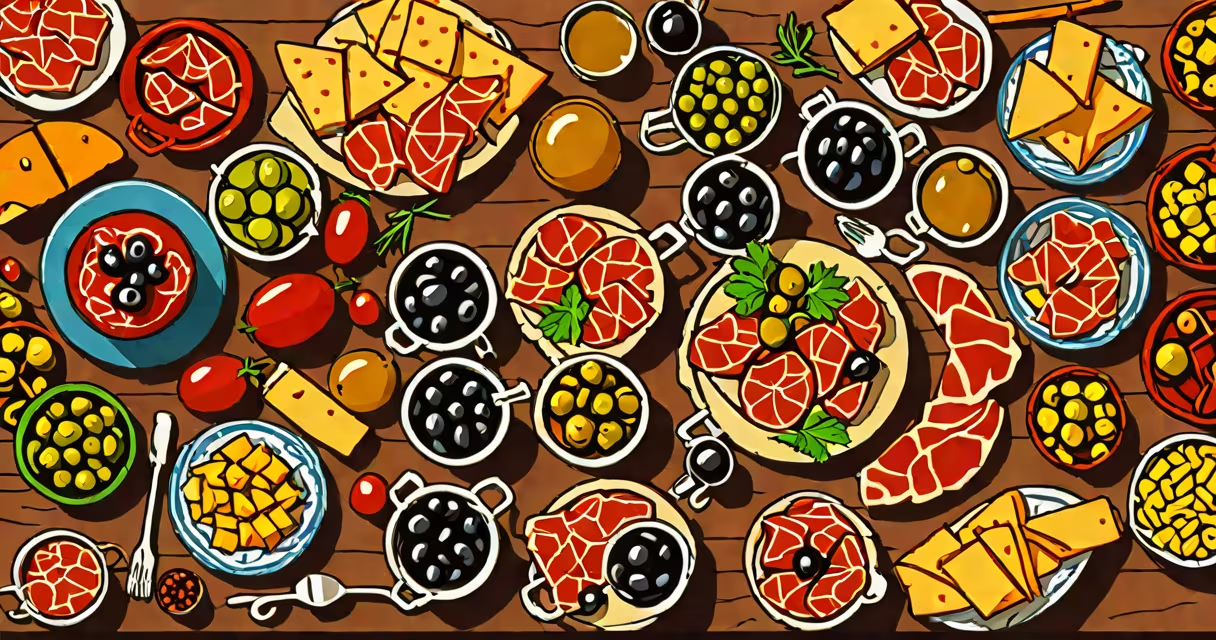
Food from Spain refers to the diverse range of traditional dishes, ingredients, and cooking methods rooted in Spain's regional cultures, climate zones, and historical influences. It includes iconic items like paella, jamón ibérico, and gazpacho, shaped by Mediterranean, Moorish, and Latin American culinary exchanges.
Spanish cuisine varies by region due to geography and history. The coastal areas emphasize seafood and olive oil, while inland regions rely on cured meats, legumes, and grains. The country's long coastline and mountainous interior created isolated food traditions that persist today. For example, Basque Country features pintxos-small savory snacks on bread-while Andalusia is known for cold soups and fried fish.
Spain's agricultural output supports many staple ingredients. Olive oil accounts for over 50% of global production, with most coming from Andalusia and Catalonia. Iberian pigs raised on acorns produce jamón ibérico, a dry-cured ham prized for its marbled fat and rich flavor. These products are protected under EU geographical indications, meaning only meat from specific regions using traditional methods can carry the name.
Spanish cooking emphasizes fresh, seasonal ingredients and slow preparation. Meals often center around shared platters rather than individual plates. A typical meal begins with tapas-small, bite-sized portions meant for socializing. These can include patatas bravas (spicy potatoes), salmorejo (thick tomato soup), or grilled sardines.
Heat is applied differently than in other European cuisines. Many dishes use low, sustained heat. Paella, for instance, is cooked over an open flame in a wide, shallow pan to achieve a crispy socarrat-the golden crust at the bottom. This technique requires precise timing and attention, as the rice must absorb liquid evenly without becoming mushy.
One lesser-known fact: Spain is the world's largest producer of almonds and hazelnuts. These nuts are used in both sweet and savory applications. Marcona almonds, grown in southern Spain, are sweeter and less oily than other varieties and are often served roasted with salt during festivals. They're also key in making romesco sauce, a nutty red pepper-based condiment from Catalonia.
Spain's 17 autonomous communities each have distinct culinary identities. The following table outlines major regional specialties and their defining ingredients:
| Region | Signature Dish | Key Ingredients | Unique Trait |
|---|---|---|---|
| Andalusia | Gazpacho | Tomatoes, cucumber, bell pepper, garlic, olive oil | Served chilled; often includes bread for thickness |
| Catalonia | Escalivada | Eggplant, peppers, onions, garlic, olive oil | Roasted and peeled, then mashed into a paste |
| Basque Country | Pintxos | Baguette, anchovies, mushrooms, cheese, ham | Skewered and served on bars; eaten with fingers |
| Galicia | Empanada de pescado | Seafood, potatoes, onions, paprika | Paired with Albariño wine; baked in clay oven |
| Castile-La Mancha | Manchego cheese | Sheep's milk, aged 60 days minimum | Protected designation of origin since 1986 |
Each dish reflects local resources and climate. Galicia's cool, wet weather favors dairy and seafood, while Castile-La Mancha's arid plains support sheep farming. The use of preserved ingredients-like salted cod or smoked paprika-also stems from historical necessity, especially in mountainous or remote areas.
Many assume food from Spain is limited to tapas and paella. While these are widely recognized, they represent only a fraction of the national cuisine. Paella originated in Valencia and is traditionally made with rabbit, chicken, green beans, and saffron-infused rice-not seafood, despite common restaurant versions.
Another misconception: all Spanish food is spicy. While some dishes like chorizo contain chili, most regional recipes focus on balance. The famous pimentón de la Vera, a smoked paprika from Extremadura, adds depth and color without heat. Its use in dishes like cocido madrileño (a hearty stew) shows how flavor is built through layering, not just spice.
I once visited a family-run restaurant in San Sebastián where the chef refused to serve "tourist paella." He insisted on using only local ingredients-rabbit from nearby hills, wild fennel, and rice from a small valley near the coast. The result was subtle, earthy, and deeply personal. That experience clarified how food from Spain isn't about spectacle-it's about place, memory, and craft.
Spain ranks second globally in wine exports, behind France. Its wines-especially Rioja and Priorat-are known for aging potential and complex structure. The country also leads in olive oil production, with over 1.2 million metric tons annually, according to the International Olive Council. This output supports both domestic consumption and export markets.
Spain's gastronomic heritage is recognized by UNESCO. In 2010, the organization inscribed "The Mediterranean diet as practiced in Southern Spain" on its Intangible Cultural Heritage list. This includes communal eating practices, seasonal ingredient use, and the role of food in social bonding.
For those interested in health impacts, food from Spain offers benefits tied to the Mediterranean diet model. Studies published in The New England Journal of Medicine show that diets rich in olive oil, vegetables, and whole grains reduce cardiovascular risk by up to 30%. This evidence supports the idea that traditional Spanish eating habits contribute to longevity and lower rates of chronic disease.
When considering dietary concerns, understand that food from Spain is not inherently high in fat. While olive oil and cured meats are central, portion control and context matter. A typical Spanish lunch includes a small plate of jamón ibérico, a salad, and a glass of wine-total calories around 500-600. This contrasts sharply with American-style "Spanish" meals that serve oversized portions of fried foods.
Food from Spain is not a monolith. It is a living tradition shaped by centuries of migration, trade, and adaptation. From the sun-drenched fields of Andalusia to the misty coasts of Galicia, each bite tells a story of land, labor, and legacy.